

Executive Summary: A Vital Lifeline for Japan’s Transport Sector
In a landmark move for Japan’s capital markets, Go, the nation’s preeminent taxi-hailing platform, successfully completed its Initial Public Offering (IPO) this past Tuesday. Raising ¥88.6 billion ($553 million), the offering stands as the largest domestic IPO in Japan so far this year. However, the significance of this listing extends far beyond the ticker symbol. For Go, the capital injection represents an existential necessity, providing the financial runway required to address a mounting demographic crisis: Japan’s severe and worsening shortage of professional taxi drivers.
As the nation grapples with an aging workforce and a shrinking labor pool, Go is positioning itself not merely as an app-based booking service, but as a technological bridge to an autonomous future. By pivoting toward robotaxi integration and strategic acquisitions, the company is attempting to solve the supply-side bottleneck that has plagued the Japanese transport industry for the better part of a decade.
The Chronology of a Market Debut
The journey to the Tokyo Stock Exchange was marked by a backdrop of skepticism and shifting government policy. Japan’s current listing season has been one of the quietest in recent memory, compounded by a government-led mandate encouraging startups to seek private acquisition rather than public listing—a move designed to keep capital private and foster long-term growth.
Despite this tepid environment, Go managed to secure backing from global financial heavyweights, including BlackRock, Wellington Management, and M&G Investment Management. This endorsement from institutional investors signaled a clear appetite for high-growth, high-tech Japanese assets, even as the broader market remained cautious.
Following its debut, the stock saw initial volatility, reflecting the broader market’s hesitation. Closing at ¥2,314 on Friday, the shares retracted approximately 4% from their IPO price of ¥2,400. This minor pullback underscores the market’s wait-and-see approach as investors evaluate whether Go’s long-term bet on autonomous technology will yield sustainable returns before the company’s cash reserves are depleted.
Supporting Data: A Demographic Time Bomb
The urgency behind Go’s IPO is rooted in hard data. According to reports from Japan’s Ministry of Land, Infrastructure, Transport and Tourism, the nation’s taxi driver population has cratered by roughly 20% in recent years. This decline is not a temporary dip but a structural shift driven by an aging demographic that shows no signs of reversal.
The economic impact of this shortfall has been profound. A 2024 report indicated that a record-high number of taxi companies in Japan have filed for bankruptcy, citing the dual pressures of unsustainable labor shortages and surging fuel costs.
While the Japanese government attempted to mitigate these pressures by authorizing limited ride-sharing services in early 2024, the regulations remain restrictive. Drivers must still be affiliated with licensed taxi companies, and service areas are geographically constrained. These policies, while helpful, have failed to provide the scale necessary to fill the void left by the disappearing workforce, making the shift toward full automation an inevitable evolution for the sector.
Corporate Origins and Market Dominance
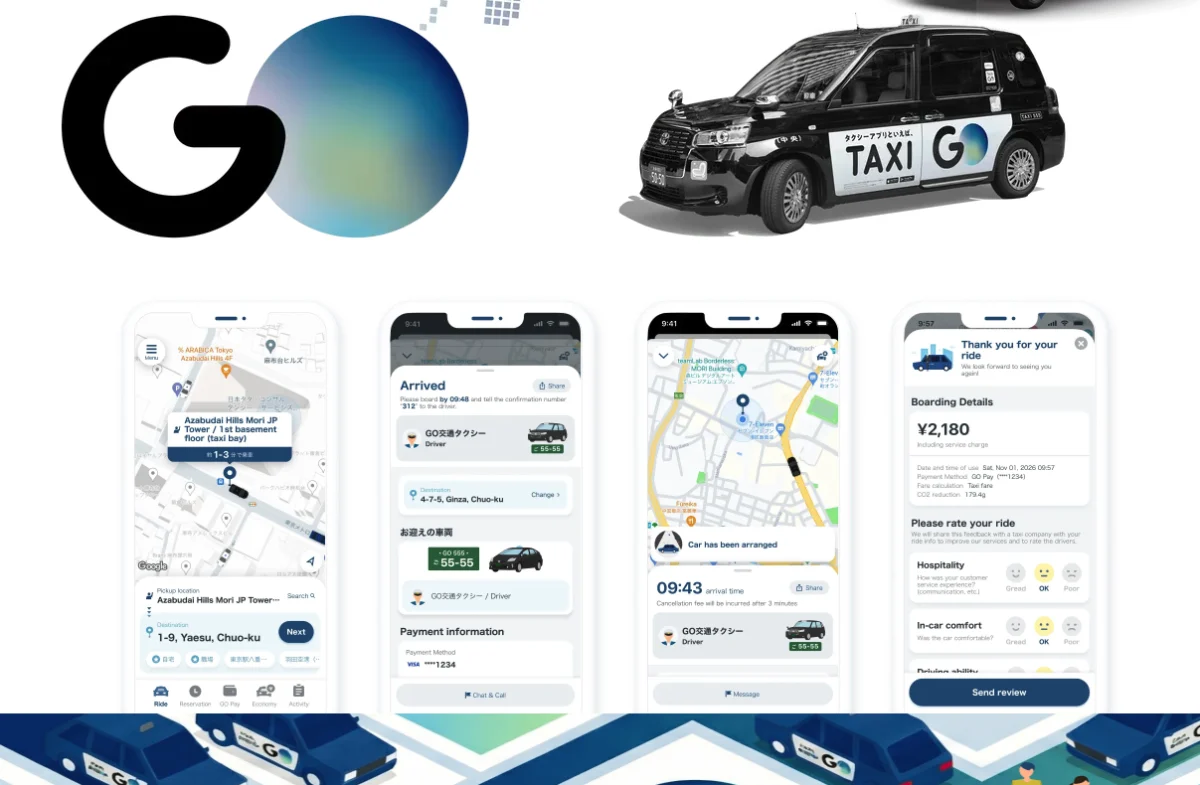
Founded in 1977 as a traditional taxi operator, Go has undergone a radical transformation. Today, it stands as the undisputed leader of Japan’s digital transport landscape. With 35 million downloads and a network of 85,000 partner vehicles, the platform commands an estimated 80% share of the Japanese taxi-app market by usage time.
Operating in 46 of Japan’s 47 prefectures, the company has successfully integrated itself into the daily commute of millions. To capitalize on the post-pandemic tourism boom, Go has also aggressively expanded its international interoperability. By partnering with global giants like Kakao T (South Korea), Alipay, and WeChat Pay (China), Go enables inbound international travelers to hail rides using the apps they already have on their phones, effectively stripping away language and payment barriers.
Official Responses: The Path Toward Autonomy
When asked about the allocation of the ¥88.6 billion raised, a company spokesperson was explicit: the funds are earmarked for research, development, and strategic expansion.
"We intend to use the proceeds from the sale of newly issued shares toward investment in research and development related to robotaxis and investment in business expansions, including strategic mergers and acquisitions in our business inside and outside of the taxi industry," the spokesperson stated.
Crucially, Go is adopting a "platform-first" approach rather than attempting to reinvent the wheel. CEO Hiroshi Nakajima has clarified that Go does not intend to invest in developing its own proprietary autonomous driving systems. Instead, the company is acting as the strategic coordinator for the ecosystem.
This strategy is best exemplified by their partnership with Waymo—Alphabet’s autonomous driving subsidiary—and Nihon Kotsu, one of Japan’s largest taxi operators. By positioning itself as the bridge between cutting-edge technology providers and the existing taxi infrastructure, Go aims to minimize capital expenditure while maximizing market capture. Regarding the timeline for driverless operations, the company remains cautious. "We plan to begin driving fully autonomously, without a human specialist present, when we validate our technology and receive approval to do so," the spokesperson added.
Implications: A Competitive Landscape
Go is not alone in its quest to automate Tokyo’s streets. The race for the "robotaxi future" is becoming increasingly crowded, with international giants vying for a foothold in the Japanese market.
In a significant move this past March, Uber, Wayve, and Nissan announced a collaborative pilot program to deploy robotaxi services in Tokyo by late 2026. This initiative will utilize Nissan Leaf vehicles equipped with Wayve’s "AI Driver" software, with booking integrated directly into the Uber app. For Uber, this represents its first foray into autonomous vehicles in Japan, setting the stage for a fierce battle with Go.
Furthermore, competition is intensifying at the consumer level. S.Ride, another prominent player, has teamed up with Uber to cater to international tourists, while Didi Mobility Japan—a joint venture between SoftBank and Didi Chuxing—is aggressively targeting the same demographic.
Strategic Outlook: Can Go Lead the Charge?
The implications of Go’s IPO are multifaceted. On one hand, the company has secured the capital necessary to survive the transition from a traditional operator to a high-tech platform. On the other, it faces a high-stakes race against global tech giants that possess deep pockets and advanced AI capabilities.
The success of Go’s long-term vision depends on two critical factors: regulatory evolution and technological reliability. Japan’s strict safety standards for autonomous vehicles mean that full-scale deployment will likely be a slow, incremental process. While Go has the market share and the partner ecosystem to lead this transition, the transition itself requires a fundamental shift in how the Japanese public perceives and trusts driverless transport.
For now, the capital markets have signaled that they are willing to bet on Go’s ability to navigate these challenges. By securing its financial footing, Go has bought itself the time required to prove that it can lead Japan into a post-driver world. Whether the company can turn this IPO into a definitive competitive moat remains the defining question for the future of Japanese mobility. As the industry watches the stock price and the progress of the Waymo partnership, one thing is certain: the traditional taxi model is rapidly reaching its expiration date, and Go is racing to ensure that it is the one holding the keys to the future.
 Asep Darmawan
 Siti Muinah
 Ali Ikhwan
