

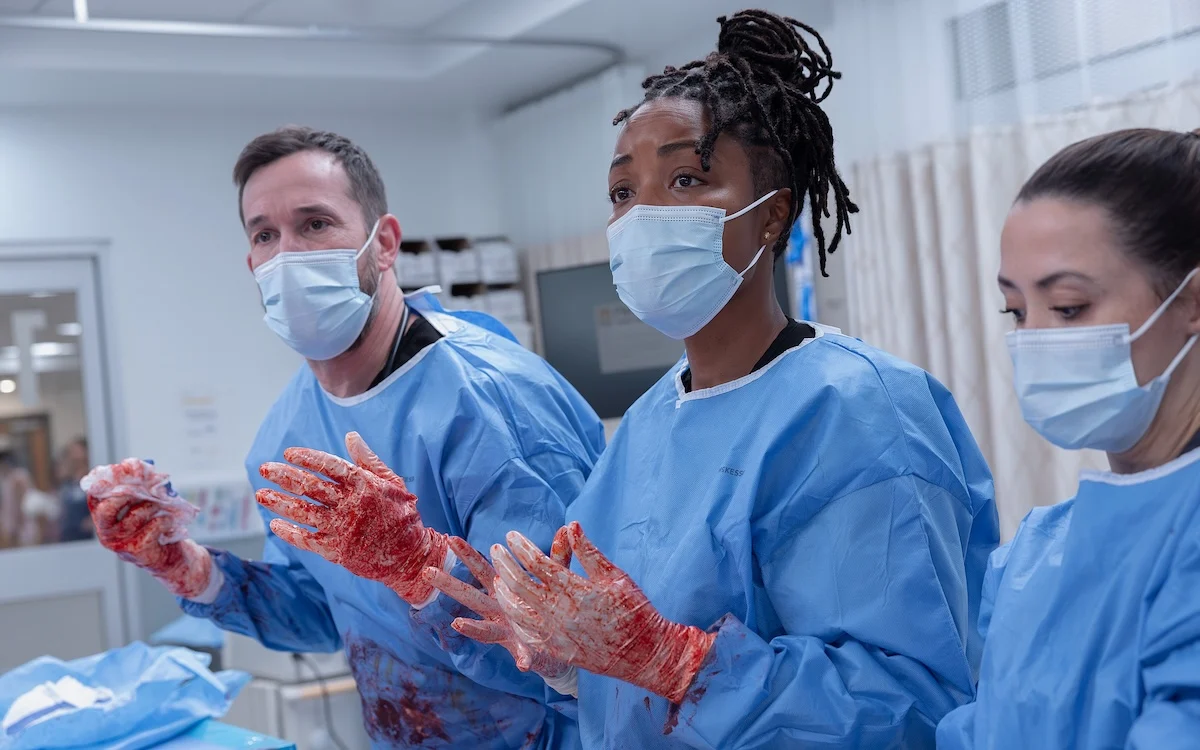
In an era of television dominated by high-concept science fiction, sprawling fantasy epics, and gritty true crime, the traditional medical drama was, for a time, considered a relic of the broadcast past. The frantic hallways of the 1990s and the romantic entanglements of the 2000s had seemingly exhausted the genre’s potential. However, Max’s latest powerhouse, The Pitt, has defied these expectations, breathing new life into the format and emerging as one of the most gripping programs on contemporary television.
The secret to its success, as revealed in a recent IndieWire Craft Roundtable, lies not just in its scripts or its star-studded cast, but in the meticulous, perspective-driven work of its editing room. Mark Strand, a lead editor on the series, recently shared insights into the narrative philosophy that prevents The Pitt from falling into the traps of melodrama, instead maintaining a high-octane realism that keeps audiences on the edge of their seats.
Main Facts: The Technical Resurgence of a Legacy Genre
The Pitt arrives as a spiritual successor to the legendary ER, reuniting star and executive producer Noah Wyle with showrunner R. Scott Gemmill. While the DNA of the show is rooted in the "gold standard" of medical procedurals, its execution is distinctly modern. The series focuses on the daily lives of healthcare workers in a modern-day Pittsburgh hospital, grappling with a healthcare system at its breaking point.
According to Mark Strand, the show’s primary innovation is its commitment to the "doctor’s perspective." Unlike many medical dramas that pivot heavily into the tragic backstories of "patients of the week" to elicit tears, The Pitt filters every emotional beat through the eyes of the medical professionals. This technical choice creates a sense of professional detachment that, paradoxically, makes the stakes feel higher and the drama more authentic.
The tension in The Pitt is manufactured through a relentless pace. The editing team utilizes a "rhythm of urgency," where the cuts mirror the cognitive load of a physician managing multiple crises. By prioritizing the doctors’ diagnostic processes over the patients’ external drama, the show transforms medical procedures into high-stakes psychological thrillers.
Chronology: From the Chaos of ‘ER’ to the Precision of ‘The Pitt’
To understand the impact of The Pitt, one must look at the timeline of the medical drama’s evolution.
The 1990s: The Era of Kinetic Realism
In 1994, ER changed television forever by introducing a kinetic, Steadicam-heavy style that prioritized the "chaos" of a Level 1 trauma center. Noah Wyle, then playing Dr. John Carter, was at the center of this revolution. For fifteen seasons, the genre leaned into the physical reality of medicine.
The 2000s and 2010s: The Rise of the Soap-Procedural
Following the success of ER, shows like Grey’s Anatomy shifted the focus. The medical setting became a backdrop for romantic intrigue and interpersonal soap opera. While highly successful, this shift led critics to view the medical drama as "comfort food" rather than "prestige TV." The technical urgency was often replaced by slow-motion montages and emotional ballads.
2024: The Launch of ‘The Pitt’
When The Pitt was announced, there was skepticism regarding whether Noah Wyle’s return to the hospital would feel like a redundant nostalgia trip. However, upon its release, it became clear that the production team intended to strip away the "soap" and return to a more disciplined, technical form of storytelling. Mark Strand joined the team with a mission to use the edit as a tool for grounding the show in the reality of 21st-century medicine—characterized by burnout, resource scarcity, and rapid-fire decision-making.
Supporting Data: The Editing Philosophy of Mark Strand
During the IndieWire Craft Roundtable, Mark Strand broke down the specific editorial choices that differentiate The Pitt from its predecessors. The data of the edit—the frequency of cuts, the choice of POV shots, and the exclusion of certain "emotional" angles—reveals a calculated strategy.
The Doctor as the Emotional Conduit
Strand emphasized that the show’s guiding principle is "bouncing every feeling through our doctors." In a typical drama, if a spouse is crying in a waiting room, the camera might linger on them to force an emotional reaction from the viewer. In The Pitt, the camera stays with the doctor observing that spouse.
"They are diagnosing issues, trying not to be a part of the emotional journey of their characters," Strand explained. "Obviously, they can’t help but be a part of that sometimes." By keeping the camera on the doctor’s reaction to the tragedy, rather than the tragedy itself, the edit forces the audience to identify with the professional burden of the physician.
Avoiding the "In-Between"
Strand noted that the editing team makes a conscious effort not to get "in between" patients or their families. "Rather than getting in between two patients or a patient’s spouse, that moment will be observed from our doctors’ point of view," he said.
This technique serves two purposes:
- Pacing: It prevents the show from slowing down for sentimental beats that don’t drive the plot forward.
- Character Investment: It reinforces who the protagonists are. "Those are the people we care about the most anyway, they’re our characters," Strand remarked. "And so it’s really how it’s affecting them, and so we try to stick to that."
The "Diagnostic Cut"
Analysis of the show’s editing patterns reveals a high frequency of "diagnostic cuts"—quick transitions between a symptom, a doctor’s reaction, and the subsequent medical action. This creates a procedural "flow state" for the viewer, simulating the high-speed mental processing required in an emergency room.
Official Responses: Insights from the Creative Team
The creative team behind The Pitt has been vocal about their desire to honor the medical profession without glamorizing it.
Noah Wyle (Lead Actor/Executive Producer):
In various press tours, Wyle has noted that his return to the genre was predicated on doing something that felt "honest to the current state of healthcare." He has praised the post-production team for capturing the "exhaustion of the modern physician," noting that the way a scene is cut can convey more about a doctor’s fatigue than a line of dialogue ever could.
R. Scott Gemmill (Showrunner):
Gemmill has echoed Strand’s sentiments regarding the "doctor-first" perspective. He has stated in interviews that the goal was to create a "subjective experience" of medicine. The show is designed to make the viewer feel like a member of the surgical team, rather than a voyeuristic observer of a patient’s misfortune.
IndieWire’s Editorial Perspective:
The IndieWire panel highlighted The Pitt as a prime example of how "craft" (editing, sound design, cinematography) is the bridge between a standard procedural and a prestige drama. The consensus among the roundtable experts was that Strand’s work proves that "less is more" when it comes to emotional manipulation; by withholding the obvious "tear-jerker" shot, the show earns a deeper, more intellectual engagement from its audience.
Implications: The Future of the Procedural in the Streaming Age
The success of The Pitt and the insights shared by Mark Strand have significant implications for the television industry at large.
1. The Death of the "Dated" Label
For years, "procedural" was a dirty word in the world of prestige streaming. It was associated with "case-of-the-week" formats meant for passive viewing. The Pitt demonstrates that the procedural format, when executed with high-level craft and a sophisticated narrative lens, can compete with serialized dramas for critical acclaim and audience retention.
2. A Shift in Emotional Storytelling
Strand’s philosophy of "observational empathy" suggests a shift away from the manipulative editing styles of the early 2000s. Modern audiences, who are more media-literate than ever, often recoil at overly sentimental cues. By filtering emotion through the "heroic protagonists doing their jobs," The Pitt offers a more mature form of drama that respects the viewer’s intelligence.
3. The "Editor as Auteur"
The IndieWire Roundtable reinforces the idea that editors are the final writers of a show. Strand’s ability to "steer the show out of the realm of melodrama" through cutting choices highlights the editor’s role in tone management. As streaming platforms look to differentiate their content, the technical "voice" of the editing room will become as important as the director’s vision.
4. Revitalizing Professional Heroism
By focusing on the "heroic protagonists" and their diagnostic brilliance, The Pitt revitalizes the concept of the "competence porn" genre—shows where the primary appeal is watching experts be exceptionally good at difficult jobs. In a cynical cultural climate, there is a growing appetite for stories that celebrate professional dedication and technical skill over personal scandal.
Conclusion
Mark Strand’s revelations about the editing of The Pitt provide a masterclass in how to modernize a classic genre. By prioritizing the doctor’s perspective, maintaining a rigorous pace, and avoiding the easy traps of melodrama, the series has managed to turn a "dated format" into a cutting-edge television event.
As The Pitt continues its run, it serves as a reminder that the most gripping stories aren’t always found in fantastical worlds, but in the focused, high-stakes reality of those who hold life and death in their hands—and the editors who know exactly how to show us that world through their eyes. Through the careful lens of Strand and his team, the medical drama hasn’t just been revived; it has been evolved for a new generation of viewers who demand both heart and heat in equal measure.
 Jia Lissa
 Lina Irawan
 Iffa Jayyana
