

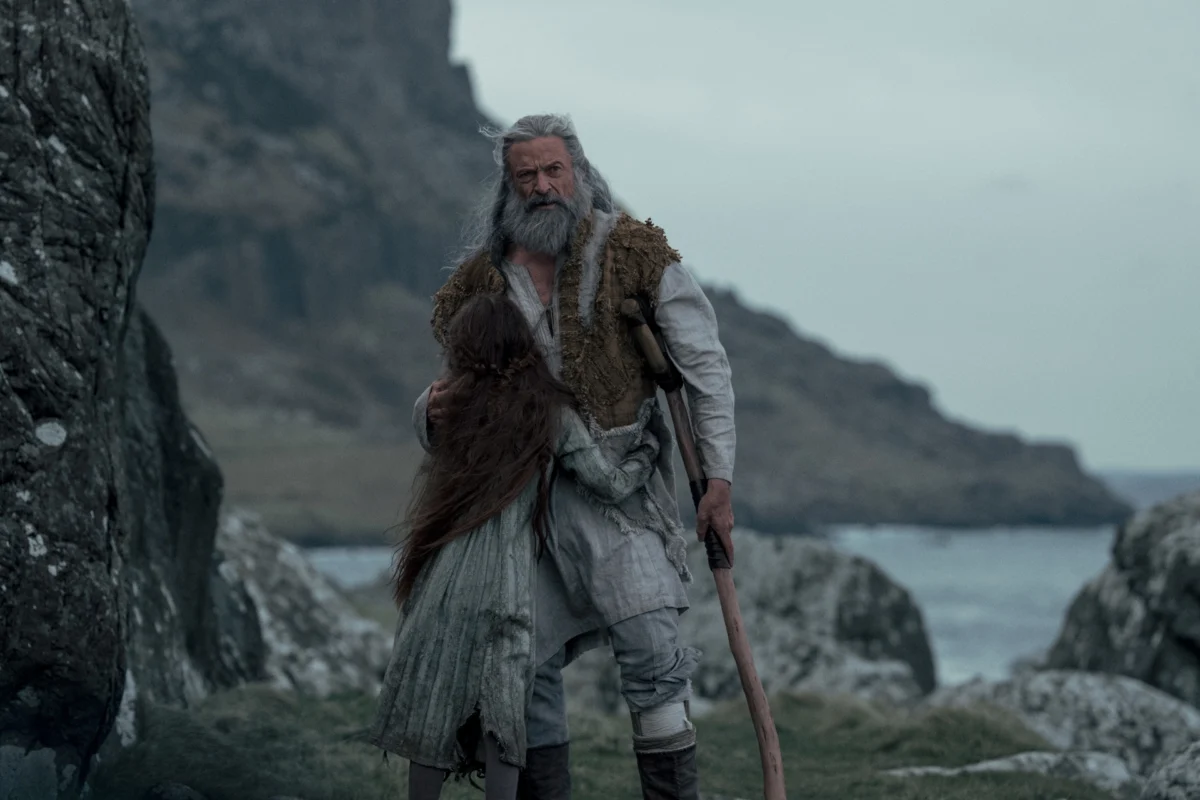
The image of Robin Hood has, for centuries, been polished into a gleaming symbol of agrarian justice. Clad in Lincoln green, the "Prince of Thieves" of popular imagination is a merry outlaw who robs the rich to feed the poor, a master archer living a life of noble defiance in the sun-dappled glades of Sherwood Forest. However, the first trailer for A24’s latest cinematic endeavor, The Death of Robin Hood, shatters this romanticized veneer within seconds.
"People speak of Robin Hood, tell his stories, they’re all lies," growls a weathered, battle-scarred Hugh Jackman in the film’s opening narration. This is not the swashbuckling hero of Errol Flynn or the animated fox of Disney’s 1971 classic. This is a man haunted by a lifetime of carnage, navigating a medieval world where "merriment" is a luxury no one can afford. Directed by Michael Sarnoski (Pig, A Quiet Place: Day One), the film seeks to strip away the folklore to reveal a gritty, historically grounded reality that challenges the very foundation of one of Western culture’s most enduring legends.
Main Facts: A Gritty Reimagining of an Icon
The Death of Robin Hood marks a significant tonal shift for the franchise, which has seen numerous iterations over the last century, ranging from Kevin Costner’s blockbuster heroics to Ridley Scott’s geopolitical epic. Produced by A24—a studio renowned for its "elevated" take on genre films like The Green Knight and The Witch—this version positions itself as a "revisionist" history.
The film stars Academy Award nominee Hugh Jackman as an aging, broken Robin Hood and Emmy winner Jodie Comer as a Prioress who becomes his unlikely caretaker. Set in 1274 AD, the narrative follows a mortally wounded Robin as he seeks sanctuary in a remote priory. Rather than a triumphant final stand, the film explores the psychological and physical toll of a life spent in the shadows of the law.
Director Michael Sarnoski, speaking on the Filmmaker Toolkit podcast, emphasized that the film’s tagline—"He was no hero"—is not merely a marketing gimmick but a thesis statement. The production, which conducted principal photography in the rugged landscapes of Northern Ireland, eschews the "shining armor" tropes of Hollywood medievalism in favor of mud, blood, and the harrowing reality of 13th-century survival.
Chronology: From Oral Ballads to the Silver Screen
To understand Sarnoski’s vision, one must look at the evolution of the Robin Hood mythos. The director notes that the "Robin Hood" we recognize today is a relatively modern invention, born from centuries of layers added to a much darker core.

The Origins (13th – 15th Century)
The character likely began as an "amalgamation of a few different people," according to Sarnoski. In the 13th century—the era in which the film is set—"Robin" was a common name, and "Hood" (or "Hode") was a frequent alias for outlaws. These early figures were not noblemen; they were yeomen, often depicted as violent and unpredictable.
The First Ballads (15th – 17th Century)
The first written accounts appeared two to three centuries after the character’s supposed life. Early ballads like A Gest of Robyn Hode reveal a character far removed from the "charity worker" image. These stories featured "morbid and horrifying" acts, including Robin decapitating enemies and donning their clothes as a disguise. Sarnoski argues that these early tales were played for a certain type of dark entertainment but reflected a much more "iffy" moral compass than modern audiences are used to.
The Romanticization (19th Century – Present)
It wasn’t until the Victorian era and later adaptations, such as Howard Pyle’s 1883 novel The Merry Adventures of Robin Hood, that the character was softened into a chivalrous hero. This sanitized version was cemented by 20th-century cinema, creating a cultural disconnect that Sarnoski found fascinating.
The Sarnoski Development (2020 – 2024)
Sarnoski’s personal journey with the project began with a book given to him by a mentor after his father’s passing. The book, a 1940s collection of Robin Hood lore, contained the specific story of Robin’s death. The idea that an "iconic folkloric figure" could die—not in a blaze of glory, but through betrayal and exhaustion—became a long-term obsession for the filmmaker, eventually culminating in the A24 script.
Supporting Data: The Brutal Reality of 1274 AD
The year 1274 AD serves as the grounding wire for the film’s realism. This was a period of immense transition in England and the "Celtic fringe." Edward I (Longshanks) had just returned from the Ninth Crusade to be crowned King, and the social fabric was defined by extreme feudal inequality and a culture of casual violence.
Sarnoski’s research led him to move away from the "Hollywood Medieval" aesthetic. "Day-to-day survival was hard, and fighting back then was brutal," Sarnoski noted. He cited a lecture on English history that profoundly influenced his visual approach: "We think of medieval battles as knights in shining armor riding around on horses, but most of the time it was just peasants beating each other to death with shovels."

This "shovel-and-mud" philosophy dictates the film’s action sequences. The violence is not choreographed for aesthetic beauty but for desperate survival. By placing an outlaw like Robin Hood in this hyper-realistic setting, Sarnoski highlights the absurdity of the "merry bandit" myth. In a world where the state itself is brutally violent, a bandit must be even more so to survive.
Official Responses: Sarnoski on Character and Redemption
In his interview with the Filmmaker Toolkit, Sarnoski delved into the creative choices behind the film’s two central figures: the dying outlaw and the woman who heals him.
Reimagining the Prioress
In the original ballads, the Prioress is often a two-dimensional villain—an "evil nun" who bleeds Robin Hood to death under the guise of medical treatment. Sarnoski found this "black and white" approach uninteresting. Instead, he drew inspiration from Hildegard von Bingen, the 12th-century polymath, healer, and visionary.
Jodie Comer’s Prioress is reimagined as a leader of a communal priory that serves as a sanctuary for the "orphans and lepers" discarded by society. "I turned the Prioress sort of into this leader of almost a commune," Sarnoski explained. This change elevates the character from a plot device to a moral foil for Jackman’s Robin.
Jackman’s Robin Hood
For Hugh Jackman, the role represents a deconstruction of the "hero" archetype he has played for decades. Sarnoski’s Robin is a man "grappling with his murderous past." The conflict of the film is internal: Can a man who has lived by the sword—and used that sword for "iffy" reasons—ever truly find salvation? The film asks whether the "legend" of Robin Hood was a lie the character told himself to justify his actions, or a lie the people told to find hope in a hopeless world.
Implications: A New Direction for Folkloric Cinema
The release of The Death of Robin Hood has broader implications for how Hollywood handles historical and folkloric intellectual property.

1. The End of the "Origin Story"
For decades, the trend was to provide "gritty origin stories" (such as 2018’s Robin Hood or 2010’s Robin Hood). Sarnoski’s film suggests that the most interesting part of a legend isn’t how it began, but how it ends—and how the "truth" of a person is lost to the "myth" over time.
2. A24’s Genre Dominance
By taking on a project as high-profile as Robin Hood, A24 is signaling its intent to compete with major studios on "brand name" properties, but on its own artistic terms. This follows the success of The Green Knight, proving there is a significant audience for medieval films that prioritize atmosphere and philosophical inquiry over traditional action beats.
3. The Revisionist Trend
The film fits into a growing movement of "revisionist historiography" in cinema, where filmmakers interrogate the colonial, patriarchal, or romanticized lenses of the past. By framing Robin Hood as a "murderous" figure rather than a "merry" one, the film forces the audience to confront the reality of how heroes are manufactured.
Conclusion: The Death of a Legend, the Birth of a Human
The Death of Robin Hood is poised to be more than just a historical drama; it is a meditation on the power of storytelling. By admitting that the stories we know are "all lies," the film attempts to find something more valuable: the human being beneath the hood.
As the film rolls out in theaters, the conversation will likely shift from Robin’s skill with a bow to the weight of his legacy. In Michael Sarnoski’s hands, the death of Robin Hood isn’t just the end of a man, but the dismantling of a myth that has shielded us from the harsh, shovel-beating reality of history for far too long. Through the performances of Jackman and Comer, A24 invites us to look past the green tunic and see the blood on the hands of our heroes.
 Jia Lissa
 Lina Irawan
 Iffa Jayyana
