

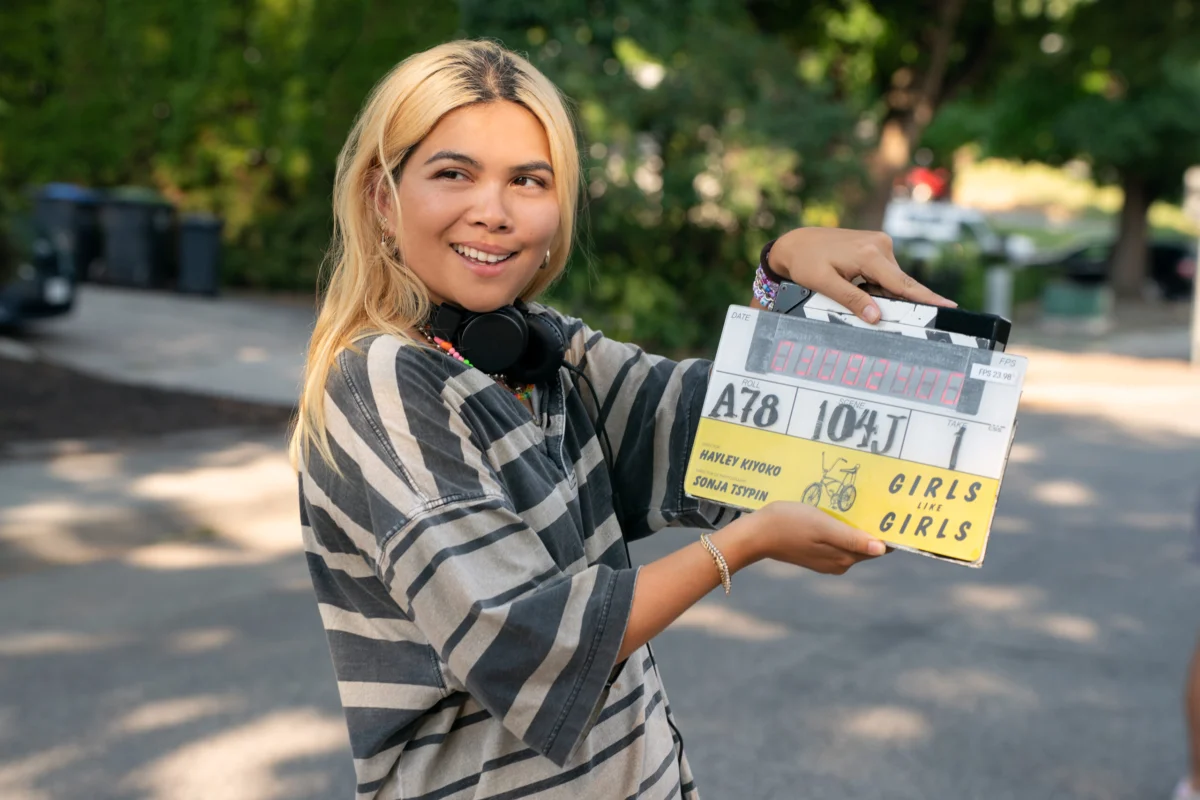
Warning: This article contains major spoilers for the film adaptation of Girls Like Girls.
In the landscape of modern queer cinema, the trope of the "hard-fought victory" is a well-worn path. For decades, LGBTQ+ narratives have been defined by external conflict—battles against societal prejudice, family rejection, and the physical manifestations of homophobia. However, in her ambitious big-screen adaptation of her viral 2015 hit Girls Like Girls, filmmaker, musician, and actor Hayley Kiyoko has made a radical creative pivot. She has opted to move away from the visceral, violent confrontation that characterized the original music video and the 2023 novel, choosing instead to focus on the quiet, internal power of self-actualization.
The Evolution of a Story: From Single to Screen
To understand the significance of this creative shift, one must look at the decade-long journey of the Girls Like Girls universe. What began as a seminal 2015 music video—which has since amassed over 160 million views—was always a story about the intersection of teen longing and external hostility. In both the song’s visual companion and the expanded 2023 novel, the narrative trajectory inevitably leads to a physical confrontation between our protagonist, Coley (Maya da Costa), and her primary tormenter, Trent (Levon Hawke).
In the source material, the tension reaches a breaking point by a swimming pool, where Coley and her romantic interest, Sonya (Myra Molloy), are attempting to navigate their fragile, on-again-off-again connection. When Trent interrupts their intimacy with a targeted, homophobic assault, the story historically pivots into a brutal display of physical retribution. As Kiyoko wrote in the novel: "Everything goes red. Three blows and he’s down on the ground, but I don’t stop. I pin him to the ground with my knees and I keep going. My knuckles might break, but it’ll be worth it."

For years, this scene served as a cathartic release for fans—a moment where the "good guy" fights back against systemic hate. Yet, as Kiyoko moved into the editing suite for the feature film, she began to question the necessity of that violence.
A Change of Heart: The Editing Room Epiphany
Kiyoko, who directed the project, revealed in an exclusive conversation with Gold Derby that she initially shot the full fight sequence. The choreography was meticulous, the performances were intense, and the scene was ready to be locked. However, the post-production process forced a re-evaluation of the story’s core message.
"I saw the incredible performances by these two women," Kiyoko explained, gesturing to her leads, da Costa and Molloy. "And then I realized it wasn’t about him. The whole point of the journey in this film is these women, and so it was important to me to end with them and their experience. And their struggle wasn’t really with Trent anyway; it was more about the struggle within themselves, and I wanted to amplify that."
This decision—to excise a completed, high-budget stunt sequence—represents a profound shift in directorial philosophy. It signals a move away from "trauma-informed" storytelling, which often mandates that queer characters must suffer or fight to prove their validity, toward a narrative of internal peace. Kiyoko confirmed that there are currently no plans to release the deleted fight scene, signaling that she views the omission not as a loss of content, but as a deliberate refinement of the film’s emotional integrity.

The Choreography of Restraint
For the actors involved, the transition from the physical confrontation to the more subdued, character-driven ending was a lesson in artistic collaboration. Maya da Costa, who portrays Coley, noted that the preparation for the fight had been intense. "It was like a dance scene," she remarked, praising the stunt team and her scene partner, Levon Hawke.
Despite the effort put into the choreography, da Costa found the final cut, which avoids the violence, to be more resonant. "I really do enjoy that it didn’t end on that note," she said. "The film is more about the little quiet moments of deciding, ‘Do I go for this?’ And the ending captured that perfectly."
Myra Molloy, who plays Sonya, echoed this sentiment, highlighting the shift in agency. "It was traumatizing to see the girl you love get beat up," Molloy admitted. "It just didn’t feel right; it was such a departure from the message and the choices that Coley and Sonya both make in the film. It was like, ‘Why are we going to let this man decide for anyone?’ We’re going to let Sonya and Coley decide their journey going forward, and it’s their love that prevails—no one else."
Implications for Queer Cinema
By shifting the focus from the villain’s defeat to the lovers’ reconciliation, Kiyoko has inadvertently set a new benchmark for queer storytelling. The film’s final moments favor a tender, triumphant reunion—a scene so classic in its romantic purity that it draws direct parallels to the iconic finales of films like The Princess Bride.

To maintain the narrative tension until the very last second, Kiyoko made the bold choice to place this romantic resolution in a post-credits scene. This allows the audience to sit with the ambiguity of the main narrative before being rewarded with a surge of unadulterated "queer joy."
"I loved the idea of having viewers sit in a theater and go down memory lane with the new version of ‘Girls Like Girls’ that plays during the credits," Kiyoko said. "And then they get that final push of hopeful queer content! It’s such a beautiful moment between those two."
This choice is not just an aesthetic one; it is a political one. In an era where queer media is still frequently criticized for relying on "Bury Your Gays" tropes or excessive hardship, Girls Like Girls chooses to prioritize the emotional fulfillment of its protagonists.
Looking Ahead: The Future of the Franchise
The Girls Like Girls project has now traversed almost every medium: music, literature, and film. With the release of a new soundtrack featuring ten songs inspired by the film, the universe continues to expand. When asked about the potential for a "final chapter" in the form of a Broadway musical, Kiyoko did not shy away from the possibility. "I think that might be the final chapter if we ever got the opportunity," she said.

However, the immediate goal remains accessibility and impact. Kiyoko is acutely aware of the generational divide in representation. "You think about people who are in their 40s or 50s and who have never seen themselves represented on the big screen before," she noted. "That’s why this film is so important—because seeing is believing."
Conclusion: The Vitality of Queer Joy
The decision to remove the fight scene serves as a microcosm for the film’s broader mission. By refusing to let a homophobic antagonist dictate the final note of her film, Kiyoko has reclaimed the narrative power for the women on screen. As she aptly summarized, "Queer joy is so vital right now. I hope they’re able to love themselves a little harder."
As Girls Like Girls begins its life in theaters and on streaming platforms, it stands as a testament to the idea that love, not conflict, is the most radical act of all. For the next generation of queer youth, this film offers a rare gift: a story that ends not with a punch, but with a promise. Through her choices, Hayley Kiyoko has ensured that Coley and Sonya’s legacy will not be defined by the man who tried to tear them apart, but by the strength they found in each other to keep moving forward.
 Ammar Sabilarrohman
 Siti Muinah
 Iffa Jayyana
