

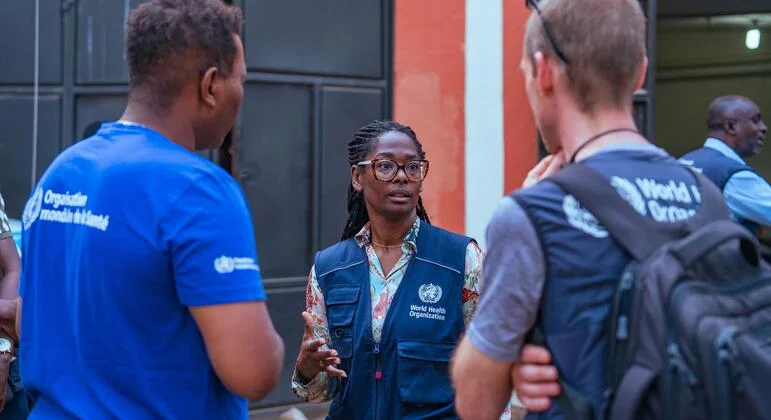
One month into the latest Ebola outbreak in the Democratic Republic of the Congo (DRC), the situation has reached a critical juncture. Despite a significant mobilization of resources, international health experts warn that the current response remains dangerously insufficient to contain the rapid spread of the virus. With infection numbers rising and the disease crossing international borders, the international community faces an urgent imperative to scale up support before the epidemic spirals out of control.
Main Facts: The Current Toll
As of the latest reporting, the Democratic Republic of the Congo has recorded more than 780 confirmed cases of Ebola, resulting in 180 deaths. The virus has not remained contained within the DRC’s borders; neighboring Uganda has already reported 19 confirmed cases, including two fatalities.
The epidemiological profile of the outbreak is shifting in concerning ways. While the initial wave of infections primarily impacted men between the ages of 20 and 49, the virus is increasingly affecting women and children. This demographic shift is attributed to the traditional social roles of women, who often serve as primary caregivers for sick family members, thereby increasing their direct exposure to the pathogen.
Chronology of a Mounting Emergency
The outbreak, which gained momentum over the past thirty days, has been characterized by a rapid, often unpredictable evolution. Local health authorities, working in tandem with the World Health Organization (WHO) and international partners, moved quickly to establish a baseline of medical infrastructure.
- Week 1-2: Initial detection of the outbreak in the Aru region triggered the immediate deployment of investigation teams. The focus was on identifying suspected cases, establishing transit centers, and implementing initial quarantine protocols.
- Week 3: A massive diagnostic scale-up was initiated. The establishment of four operational laboratories—two of which are capable of processing 1,000 samples per day—significantly reduced the wait time for test results, allowing for faster triage and isolation.
- Week 4: The focus shifted toward cross-border collaboration. Recognizing the porous nature of the border between the DRC and Uganda, officials from both nations met to harmonize their response plans, creating joint task forces to monitor the movement of people and resources.
The Eleven Pillars of Response
The Ebola response in the DRC is not merely a medical endeavor; it is a complex, multi-layered operation. Dr. Rose Belizaire, Emergency Response Lead at WHO Africa, describes the strategy as being organized around "11 pillars." This holistic approach ensures that the medical response is supported by social and logistical frameworks.
Medical and Logistical Infrastructure
The core of the response includes:
- Community Surveillance: Early detection through local alerts.
- Investigation Teams: Rapid-response units dispatched to evaluate suspected cases.
- Transit Centers: Holding facilities for patients awaiting laboratory confirmation.
- Treatment Centers: Specialized facilities for the clinical care of confirmed patients.
- Laboratories: Diagnostic hubs that serve as the backbone of the containment strategy.
- Infection Prevention and Control: Rigorous protocols including the disinfection of sites and the safe destruction of contaminated materials.
- Data Management: Real-time tracking of the epidemic’s progression to guide resource allocation.
Social and Holistic Support
Recognizing that medical treatment alone cannot stop an epidemic, the response includes robust support for the families and contacts of the infected. "We now have psychosocial support and nutritional support that provide assistance to confirmed patients, their families, and the contacts we are monitoring," says Dr. Belizaire.
This includes the provision of food rations to contacts under surveillance and three hot, nutritious meals a day for hospitalized patients. By addressing the fundamental needs of the affected, the WHO aims to increase community trust and cooperation, which are vital for contact tracing and vaccination efforts.
Official Responses: "We Are at Three or Four Out of Ten"
Despite the massive scale-up of facilities—including 400 new beds—the WHO remains cautious. Dr. Belizaire offered a sobering assessment of the current state of the epidemic: "On a scale of zero to ten, compared with where this response needs to be, I would say we are at about three or four."
The Resource Gap
Dr. Belizaire’s recent field visit to Beni revealed a stark contrast between local technical capacity and available resources. She noted that local health workers possess the necessary expertise and a clear understanding of what must be done to contain the virus. However, they are consistently hampered by a lack of logistical support and insufficient human resources. The "machinery" of the response requires sustained, long-term funding to remain effective against such a volatile pathogen.
Implications for the Region and Beyond
The Ebola outbreak is occurring in a highly specific socioeconomic context. In the border regions of Aru (DRC) and Arua (Uganda), the border is largely symbolic. Populations on both sides share the same languages, cultural practices, and intense commercial ties.
Cross-Border Cooperation
The decision to deploy joint teams along the border is a strategic move to prevent the virus from exploiting these close-knit ties. By establishing a joint treatment center managed by both Congolese and Ugandan medical personnel, the two countries are effectively reducing the need for potentially infected individuals to travel long distances in search of care, thereby limiting the risk of transmission along transit routes.
Adapting to Local Realities
A vital component of the current strategy is the "listening response." WHO officials have been actively engaging with diverse community segments, including local entrepreneurs, motorcycle taxi drivers, and community leaders.
- Entrepreneurs: Concerned about the economic paralysis caused by the outbreak, they are being consulted on how to maintain safe trade routes.
- Motorcycle Taxi Drivers: As key vectors of movement in the region, they are being trained in infection prevention to ensure they do not inadvertently spread the virus.
A Legacy of Resilience
The human element of the response is perhaps best exemplified by the story of a local epidemiologist working with the WHO. A survivor of a previous Ebola outbreak, this individual was instrumental in sounding the alarm for the current crisis after a local pastor reported a suspicious death during a funeral in Aru.
His transition from a patient to a frontline defender of public health serves as a powerful reminder of the resilience of the Congolese people. "To see people whose lives we helped save becoming my colleagues and working in the same organization as me," Dr. Belizaire reflects, "is perhaps my best paycheck."
Conclusion: The Path Forward
The Ebola outbreak in the DRC is a test of international solidarity and local resilience. While the infrastructure for a robust response has been laid, the current intensity of the epidemic demands a significant increase in international support. The virus is evolving rapidly, and if the response remains at its current level of "three or four out of ten," the risk of a widespread, uncontrollable crisis remains high.
To succeed, the global community must move beyond temporary emergency measures. The focus must be on sustained, long-term investments in healthcare infrastructure, the empowerment of local health workers, and the continuation of the community-based, culturally sensitive approach that has proven essential in the fight against this devastating disease. As the DRC and Uganda continue to work in concert, the hope remains that with sufficient resources, the tide can be turned.
 Lina Hope
 Asro
Asro
 Layla Zulfa
