

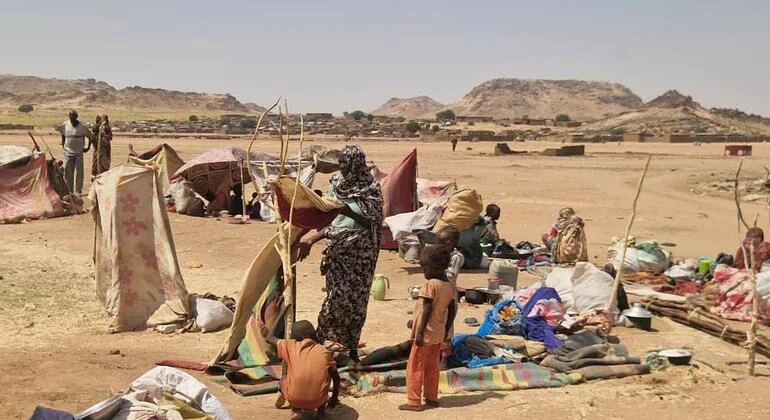
UNITED NATIONS — The United Nations Security Council has issued an urgent, high-level warning regarding the escalating military situation in Sudan, specifically identifying the city of El Obeid as a flashpoint for potential mass atrocities. As the Rapid Support Forces (RSF) continue to bolster their military presence around the capital of North Kordofan, the international community is bracing for a humanitarian catastrophe that threatens to displace thousands and further destabilize an already fractured nation.
In a formal statement released on Saturday, June 20, 2026, the Security Council signaled its profound alarm, demanding an immediate cessation of hostilities and a pullback of forces that have effectively encircled the city.
The Core Crisis: An Imminent Threat to Civilians
The current crisis in El Obeid is a microcosm of the broader Sudanese conflict, which has been raging since April 2023. Military intelligence and reports from the ground indicate that the RSF has been steadily accumulating heavy weaponry, personnel, and drone capabilities in the periphery of the city. For the Security Council, this buildup is not merely a tactical maneuver but a precursor to a large-scale ground offensive that could have devastating consequences for the civilian population.
The Council’s warning is underscored by reports of indiscriminate drone strikes targeting infrastructure and residential areas. These strikes, coupled with the potential for urban warfare, have prompted fears that El Obeid—a city that has remained a critical transit hub—could soon witness the same levels of violence that have decimated Khartoum and Darfur.
Chronology of the Sudanese Conflict: A Descent into Chaos
To understand the gravity of the current situation in North Kordofan, one must look at the timeline of the conflict that has dismantled Sudan’s transition toward democracy:
- April 15, 2023: Violent clashes erupt in Khartoum between the Sudanese Armed Forces (SAF), led by General Abdel Fattah al-Burhan, and the Rapid Support Forces (RSF), led by Mohamed Hamdan Dagalo (“Hemedti”).
- May 2023: The warring parties meet in Jeddah, Saudi Arabia, signing the "Jeddah Declaration," which commits both sides to the protection of civilians and the facilitation of humanitarian aid. This commitment has been repeatedly violated.
- Late 2023 – 2024: The conflict expands from the capital into the Darfur and Kordofan regions, leading to the displacement of millions and the total collapse of basic state services.
- Early 2025: The Security Council adopts Resolution 2791, aimed at enforcing arms embargoes and curbing external support for the warring factions.
- June 2026: The RSF launches a strategic push toward El Obeid, triggering the current Security Council emergency session and warning.
Humanitarian Implications: The Cost of Continued War
The humanitarian landscape in Sudan is described by UN aid agencies as one of the most dire in the world. The escalation in Kordofan poses a severe risk of severing the last remaining supply lines for food, medicine, and clean water.
A Population Under Siege
El Obeid serves as a vital artery for the delivery of humanitarian aid to surrounding regions. Should the city fall under direct combat, these supply chains will likely be severed, leaving hundreds of thousands of civilians without access to basic necessities. The World Food Programme (WFP) has repeatedly warned that the "famine-like conditions" currently seen in isolated pockets of the country could become the norm if regional trade routes are blocked by military engagement.
Drone Warfare and Civilian Safety
A disturbing evolution in this conflict is the tactical use of drones. Reports confirm that the RSF has integrated drone strikes into their offensive strategy. Unlike traditional artillery, which is often visible and audible, drone strikes provide little warning, leading to high casualty rates in densely populated urban centers. The Security Council has specifically condemned these tactics as a violation of international humanitarian law, noting that they often fail to distinguish between military targets and civilian infrastructure.
Official Responses and Diplomatic Stance
The Security Council’s message was unified in its demand for accountability. While the body reaffirmed its commitment to the sovereignty and territorial integrity of Sudan, it took a firm stance against the RSF’s attempts to establish parallel governance in the territories they occupy.
Rejection of Parallel Authority
A critical component of the Council’s statement is the explicit rejection of any "parallel governing authority." This is a direct rebuke of the RSF’s attempts to set up administrative structures in regions under their control, which the international community views as a violation of the unitary nature of the Sudanese state.
The Call for External Restraint
Perhaps the most significant diplomatic nuance in the Council’s statement is the appeal to UN Member States to "refrain from external interference." It is an open secret that the Sudanese conflict is being fueled by regional and global actors providing arms, funding, and tactical support to both the SAF and the RSF. By referencing Resolution 2791, the Council is signaling that it is watching the supply chains of these external actors and that future sanctions may be on the table for states that continue to prioritize proxy victories over Sudanese peace.
Supporting Data: The Scale of the Conflict
The statistics surrounding the Sudan conflict are staggering and illustrate why the Security Council is so concerned about the situation in El Obeid:
- Displacement: Over 10 million people have been internally displaced since the conflict began, with millions more seeking refuge in neighboring Chad, South Sudan, and Egypt.
- Food Insecurity: Nearly 20 million Sudanese are currently facing acute food insecurity, a figure that is expected to rise by at least 15% if the conflict in the Kordofan region continues to disrupt agricultural cycles.
- Economic Collapse: Sudan’s GDP has contracted by an estimated 40% since the outbreak of hostilities, with the collapse of the banking sector and the destruction of physical infrastructure effectively setting the country’s development back by decades.
Implications: A Path to Resolution or Perpetual War?
The warning regarding El Obeid represents a crossroads for the Sudanese conflict. If the international community, through the Security Council, cannot compel the RSF to halt their advance, the conflict risks entering a new phase of entrenched, localized urban warfare that will be nearly impossible to reverse.
The Role of International Law
The emphasis on international humanitarian law is not just rhetorical. The Council is setting the stage for future investigations by international tribunals. By documenting the reports of drone strikes and the failure to protect civilians, the UN is building a record that will eventually be used to hold commanders accountable, whether through the International Criminal Court (ICC) or future special tribunals.
The Necessity of Localized Peace
While international pressure is essential, the Security Council acknowledges that peace cannot be imposed from New York. There is a renewed call for local leaders, tribal elders, and civil society groups within North Kordofan to mediate local truces. The failure of the national-level Jeddah process has led to a shift in strategy, where the UN is now looking for "bottom-up" solutions to prevent further bloodshed.
Conclusion: The World Watches
As the situation in El Obeid remains fluid, the UN Security Council’s declaration serves as a stark reminder of the global responsibility to protect civilians in the face of state collapse. The residents of El Obeid, currently living under the shadow of looming military action, represent the thousands of Sudanese citizens who are caught in a struggle for power they did not invite and cannot escape.
For now, the world waits to see if the RSF will heed the warnings of the international community or proceed with an offensive that could define the next tragic chapter of the Sudanese civil war. The demand is clear: the fighting must stop, humanitarian access must be restored, and those responsible for the violence must be held accountable. Anything less will be a failure of the international system to protect those most vulnerable to the scourge of war.
For daily updates on the situation in Sudan and other global security crises, subscribe to the official UN News newsletter or download the UN News app for real-time alerts.
 Asro
Asro
 Layla Zulfa
