

When Sir Paul McCartney takes the stage, the world generally follows his lead. Whether he is playing to 80,000 fans at Wembley Stadium or, as he did recently, performing an intimate, blistering set at The Fonda in Los Angeles, the result is usually the same: a collective, euphoric surrender. During the climactic, multi-minute chant of “Hey Jude,” the audience is transformed into a singular organism, swaying in unison to one of the most recognizable melodies in human history.
However, during a recent residency at the Los Angeles venue, one attendee proved to be the ultimate outlier. While the likes of Taylor Swift, Olivia Rodrigo, and even his former bandmate Ringo Starr were caught up in the communal spirit of the night, television titan and master of social friction, Larry David, remained a statue of stoic indifference. This clash of social expectations—the “na-na-nas” versus the “no-no-nos”—has sparked a lighthearted but profound debate about the unspoken rules of concert etiquette and the philosophy of the curmudgeon.
The Scene at The Fonda: A Who’s Who of Musical Royalty
The Fonda shows were, by any metric, historic. McCartney’s decision to perform in a relatively small club setting provided a rare, high-octane atmosphere that felt worlds away from his usual stadium tours. The guest list for these nights read like a definitive chronicle of contemporary pop culture.
The audience was a glittering mosaic of talent: Sabrina Carpenter and Olivia Rodrigo represented the current vanguard of pop, while Harrison Ford brought a touch of cinematic gravitas to the VIP section. The presence of Ringo Starr served as a poignant reminder of the enduring legacy of The Beatles, grounding the modern spectacle in the band’s storied history. For most of the two-night run, the room was a pressure cooker of nostalgia and celebration. The crowd, comprised of die-hard fans and industry titans alike, sang every lyric, clapped in time, and performed the mandatory “na-na-na” ritual during the extended outro of “Hey Jude.”
A Chronology of the Confrontation
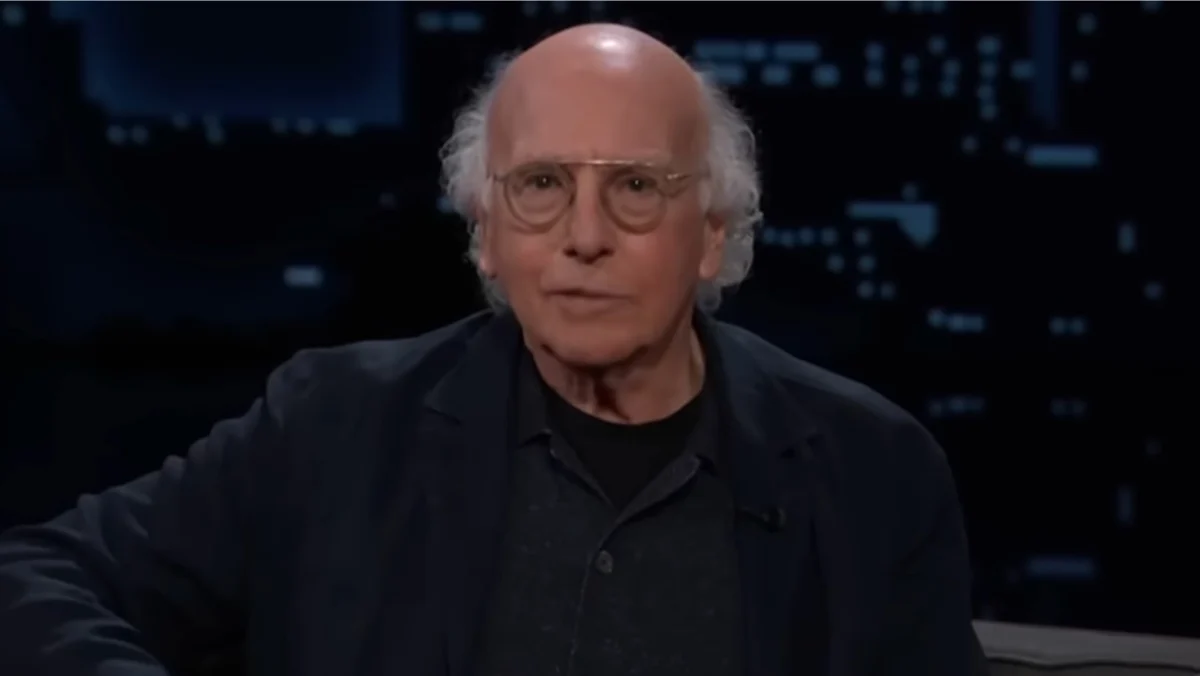
The incident did not come to light until Thursday night’s episode of Jimmy Kimmel Live!, where the host recounted his experience standing near David during the performance. According to Kimmel, the sight of the Curb Your Enthusiasm star standing motionless amidst a sea of swaying fans was too surreal to ignore.
Kimmel opened the segment by posing a rhetorical challenge to his audience: “I witnessed something at a Paul McCartney concert. Two months ago, the whole audience was singing ‘Hey Jude’ along with Paul McCartney—with the notable exception of one person. And who do you guess that person was?”
The subsequent dialogue revealed a comedic friction that could have been plucked directly from a script for Curb. David, never one to shy away from his own brand of social contrarianism, defended his silence with the trademark logic that has defined his career. When asked why he refused to participate in the most famous sing-along in pop music, David retorted, “You know, everybody’s going, they’re standing and they’re swaying… and it is so lame. Okay? You think I’m going to ‘na, na, na’? What kind of person do you think I am?”
The Philosophy of the “Na-Na-Na”: Examining Social Expectations
The core of the disagreement between Kimmel and David touches on the unwritten social contract of live performance. Kimmel argued from the perspective of the fan: McCartney, the architect of the song, explicitly invites the audience to participate. To refuse, in Kimmel’s view, is a rejection of a shared experience. “He wants this from us,” Kimmel argued. “We’ve given him nothing. He’s given us so much. Why wouldn’t you do a little ‘na, na, na’?”
David’s response, however, highlights the performative nature of audience participation. For David, the act of mass swaying and chanting is an inherently “lame” display of social conformity. He drew a sharp distinction between the performer and the participant: “He wrote the song. He’s allowed, that’s in the song: ‘na, na, na.’ But you don’t have to listen to him.”
This philosophical divide is perhaps the quintessential Larry David experience. It begs the question: is a concert a collaborative ritual or a passive viewing experience? If a legend like McCartney asks for a sing-along, is it a request or an order? David’s refusal to participate suggests that he views the audience’s behavior not as genuine enthusiasm, but as a performative reflex—a “sheep-like” adherence to a script he refuses to follow.
Supporting Data: The Celebrity Concert Phenomenon
The rise of the "intimate" concert experience for the ultra-elite has become a staple of Los Angeles nightlife. As ticket prices for major stadium tours reach record highs and the distance between the artist and the audience grows, artists of McCartney’s stature are increasingly returning to smaller, 1,000-to-2,000-capacity venues to reclaim the energy of their early days.
Data from the live music industry suggests that these intimate shows generate significantly higher levels of social media engagement. When celebrities attend these events, they are essentially “on display” as much as the performer. The expectation for celebrities in the crowd is to be visible, to be seen enjoying themselves, and to act as a bridge between the artist and the fans.
By refusing to sing, David effectively broke the fourth wall of celebrity behavior. He wasn’t there to perform as a “fan”; he was there as an observer, maintaining his own internal rhythm regardless of the social pressure surrounding him.
Official Responses and Cultural Implications
The segment on Jimmy Kimmel Live! has since gone viral, reigniting the debate over concert etiquette. On social media, fans are split. Some view David’s behavior as peak “Larry,” applauding his commitment to his own discomfort. Others, aligning with Kimmel, find it slightly churlish to stand motionless at a McCartney show, characterizing it as a missed opportunity to connect with a living legend.
Perhaps the most telling moment of the exchange came when Kimmel pointed out that David had not even paid for his tickets. “You didn’t even pay for those tickets, did you? You got those for free,” Kimmel quipped. David’s deadpan response—"You think I would pay for that?"—served as the final blow, cementing his position as the ultimate, unbothered curmudgeon.
This interaction serves as a meta-commentary on David’s career, which has always focused on the friction between individual impulses and societal expectations. Whether it’s an improperly placed "stop and chat" or the refusal to sing “Hey Jude,” David’s brand is built on his refusal to participate in rituals that he finds meaningless or forced.
The Pursuit of Unhappiness
The timing of this anecdote coincides with the promotion of David’s latest project, Life, Larry and the Pursuit of Unhappiness, which is set to premiere on HBO on June 26th. The title itself serves as a perfect bookend to the McCartney incident. If the “pursuit of happiness” is the American ideal—the communal singing, the swaying, the shared euphoria of a concert—then Larry David’s career has been a testament to the alternative: the pursuit of a very specific, very comfortable brand of unhappiness.
As the music world continues to evolve and live performances become increasingly digitized and standardized, David’s silent protest at the Fonda remains a refreshing, if slightly grumpy, reminder of the individual’s right to remain detached. While the rest of the world may be eager to chant “na-na-na,” Larry David will be standing in the back, thinking about why we’re all doing it in the first place. And perhaps, in a strange way, that is the most authentic tribute one can pay to the complexities of human existence.
 Asro
Asro
 Lina Irawan
 rifanmuazin
