

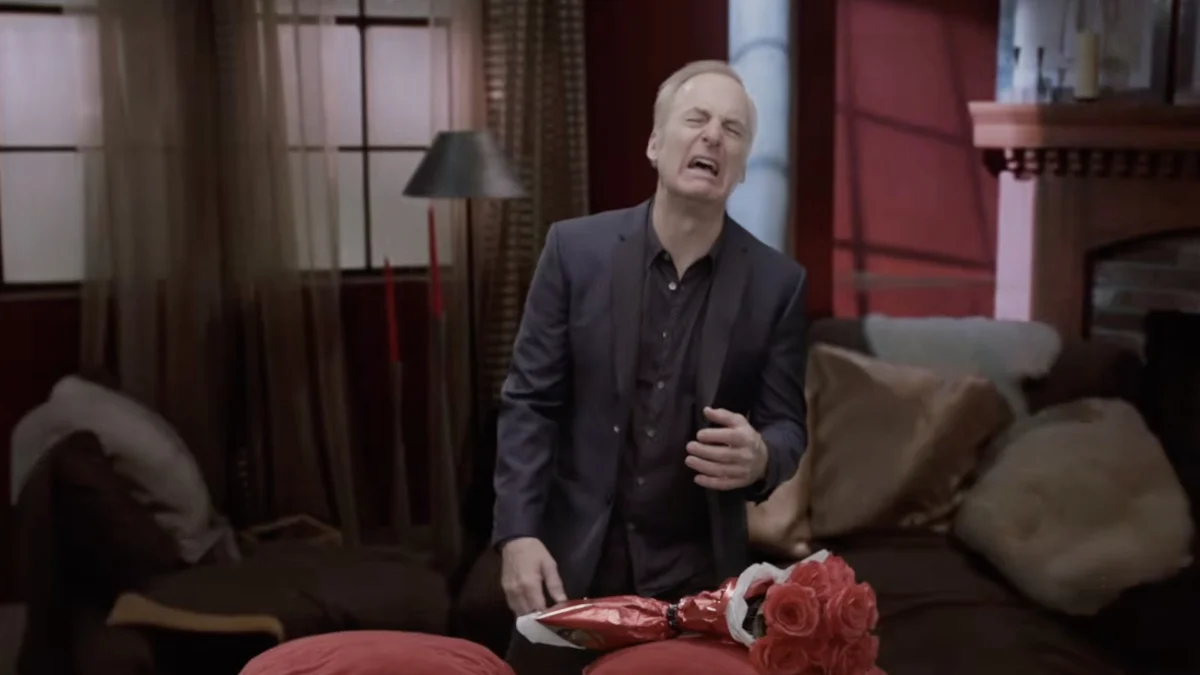
In the annals of cinema history, few films have achieved the level of bewildering, accidental immortality quite like Tommy Wiseau’s 2003 magnum opus, The Room. Often cited as the "Citizen Kane of bad movies," the original production became a cultural touchstone defined by its nonsensical plot, bizarre performances, and an enigmatic creator who remains a pop-culture mystery. Now, more than two decades later, the project has been revisited in a high-profile, charitable experiment. The Room Returns, a scene-for-scene remake starring the inimitable Bob Odenkirk, is finally making its Los Angeles debut.
After sold-out, curiosity-piquing screenings in New York and Chicago, the production is set to touch down at the historic Hollywood Forever Cemetery on June 26th. The event, facilitated by the all-volunteer charity Acting For a Cause, serves as more than just a novelty screening; it acts as a fundraiser for amfAR, The Foundation for AIDS Research, and the Blue Collaborative, an organization dedicated to supporting independent artists.
The Genesis of an Unlikely Remake
The rumors began in early 2023, sending shockwaves through online film communities. When it was confirmed that Bob Odenkirk—the Emmy-winning actor known for his razor-sharp wit and dramatic gravity in Better Call Saul—would be stepping into the shoes of Johnny, the role originally played by Wiseau, the internet was equal parts confused and electrified.
For years, fans of the original had speculated about the possibility of a remake, often dismissing it as a fever dream of the fandom. However, the project was indeed real. Produced by Brando Crawford and Jarad Schwartz, with horror maestro Mike Flanagan attached as executive producer, the film was designed as a creative exercise in "reimagining" the source material. By utilizing green-screen technology and a cast of high-caliber performers—including Bella Heathcote, Kate Siegel, and original The Room alum Greg Sestero—the team set out to see what would happen if a "bad" movie was treated with the rigor of a professional production.
Chronology of a Cult Classic
To understand the weight of this remake, one must revisit the original timeline of Wiseau’s production:
- 2003: The Room premieres in Los Angeles. Its lack of narrative cohesion and amateur filmmaking techniques lead to a quiet, disastrous reception.
- Mid-2000s: A cult following begins to form. Midnight screenings become a ritualistic experience, with fans throwing plastic spoons at the screen and shouting lines in unison.
- 2013: Greg Sestero, who played Mark in the original, publishes The Disaster Artist, a memoir detailing the chaotic, $6 million production process behind Wiseau’s vision.
- 2017: James Franco directs and stars in the film adaptation of The Disaster Artist, bringing the story of the original movie to the mainstream.
- 2023: Bob Odenkirk officially confirms his involvement in a remake of The Room. The announcement marks the transition from a niche cult interest to a legitimate industry project.
- 2026: Following a successful tour through New York and Chicago, The Room Returns arrives in Hollywood, closing the circle of this strange, decade-spanning experiment.
The Production Philosophy: Chaos as Art
The challenge inherent in remaking The Room is the risk of stripping away its unique, accidental charm. If you "fix" the movie, you destroy the very thing that made it famous. To circumvent this, director Brando Crawford opted for an unorthodox approach: zero rehearsals and a reliance on teleprompters.
"With no rehearsal and only teleprompters to guide them, the cast embraced the chaos with Shakespearean gravity," Crawford stated. "They transformed cinematic disaster into an unpredictable spectacle."
By demanding that actors like Odenkirk and Siegel perform lines that are inherently illogical with the utmost sincerity, the production created a tonal dissonance that is arguably more fascinating than the original. It is an exploration of the "actor’s craft"—proving that even the most nonsensical script can be imbued with a semblance of depth if the performer commits entirely to the moment.
Supporting Data and The Charitable Mission
The upcoming Los Angeles premiere is not merely a celebration of absurdity; it is a meticulously organized charitable event. Acting For a Cause, the organization behind the screening, has positioned the film as a vehicle for philanthropy. By hosting the screening at the iconic Hollywood Forever Cemetery—a location steeped in the history of the industry—the event bridges the gap between the low-brow reputation of The Room and the high-minded traditions of Hollywood.
Proceeds from ticket sales are directed toward two distinct causes:
- amfAR (The Foundation for AIDS Research): One of the world’s leading non-profit organizations dedicated to the support of AIDS research, HIV prevention, and treatment education.
- Blue Collaborative: A grassroots organization that provides resources, funding, and platforms for independent artists, ensuring that the "next generation" of filmmakers has the support that Wiseau largely lacked during his own production.
The Legacy of the "Johnny" Archetype
Bob Odenkirk’s involvement brings a layer of meta-commentary to the project. Having spent years portraying the morally gray Saul Goodman, Odenkirk is no stranger to characters who exist on the fringes of reality. His recent work, including a playful birthday message for the United States on the eve of its 250th anniversary, shows an actor who is increasingly interested in the intersection of performance and cultural history.
Playing Johnny—a character described as a "banker" with a mysterious past and an inexplicable accent—requires a specific kind of bravery. Odenkirk’s performance is not a parody; it is a re-interpretation. By treating the dialogue—which famously includes lines like "I did not hit her, it’s not true! It’s bullshit! I did not hit her! I did not. Oh, hi, Mark"—with the same intensity he brought to his award-winning dramatic roles, he highlights the inherent, bizarre humanity of Wiseau’s original vision.
Implications for the Future of Cult Cinema
The existence of The Room Returns raises significant questions about the nature of legacy and ownership in film. Can a bad movie be "remade" in a way that respects the original while simultaneously critiquing it?
Many industry analysts believe this project signifies a shift in how we consume cult media. In an era dominated by reboots and franchise expansions, The Room Returns acts as a "remix" culture milestone. It suggests that modern audiences are less interested in "good" movies and more interested in "interesting" movies—films that provide an interactive, communal experience.
Furthermore, by involving figures like Mike Flanagan, who has carved out a massive reputation in the horror and thriller space, the remake validates the project as a legitimate artistic pursuit. It challenges the binary of "good vs. bad" cinema, suggesting that the effort, passion, and community surrounding a production are just as important as the quality of the final product.
Conclusion: A Night in Hollywood
As the June 26th premiere approaches, the anticipation in Los Angeles is palpable. For those who grew up attending the midnight screenings of the 2003 original, this is an opportunity to see their favorite "disaster" treated with a blend of reverence and irony. For the uninitiated, it is an entry point into one of the most enduring rabbit holes in pop culture history.
Whether The Room Returns will eventually eclipse the original in the annals of cult cinema remains to be seen. However, one thing is certain: by bringing together a cast of this caliber for a charitable cause, the team behind the project has managed to turn a symbol of failure into a beacon of collaboration. It is a fitting, if slightly surreal, tribute to a movie that was never meant to be seen—and yet, through the power of collective obsession, refuses to go away.
Tickets for the Los Angeles premiere are currently available through TicketWeb. As the screen lights up at Hollywood Forever, the audience will likely find themselves doing what fans of The Room have done for twenty years: laughing, cheering, and asking, in the most genuine way possible, "How could this happen?" And for one night, at least, the answer will be perfectly clear.
 Pevita Pearce
 Asro
Asro
 Lina Irawan
