

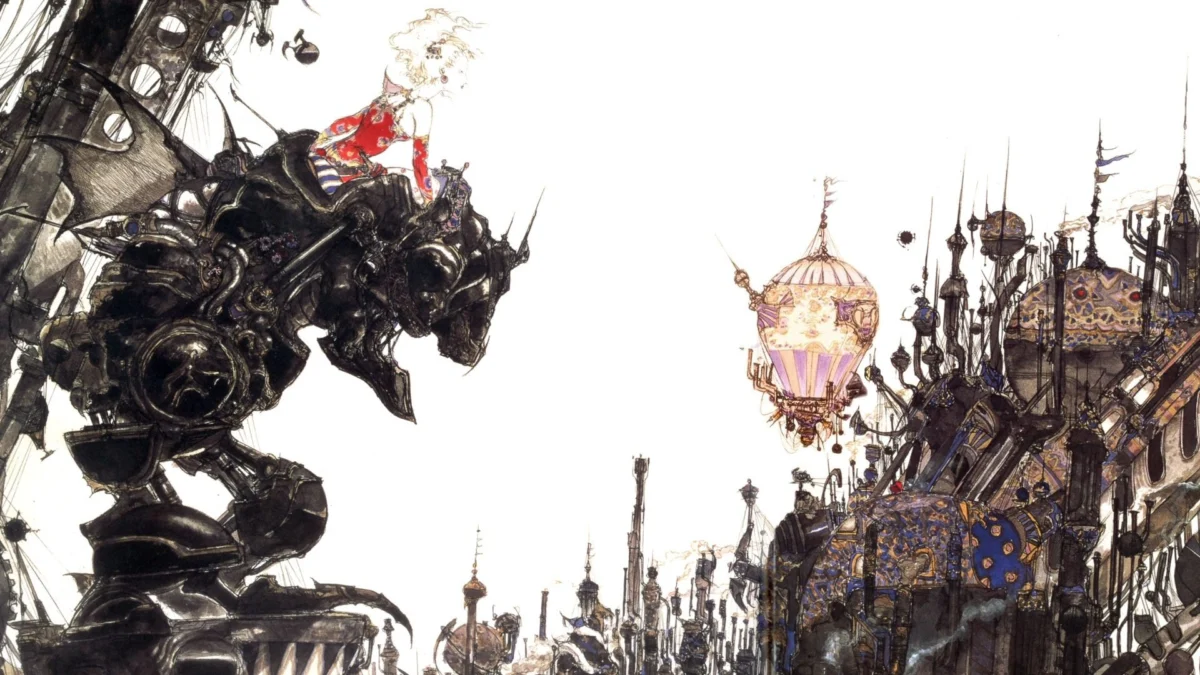
The world of Japanese animation is bracing for a momentous unveiling. Yoshitaka Amano, the legendary illustrator whose ethereal, dreamlike brushwork has defined the aesthetic identity of the Final Fantasy franchise for nearly four decades, is officially bringing his long-gestating project, Zan, to the screen. After years of speculation, reboots, and artistic evolution, the limited anime series has been confirmed for production, with a global reveal of its first trailer scheduled for July 3 at Anime Expo in Los Angeles.
For fans of Amano’s distinctive style—characterized by flowing lines, watercolor-like gradients, and hauntingly beautiful character designs—Zan represents more than just a new show; it is the culmination of a creative odyssey that has spanned over a decade.
The Core Concept: A Dark Fantasy Epic
At its heart, Zan is an adaptation of Amano’s 2013 art project, Deva Zan. The original artbook introduced a world of dark fantasy, blending mythology with a futuristic, surrealist edge. According to official descriptions provided by Yoshitaka Amano Inc., the series is described as a "dark fantasy epic that crosses time and space."
The narrative promises to lean heavily into the visual language that made Amano an icon. Viewers can expect a synthesis of original, hand-painted artwork seamlessly integrated with fluid animation. The series is built around themes of dynamic action, intense swordplay, and a roster of "visually striking" heroes that feel plucked directly from the pages of a high-fantasy grimoire. By merging the static, atmospheric beauty of Amano’s traditional art with the kinetic energy of modern animation, the production team aims to create a "premium animated work" capable of capturing the imagination of a worldwide audience.
A Chronology of Development: From Studio Devaloka to Present
The road to Zan has been far from linear. The project’s origins date back to 2010, a period during which Amano founded his own film production company, Studio Devaloka. At that time, the vision for Zan was markedly different: it was pitched as a 3D anime feature film.
However, the ambitious nature of the 3D project led to years of silence and industry rumors. As technology evolved and the appetite for traditional, auteur-driven animation shifted, the project underwent a significant metamorphosis. In 2022, the film was officially "rebooted" and re-envisioned as a limited series, a format that allows for a more expansive, serialized exploration of the Deva Zan universe. This pivot appears to have been the catalyst needed to move the project from the concept phase into active production.
The Architect of Dreams: Amano’s Legacy
To understand the weight of the Zan announcement, one must appreciate the sheer breadth of Yoshitaka Amano’s influence. While he is most colloquially known as the man behind the logo and character illustrations of the Final Fantasy series, his resume is a history lesson in Japanese pop culture.
Before his digital and watercolor mastery reached the gaming masses, Amano was a foundational figure in the anime industry. During the 1970s and 80s, he served as a character designer for legendary titles such as Science Ninja Team Gatchaman (known in the West as Battle of the Planets) and Casshan. His work on these shows helped establish the "heroic" aesthetic that defined a generation of Japanese action animation.
Perhaps most famously, Amano co-created the 1985 cult classic Angel’s Egg with director Mamoru Oshii. A haunting, almost silent film, Angel’s Egg is widely considered one of the most significant works of experimental animation in history. It remains a masterclass in visual storytelling, proving that Amano’s art does not merely decorate a narrative—it dictates the atmosphere, the emotional rhythm, and the metaphysical stakes. His work on Vampire Hunter D and Neil Gaiman’s Sandman: The Dream Hunters further cemented his status as an artist who transcends the boundaries of genre.
The Creative Powerhouse: Behind the Scenes
The production of Zan is not a solo effort. Recognizing the complexity of translating his unique, painterly aesthetic into motion, Amano has assembled a team of industry veterans who understand the gravity of the source material.

- Directing and Animation: The project will be steered by animation directors Masashi Ikeda (known for Inuyasha and Gundam Wing) and Toru Toshida (Armored Trooper VOTOMS, Gundam Seed). Their collective experience in balancing high-octane action with long-form storytelling will be vital to keeping the series grounded.
- Principal Animation: Moriyasu Taniguchi, whose credits include the gritty, kinetic Samurai Champloo and the sweeping epic Vinland Saga, has been tapped as the principal animator. His involvement suggests that the sword battles promised in the press release will be handled with high technical precision.
- Series Composition: Ryosuke Takahashi, a legend in his own right for his work on Armored Trooper VOTOMS and the psychological thriller The Fable, will handle the series composition. Joining him in the writing room is Yuya Takashima, known for his work on Mobile Suit Gundam: The Witch from Mercury.
- Art Direction: The visual foundation of the series will be overseen by Kunio Ogawa (Time Bokan) and Minoru Nishida (Kill Bill, Doraemon), ensuring that every frame remains faithful to the, at times, surrealist color palettes and architectural sensibilities of Amano’s original paintings.
Implications for the Anime Industry
The announcement of Zan arrives at a time when the anime industry is increasingly looking toward auteur-driven projects. While the medium is dominated by long-running shonen franchises, there is a burgeoning market for "prestige" limited series—shows that are shorter, more visually experimental, and deeply tied to the vision of a specific creator.
By bringing Zan to life, Yoshitaka Amano is effectively challenging the current trend of hyper-realistic digital animation. Instead, the project seems poised to push the envelope of "art-forward" storytelling. If successful, Zan could pave the way for other legendary illustrators and fine artists to transition into the director’s chair, potentially bridging the gap between the art gallery and the streaming queue.
Furthermore, the involvement of Yoshitaka Amano Inc. as the primary developer highlights a shift toward creator-led production. By maintaining tighter control over the intellectual property, Amano ensures that the adaptation process remains a faithful extension of his creative spirit rather than a commodified version of his designs.
Looking Ahead: The July 3 Reveal
As the global anime community turns its eyes toward Los Angeles for Anime Expo, the pressure on Zan is significant. The teaser image released alongside the announcement offers a glimpse into a world of sharp, angular silhouettes and ethereal, glowing motifs—a clear evolution of the aesthetic seen in his earlier Deva Zan concepts.
Whether the series will successfully capture the "hallucinatory" beauty that defined Angel’s Egg or deliver the polished, high-budget spectacle of modern anime remains to be seen. However, one thing is certain: Yoshitaka Amano is not merely returning to the industry—he is attempting to define its future, one frame at a time. For those who have grown up with his art on the covers of their favorite games and novels, Zan is the realization of a dream decades in the making. The wait to see his vision in motion is almost over.
 Basiran
 Suro Senen
