

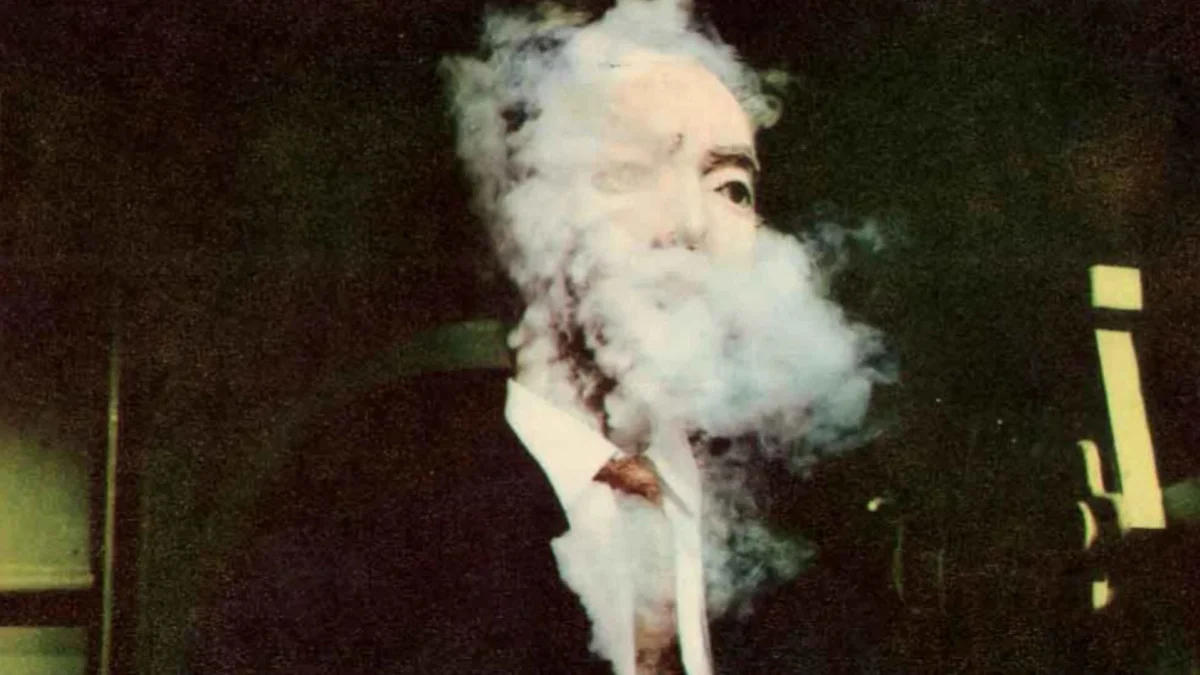
On July 2, 2026, Netflix will pull back the curtain on one of its most ambitious international productions to date. Simply titled Human Vapor, this eight-episode limited series represents a monumental milestone in global entertainment: the first official collaboration between the streaming giant and Toho, the legendary Japanese studio that birthed Godzilla. While the series is branded as a Netflix Original, it is deeply rooted in the DNA of 1960s Japanese tokusatsu cinema. By reimagining a "forgotten" cult classic for a modern audience, Netflix is attempting to bridge the gap between mid-century experimental sci-fi and the high-octane, conspiracy-driven thrillers that dominate today’s streaming charts.
A Legacy Reborn: The Genesis of ‘Human Vapor’
To understand the significance of the upcoming Netflix series, one must look back to the shifting landscape of Japanese film in the 1960s. At the time, Toho was the undisputed titan of the monster movie genre, thanks to the global success of Ishiro Honda’s Godzilla (1954). However, the studio was also experimenting with more grounded, albeit strange, science-fiction narratives.
The Human Vapor (1960), directed by Honda and featuring special effects by Eiji Tsuburaya, served as the third entry in Toho’s "Transforming Human Series." Unlike the giant monsters stomping through Tokyo, the "Human" series focused on physical mutations that were more intimate and, often, more tragic. The 1960 original followed a librarian who, after surviving a disastrous experiment, gains the ability to dissipate his physical form into a gaseous state. Rather than becoming a world-ending threat, he uses his powers to commit bank robberies to fund the career of a cabaret dancer he loves.
It was a poignant, noir-drenched exploration of loneliness and desperation. While it did not reach the gargantuan heights of Godzilla, it gained a dedicated cult following in the West, eventually becoming a staple for cinephiles and enthusiasts of physical media collectors, such as those who prize releases from The Criterion Collection.
Chronology: From 1960 Noir to 2026 Streaming Event
The journey from a 1960s B-movie experiment to a 2026 flagship series was neither linear nor simple.
- 1960: Toho releases The Human Vapor. Directed by Ishiro Honda, the film explores the dark side of scientific advancement, positioning itself as a crime-thriller rather than a traditional monster flick.
- 1960s–1980s: The film gains a slow-burn reputation among international audiences, particularly in Europe and the United States, where it is celebrated for its inventive practical effects and tragic protagonist.
- 2020–2024: As Netflix expands its international footprint, it seeks stronger ties with legacy studios. Discussions between Netflix and Toho intensify, focusing on IP that can be modernized without losing its distinct Japanese identity.
- 2025: The project is officially announced. The production team aims to move away from the "doomed romance" trope of the original, opting instead for a sprawling, multi-perspective conspiracy narrative.
- July 1, 2026: Prime Video loses the streaming rights to the 1960 original, marking a symbolic transition as the property shifts exclusively into the orbit of the new Netflix production.
- July 2, 2026: The eight-episode Human Vapor series premieres worldwide on Netflix.
The Modern Pivot: A Conspiracy Thriller
While the 1960 original was a character study wrapped in a heist movie, the 2026 Netflix series is a beast of a different nature. Showrunners have pivoted toward the high-stakes, hyper-connected reality of modern Tokyo.
The central premise remains: a mysterious individual possesses the ability to transform into mist, allowing him to pass through walls, infiltrate high-security facilities, and evade capture. However, the stakes have been elevated. Instead of a lone librarian seeking to fund a dancer’s dreams, the "Human Vapor" is now a catalyst for a nationwide panic.

The plot weaves together the perspectives of investigative journalists, desperate politicians, police task forces, and even modern-day livestreamers looking for the next viral scoop. By removing the singular focus on the protagonist’s internal struggle, the series creates a panoramic view of societal collapse, surveillance, and the ethics of human experimentation.
Creative Powerhouses: The Team Behind the Vapor
Netflix has spared no expense in assembling a "dream team" of Asian genre talent to ensure the series hits with the same force as Train to Busan or Hellbound.
The writing duties are headed by Yeon Sang-ho, a master of social commentary and genre-bending suspense. His involvement suggests that while the series will feature high-concept sci-fi, it will not shy away from sharp criticisms of power structures and media ethics. Overseeing the visual tone is director Shinzo Katayama (Gannibal), known for his ability to craft dread and atmosphere.
The cast is equally impressive, featuring some of Japan’s most recognizable stars:
- Shun Oguri (Godzilla vs. Kong)
- Yu Aoi (Hana and Alice)
- Suzu Hirose
- Kento Hayashi
- Yutaka Takenouchi
- Uta Uchida (in the titular role)
Furthermore, the visual effects are being handled by Shirogumi, the studio responsible for the Academy Award-winning work in Godzilla Minus One. This ensures that the transition from human to mist—a visual effect that was groundbreaking in 1960—will be rendered with the cutting-edge digital wizardry expected of a top-tier 2026 production.
Official Responses and Industry Implications
The partnership between Netflix and Toho is being viewed by analysts as a "watershed moment" for the industry. For decades, Toho was famously protective of its library, particularly the Godzilla franchise. This collaboration signals a new era of openness.
"Toho is not just licensing a name," notes industry analyst Marcus Thorne. "They are actively participating in the expansion of their history. By choosing The Human Vapor—a niche but beloved title—they are signaling that they trust Netflix to handle their cultural assets with a degree of sophistication that transcends a simple remake."

Netflix’s strategy is clear: by investing in "prestige international genre," they can capture global markets that are increasingly tired of the same domestic superhero narratives. If Human Vapor succeeds, it is likely to open the door for more deep-cut adaptations from the Toho archives, potentially giving other forgotten 1960s gems a second life in the streaming era.
Implications for Sci-Fi and Horror
The success of this series could fundamentally shift how studios view their "back catalogs." For years, the industry focused on remaking "blockbuster" hits. Human Vapor proves that there is significant value in the "cult middle class"—movies that were never massive hits but have enough thematic depth to support a modern, serialized expansion.
Furthermore, the integration of real-world elements—such as the role of social media and the rapid spread of misinformation—into a sci-fi premise demonstrates how these old stories can be used as a mirror for modern anxieties. The original Human Vapor was about the fear of the invisible, the uncontrollable, and the scientific unknown. The new series updates these fears for an age where everything is potentially "seen" by cameras, yet nothing is truly understood.
Conclusion: A Must-Watch for Genre Enthusiasts
Whether you are a devotee of the original tokusatsu era or a fan of gritty, modern thrillers, the 2026 Human Vapor series is positioned to be a cultural event. By marrying the practical ingenuity of the past with the narrative complexity of the present, Netflix is attempting to create something that feels both nostalgic and refreshingly new.
As the release date approaches, the buzz surrounding the show continues to grow. It is not merely a remake; it is a resurrection of a classic vision, updated to haunt a new generation. When the mist clears on July 2, we will finally see if this modern iteration of the Human Vapor can cast a shadow as long and enduring as the monsters that made Toho a household name.
 Basiran
 Suro Senen
