

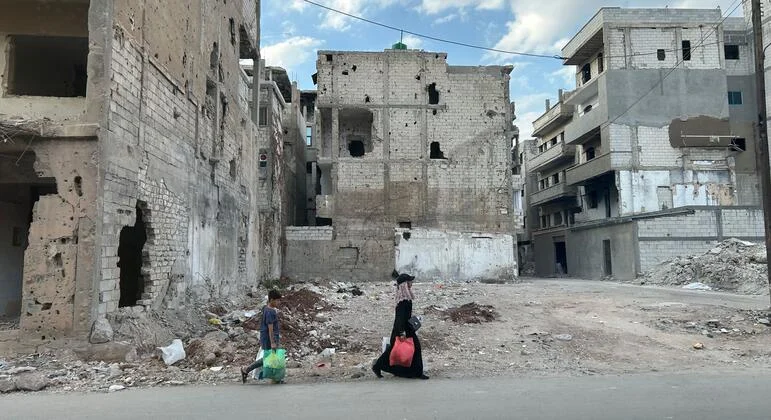
The United Nations Security Council recently convened to deliberate on the shifting landscape of the Syrian crisis, where the long-standing paradigm of humanitarian emergency is slowly yielding to a complex, volatile phase of national recovery. While the international community observes signs of a transition, UN officials have emphasized that the window for sustainable peace remains narrow, defined by a precarious balance between newfound opportunities and entrenched systemic fragility.
Main Facts: The Turning Point for Syria
The current situation in Syria is characterized by a "genuine opportunity" to transition from emergency relief to long-term recovery, according to Indrika Ratwatte, Assistant Secretary-General for humanitarian affairs. Speaking on behalf of UN relief chief Tom Fletcher, Mr. Ratwatte underscored that while humanitarian aid remains vital, the country’s trajectory must now shift toward investment, political will, and the rebuilding of civilian lives.
However, the reality on the ground is stark. Millions of Syrians remain displaced, and while there has been a notable movement of returnees—approximately 1.6 million refugees and two million internally displaced persons (IDPs) since December 2024—the conditions for these returns remain uneven. The UN’s vision, titled No Camps, No Tents, serves as the guiding framework for this new era, aiming to replace temporary displacement infrastructure with permanent, dignified solutions rooted in sustainable livelihoods and robust protection mechanisms.
Chronology of Recent Developments
The path toward this current transitional phase has been marked by significant milestones and persistent obstacles over the past eighteen months:
- July 2025: Deadly clashes in the Sweida province destabilized local governance, resulting in deep-seated distrust between Damascus and local factions. The implementation of the 2025 Roadmap for confidence-building has since stalled.
- May 2026: Syrian government officials and UN partners held a series of strategic meetings to map out the "No Camps, No Tents" vision, aligning humanitarian aid with the state’s national recovery priorities.
- June 14, 2026: A security headquarters in Raqqa was targeted in a lethal attack by Da’esh-linked elements, highlighting the persistent threat of extremist resurgence in governance gaps.
- Late June 2026: The UN Security Council briefing served as a high-level assessment of the ongoing political transition, eight months after the nation’s main elections. The People’s Assembly remains in a state of suspension, pending the final presidential appointments that will determine the legislative body’s full composition.
Supporting Data: The Funding Gap and Human Impact
The ambition of the UN’s humanitarian mission is currently throttled by a severe lack of financial support. Of the $2.92 billion required for the 2026 humanitarian appeal, only 20 percent has been funded. This shortfall persists despite the fact that UN aid operations successfully reached three million people across 3,000 communities in the first quarter of 2026 alone.
The demographics of displacement remain staggering. The return of 3.6 million people (combined refugees and IDPs) since late 2024 represents a massive demographic shift, yet the infrastructure to support these returnees—including healthcare, education, and electricity—is largely devastated. Economic indicators, particularly inflation, remain a volatile factor. While the Syrian government has implemented measures to attract private-sector investment and reform its financial systems, the burden of supporting a transitioning economy in a post-conflict environment remains immense.
Counter-terrorism data also points to the intensity of the security environment: Syrian authorities have reported over 230 arrests in the last three months, including the dismantling of seven Da’esh-linked cells, indicating that while the state is exerting control, the extremist threat remains pervasive and highly mobile.
Official Responses and Strategic Requests
The UN’s stance, presented by Mr. Ratwatte and Deputy Special Envoy Claudio Cordone, is one of "ambition anchored in realism." Mr. Ratwatte issued three formal requests to the Security Council:
- Prioritization of Development Financing: Immediate investment is needed to move beyond emergency food and medical aid toward sustainable economic stability.
- Political Empowerment of the Legislature: Mr. Cordone stressed the urgency of constituting the People’s Assembly. The transition cannot proceed without a functioning parliament capable of debating new laws and reviewing executive actions.
- Adherence to International Agreements: The UN has explicitly called on Israel to cease violations of the 1974 Disengagement of Forces Agreement. These violations—which include military incursions in southern Syria, the detention of civilians, and the disruption of agricultural access—are viewed by the UN as a direct threat to Syria’s sovereignty and the stability of the region.
The Syrian government, for its part, has signaled a willingness to engage in security arrangements and has emphasized its policy of non-interference in Lebanon, bolstered by efforts to curb cross-border smuggling of weaponry.
Implications for the Future: Opportunity vs. Fragility
The implications of the current status quo are profound for both Syria and the wider Middle East.
The Political Transition
The delay in forming the People’s Assembly is a critical bottleneck. Without this body, the "transitional parliament" cannot fulfill its role as a platform for diverse voices or as a check on executive power. The necessity of including women and civil society actors in this process is no longer just a democratic ideal; it is a functional requirement for social cohesion.
Security and Extremism
The resurgence of Da’esh, even in areas outside their traditional strongholds, serves as a grim reminder that security gains are fragile. The ability of extremist networks to exploit local grievances means that military solutions alone will fail. Only by addressing the "governance gaps" and providing tangible services to local communities can the state hope to undermine the recruitment narratives of extremist groups.
Regional Stability
Syria’s strategic position makes it a pivot point for regional security. The potential for the recent U.S.-Iran Memorandum of Understanding to influence the ground reality in Syria is a subject of guarded optimism within the UN. If the agreement leads to a de-escalation of proxy tensions, Syria may finally be able to focus its limited resources on internal economic reform rather than managing regional security externalities.
The Human Cost of "Waiting"
Perhaps the most significant implication is the urgency of the "Return" process. If returnees are not provided with the protection and services promised under the No Camps, No Tents vision, the risk of secondary displacement is high. The international community is at a juncture where the "wait-and-see" approach to development funding may inadvertently contribute to a new cycle of poverty and extremism.
In conclusion, as Claudio Cordone noted, "opportunity and fragility exist side-by-side." The success of Syria’s recovery will not be determined solely by the absence of war, but by the presence of a robust, inclusive political framework and the willingness of the global community to shift from the role of an emergency donor to that of a long-term development partner. The transition from survival to recovery is a marathon, not a sprint, and the coming months will prove decisive in determining whether Syria can cement these gains or if the progress made will once again be undone by the persistent shadows of its recent past.
 Lina Hope
 Asro
Asro
 Layla Zulfa
