

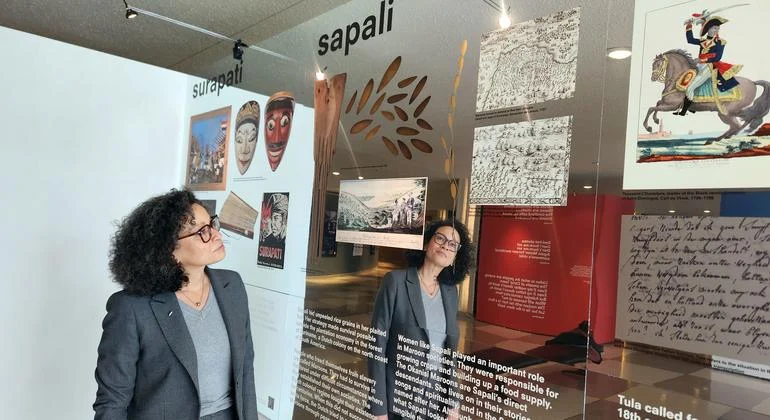
In an era defined by global connectivity and the rapid digital dissemination of information, the power of cultural expression to influence human behavior has never been more profound. On Juneteenth—a date marking the emancipation of enslaved people in the United States—the United Nations convened a pivotal virtual discussion titled Art Remembers: Culture as Witness and Prevention. The event brought together historians, survivors, artists, and policymakers to interrogate a haunting paradox: how the same cultural tools used to incite genocide and normalize hatred can be repurposed as instruments of healing, resistance, and historical accountability.
The Early Warning: Hate Speech as a Prelude to Horror
The discussion was inaugurated by Chaloka Beyani, the UN Special Adviser on the Prevention of Genocide. Beyani set a somber but necessary tone, identifying hate speech not merely as offensive rhetoric, but as a clinical "early warning sign" of impending atrocity crimes.
"Rhetoric precedes reality," Beyani noted, emphasizing that the dehumanization of "the other" is the foundational step in the machinery of war crimes, crimes against humanity, and genocide. According to the UN’s framework, once a population is systematically stripped of its dignity through cultural narratives, the physical act of violence becomes easier for perpetrators to justify. Consequently, the UN’s programming for the International Day for Countering Hate Speech underscores a critical mandate: we must treat the shaping of public narratives as a matter of global security and human rights.
A Chronology of Trauma and Memory
To understand the weight of the discussion, one must look at the specific historical scars the participants addressed. The panel drew from four distinct, yet interconnected, chapters of human tragedy:
- 1700s–1865 (Transatlantic Slave Trade): The panel highlighted the brutal history of chattel slavery, recognizing Juneteenth as a day of liberation that remains inextricably linked to the ongoing struggle for racial justice.
- 1940–1945 (The Holocaust): The systemic extermination of six million Jews and millions of others under Nazi Germany remains a benchmark for the industrialization of hate.
- 1994 (Genocide against the Tutsi in Rwanda): A 100-day slaughter that demonstrated how effectively radio and popular culture could be weaponized to turn neighbors against neighbors.
- 1995 (Genocide in Srebrenica): The massacre of over 8,000 Bosniak men and boys, which continues to challenge the international community regarding the failure to protect vulnerable populations.
Reframing History: The Role of Cultural Institutions
Valika Smeulders, Head of History at the Rijksmuseum in Amsterdam, provided a poignant look at how cultural institutions—long accused of upholding colonial narratives—are now pivoting to confront their own legacies.
Smeulders pointed to the Rijksmuseum’s landmark exhibition, Slavery: Ten True Stories of Dutch Colonial Slavery. By shifting the focus from imperial glory to the individual agency of the enslaved—such as the women who hid rice in their hair as a defiant act of survival—the museum began to dismantle the "us vs. them" narrative that has historically separated European history from the history of those they enslaved.
"It is one single history that forms the crucible for our societies of today," Smeulders argued. By integrating these stories, institutions force the public to recognize that the history of colonial violence is not a peripheral concern; it is the central architecture upon which modern Dutch—and global—society is built.
Music as Resistance: The Secret Weapon
For Israeli clarinetist Nur Ben Shalom, music is far more than an aesthetic experience; it is an act of defiance. As a co-creator of Lebensmelodien (Melodies of Life), Ben Shalom performs works written by composers who were murdered during the Holocaust.
"Art is not neutral," he asserted. His work is fueled by the legacy of his great-aunt, Salomea Ochs Luft, who left behind letters imploring her family to resist the erasure of their culture. Ben Shalom’s performances, often held at sites of trauma like the Auschwitz-Birkenau death camp, serve to reclaim the humanity of the victims. "Music is a witness for the extermination of the Jewish people. When we perform these melodies, we also fight," he noted. By bypassing the logical, defensive mind and striking directly at the heart, music serves as a "secret weapon" against the cold, clinical nature of genocidal propaganda.
The Weaponization of Culture: The "Radio Machete"
While art can heal, it is also capable of horrific destruction. Rwandan actor and playwright Diogène "Atome" Ntarindwa provided a harrowing analysis of how culture was weaponized in his home country. He described the role of RTLM—Radio Télévision Libre des Mille Collines, or "Radio Machete"—which used jokes, music, and popular entertainment to socialize the Rwandan public into accepting the extermination of the Tutsi.
Ntarindwa’s play, Hate Speech, is a deliberate attempt to dissect this mechanism. By portraying a perpetrator on stage, Ntarindwa forces the audience to confront how "entertainment" can be used to erode the conscience. His work serves as a reminder that the transition from a peaceful society to a genocidal one is often paved with the normalization of hate under the guise of casual discourse.
Supporting Data: Rituals of Healing
Art does not only expose the past; it creates the infrastructure for future reconciliation. Bosnian American artist Aida Šehović’s project, ŠTO TE NEMA, serves as a powerful case study. The installation consists of thousands of traditional porcelain coffee cups, collected from families of survivors of the Srebrenica genocide.
In Bosnian culture, coffee is a communal, daily ritual. By placing these cups in public spaces, Šehović transforms private, lingering grief into a public, civic act of remembrance. The ritual serves as a bridge: it makes the genocide "real" to those who were not there, while providing survivors with a space to mourn collectively. This transformation of memory from a solitary burden to a shared responsibility is the ultimate counter-measure to the denial that often follows mass atrocities.
Official Responses and Strategic Implications
The UN’s Beyond the Long Shadow series, which hosted this discussion, highlights a shifting strategic priority for the organization. There is a growing consensus among diplomats and human rights experts that "hard" security measures—sanctions, peacekeeping missions, and treaties—are insufficient if the "soft" power of culture is left in the hands of extremists.
The implications for policy are clear:
- Cultural Literacy as Defense: States must invest in educational systems that highlight the histories of marginalized groups to prevent the "othering" that precedes violence.
- Digital Responsibility: Given the role of media in the Rwandan genocide, there is an urgent need for international oversight of digital platforms that host inflammatory content.
- Institutional Transparency: Museums and cultural archives must continue to decolonize their collections, ensuring that their narratives reflect the truth of historical suffering rather than the prestige of past empires.
Conclusion: The Responsibility of the Witness
The event concluded with a powerful consensus: the act of remembering is a moral imperative. As Chaloka Beyani noted, the prevention of genocide is not merely a task for politicians and soldiers, but for artists, historians, and citizens.
When culture is used as a witness, it prevents the erasure of history. When it is used for prevention, it forces society to look into the mirror and recognize the early symptoms of hatred before they manifest as violence. On this Juneteenth, the United Nations sent a clear message to the world: history is not just something that happened; it is something we curate every day. Whether that curation leads to cycles of violence or the building of a more empathetic future depends entirely on our collective willingness to use art as both a mirror and a shield.
 Lina Hope
 Asro
Asro
 Layla Zulfa
