

Introduction: A Silent Emergency
The promise of education as a fundamental human right is currently facing its most severe stress test since the mid-20th century. A landmark report, Breaking Barriers: Understanding Educational Exclusion in Crises, published by Education Cannot Wait (ECW)—the United Nations’ global fund for education in emergencies—has sounded a deafening alarm: the global learning landscape is fracturing.
The data suggests that we are witnessing the erosion of a generation’s potential. With 93 million children currently entirely out of school due to conflict, climate disasters, and forced displacement, the global community is confronting an emergency that transcends borders and threatens to destabilize entire regions for decades to come. This article explores the depths of this crisis, the systemic barriers involved, and the urgent imperative for a shift in international policy.
The Core Facts: Quantifying the Educational Deficit
The ECW report provides a granular look at a crisis that is often obscured by aggregate global statistics. The reality is that educational need has become hyper-concentrated in the world’s most volatile environments.
The Concentration of Vulnerability
The research identifies 20 countries that represent the highest-severity crisis contexts on the planet. Within these regions, 182 million children are struggling to access any form of stable schooling. Of that number, 74 million are completely out of school—a staggering figure that accounts for nearly 80 percent of all out-of-school children living in crisis-affected areas globally.
Beyond Enrollment: The Quality Gap
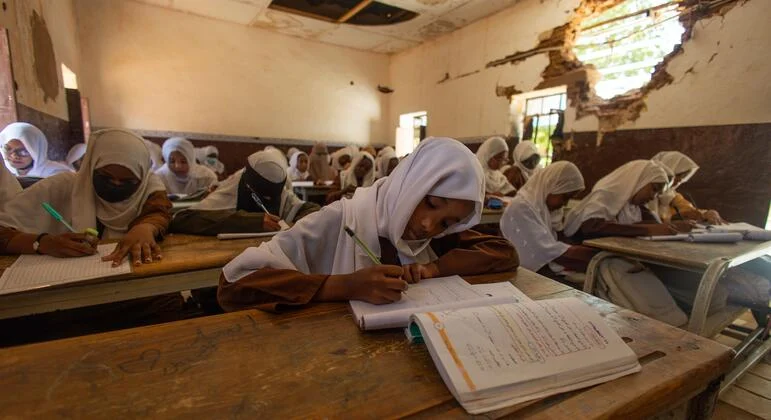
Perhaps the most harrowing finding is that physical enrollment no longer acts as a proxy for learning. Millions of children who manage to secure a seat in a classroom are effectively "invisible" learners. They are present in body but absent in cognitive progress. In many of these high-severity zones, the environmental conditions—ranging from overcrowded makeshift shelters to active conflict zones—undermine the very possibility of pedagogical progress. When a school lacks safe infrastructure, trained teachers, and basic learning materials, the classroom ceases to be an engine of opportunity and becomes a mere holding pen, fueling a high rate of attrition that eventually forces students to drop out entirely.
Chronology of a Crisis: From Stability to Exclusion
To understand how we arrived at this juncture, one must look at the convergence of three primary catalysts: conflict, climate change, and systemic economic instability.
The Pre-2020 Context
Before the recent escalation, the global community had made significant, albeit uneven, strides in universal primary education. However, the gains were fragile. Countries already experiencing "protracted crises"—nations locked in cycles of political instability—had begun to see their educational infrastructure decay.
The Pandemic Multiplier (2020–2022)
The global COVID-19 pandemic acted as an accelerant. For children in stable, high-income nations, the shift to digital learning was a disruption; for children in crisis zones, it was a death knell for their education. The lack of digital infrastructure meant that when school doors closed, learning stopped entirely for years, not months.
The Current Era: The "Perfect Storm" (2023–2026)
Today, we are seeing the long-term impacts of that disruption. The current landscape is defined by the intersection of climate-induced migration and renewed geopolitical conflict. In regions such as the Sahel and the Horn of Africa, families are fleeing drought-stricken lands only to land in refugee camps where education systems are already at their breaking point. The "chronology" of these children’s lives is now defined by cycles of displacement, where a child may attend three different schools in three different countries by the age of ten, losing foundational skills with every move.
Supporting Data: The Anatomy of Learning Loss
The ECW study utilizes empirical evidence to demonstrate that exclusion is a multi-layered problem, not merely a lack of school buildings.
The Foundational Literacy Crisis
In some of the most affected regions, the data shows that less than one in ten children demonstrates basic reading proficiency by the early grades. This is not a temporary setback; it is a permanent hurdle. When a child fails to grasp foundational literacy early on, they cannot engage with the curriculum of higher grades. The "learning gap" widens exponentially over time. By Grade 6, the disparity between conflict-affected nations and others becomes stark:
- Conflict-affected countries: 30% reading proficiency.
- Socioeconomically distressed countries: 47% reading proficiency.
- Natural disaster-affected countries: 63% reading proficiency.
The Burden of Displacement
Displaced children—those forced to flee their homes—suffer the most significant educational regression. Analysis from the Democratic Republic of the Congo, Somalia, Burkina Faso, Mali, and the Central African Republic indicates that these children consistently face:
- Lower promotion rates: High failure rates lead to repeat years.
- Slower progression: The "over-age" phenomenon, where children are significantly older than their peers for their grade level, increases the social stigma and the likelihood of dropping out to seek labor.
- Gender-based disparity: Girls in conflict zones face a "triple threat": gender-based violence, the pressure of early marriage, and the cultural tendency to prioritize the education of boys when resources are scarce.
Official Responses and Strategic Shifts
The international community, led by organizations like Education Cannot Wait, is recalibrating its approach to meet these challenges. The response is shifting from "emergency aid" (short-term) to "resilience building" (long-term).
The Resilience Narrative
Contrary to the belief that displaced families do not value education, the report finds that families demonstrate immense resilience. The primary reason for school withdrawal is not lack of interest, but systemic necessity. Nearly 80 percent of withdrawals are driven by direct financial barriers or conflict-related school closures. Families are forced to choose between immediate survival (food and shelter) and the long-term investment of schooling.
The Call to Action
Maysa Jalbout, Director of Education Cannot Wait, has been a vocal proponent of treating education as an "insurance policy" for global stability. In her official statements accompanying the report, she argued that investing in education during a crisis is the most effective way to prevent the loss of a generation to extremism, poverty, and state fragility.
"Support for education in crises is the insurance policy families, governments, and donors need to protect their long-term investments in education and economic opportunity," Jalbout stated. She warned that the current combination of climate change and conflict is effectively "reversing years of progress."
ECW’s Operational Goals
Education Cannot Wait has positioned itself as the primary vehicle for this change. Having reached over 14 million children since its inception, the fund has set a target of reaching an additional 10 million by 2030. This strategy involves:
- Multi-year funding: Moving away from short-term emergency grants toward sustained, multi-year commitments that allow for better infrastructure and teacher retention.
- Inclusive programming: Specifically targeting children with disabilities, refugees, and adolescent girls, who are statistically the most likely to be left behind.
- Infrastructure resilience: Building "climate-smart" schools that can withstand environmental shocks and serve as community hubs for displaced populations.
Implications: The High Cost of Inaction
The implications of this crisis are profound and move well beyond the classroom. When 93 million children are excluded from education, the social contract is fundamentally broken.
Economic Consequences
The World Bank has frequently noted that the "cost of inaction" in education is vastly higher than the cost of investment. A generation without foundational skills will be unable to participate in the modern economy, leading to a massive loss in global GDP and an increased reliance on international aid.
Security and Geopolitics
Educational exclusion is a known driver of radicalization and social unrest. When young people see no pathway to economic independence or social mobility, they are more susceptible to recruitment by extremist groups. The "lost generation" described in the ECW report is a ticking time bomb for global security.
The Moral Mandate
Ultimately, the findings of the Breaking Barriers report present a moral challenge to the global community. If the international community continues to treat education as a "luxury" to be addressed only once peace or stability is achieved, we ensure that stability remains permanently out of reach.
Education must be prioritized as a first-line response in every humanitarian intervention. As the report concludes, the barriers to education are not insurmountable, but they require a level of political will that has yet to be fully realized. We are currently at a crossroads: we can either invest in the resilience of these children, or we can bear the generational cost of a world left in the dark.
The data provided by Education Cannot Wait serves as a stark reminder that time is not on our side. Every day that a child is out of school is a day of lost potential that cannot be reclaimed. The challenge for the coming decade is not just to provide schooling, but to provide a standard of learning that is robust enough to survive the crises of the modern age.
 Siti Muinah
 Lina Hope
 Asro
Asro
