

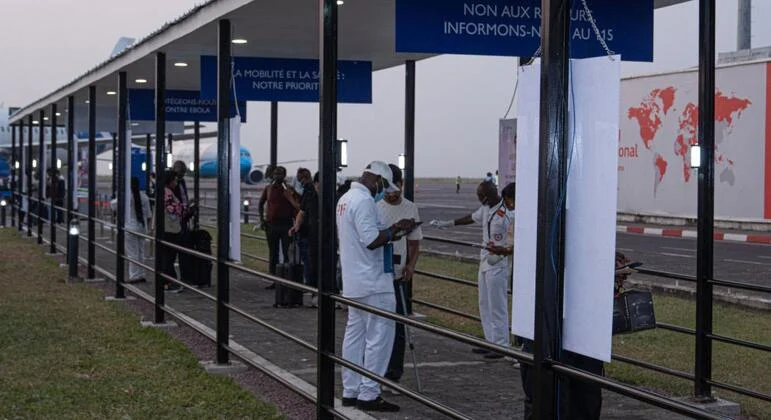
The Democratic Republic of the Congo (DRC) is currently grappling with a devastating Ebola outbreak that has set grim historical precedents. According to the latest data from the World Health Organization (WHO), the current surge—driven by the Bundibugyo species of the virus—has achieved the highest number of confirmed cases ever recorded in the inaugural month of an Ebola epidemic in Africa. As humanitarians struggle to contain the contagion amidst persistent insecurity and geographic hurdles, the international community is being urged to bridge a significant funding shortfall to prevent the virus from spiraling further out of control.
The Core Facts: An Unprecedented Velocity of Transmission
The severity of the current outbreak, which was officially declared on May 15, is defined not just by the total number of infections, but by the alarming speed at which the virus has spread through vulnerable communities. Dr. Abdirahman Mahamud, Director of Health Emergency Alert and Response Operations at the WHO, recently returned from a month-long mission in the DRC, where he witnessed the harrowing reality on the ground.
As of Monday, the official tally stands at 1,048 confirmed cases, with a tragic death toll of 267. The statistical trajectory of this outbreak is vastly different from previous health emergencies in the region. Dr. Mahamud noted that it took only 37 days for the death toll to reach 250. To put this in perspective, the 2014–2016 West Africa epidemic—the largest in history—took 78 days to reach the same threshold. Even more striking is the comparison to the 2018–2019 DRC outbreak, which required 130 days to record 250 deaths.
This accelerated transmission rate has overwhelmed local health systems, forcing international agencies to pivot from traditional containment strategies toward a more aggressive, decentralized response model.
Chronology and Comparative Data: Why This Outbreak is Different
The Bundibugyo strain of the Ebola virus, while historically known, has proven particularly difficult to manage in the current socio-political climate of the DRC. The following timeline and comparative metrics highlight why global health experts are increasingly concerned:
A Rapid Descent into Crisis
- May 15: Official declaration of the Ebola outbreak.
- Day 37: Death toll reaches 250, marking a record-breaking speed of mortality compared to previous outbreaks.
- Current Status: Surveillance networks have been decentralized to eight labs across Ituri, North Kivu, and South Kivu to handle a diagnostic volume that has surged from 30 tests per day to over 2,000.
Comparative Mortality Timelines
| Outbreak | Days to reach 250 deaths |
|---|---|
| Current (2024) | 37 days |
| 2014–2016 (West Africa) | 78 days |
| 2018–2019 (DRC) | 130 days |
The acceleration is attributed to a combination of high population mobility, the specific nature of the virus strain, and the inherent difficulties of conducting medical interventions in areas plagued by long-standing conflict and civil insecurity.
Implications: A Crisis Beyond the Hospital Ward
While the medical data paints a bleak picture, the human reality of the crisis is perhaps even more profound. Ugochi Daniels, Deputy Director General for Operations at the International Organization for Migration (IOM), has emphasized that the virus has evolved into more than just a public health issue; it is a multifaceted socio-economic crisis.
"Everyday life has become fraught with risk," Ms. Daniels stated. "The journey to feed your family or earn a living can also become a journey into danger."
The Burden on Families
For the families living in the affected provinces, the threat of Ebola has replaced normalcy with a pervasive sense of dread. Because the outbreak is concentrated in border-proximal areas, daily survival—such as crossing into neighboring districts for trade or labor—now involves navigating a complex web of disease surveillance.
The Security-Health Nexus
The response efforts are inherently linked to the region’s stability. Many of the affected communities are in areas where government oversight is thin and armed conflict is frequent. This creates a "perfect storm" for the virus, as tracking the movement of individuals who are fleeing insecurity makes contact tracing nearly impossible. Furthermore, the reliance on informal border crossings means that standard health checkpoints often fail to capture the full scope of human movement, necessitating a more comprehensive approach to regional surveillance.
Official Responses: Scaling the Infrastructure
In response to the rapid escalation, international health bodies have significantly expanded their operational footprint. The strategy has shifted from centralized monitoring to a distributed system of care.
Expanding Clinical Capacity
WHO and its partners have successfully ramped up clinical infrastructure. In just two weeks, the capacity for treatment has expanded from a handful of facilities to over 500 dedicated treatment beds spread across 19 distinct health zones. This expansion is critical to ensuring that patients are isolated and treated, which is the primary mechanism for breaking the chain of transmission.
Laboratory and Diagnostic Breakthroughs
The ability to identify the virus in real-time has been a major focus. By establishing a network of eight decentralized laboratories across the hardest-hit provinces, health authorities have increased testing capacity by over 6,000 percent. This allows for rapid isolation of suspected cases, a crucial step in lowering the R-nought (transmission rate) of the virus.
The Role of Safe and Dignified Burials
The International Federation of the Red Cross and Red Crescent Societies (IFRC) has taken a lead role in the management of post-mortem care. Paolo Cravero, a Senior Officer at the IFRC, noted that safe and dignified burials are a cornerstone of the response. However, this aspect of the operation has met with significant resistance.
"We have seen violence against our volunteers at burial sites," Mr. Cravero admitted. The resistance stems from a deep-seated lack of trust in the response teams, compounded by the rapid spread of misinformation and rumors that have painted the international intervention in a suspicious light. Bridging this "trust gap" is currently one of the most significant challenges facing the humanitarian effort.
The Funding Gap: A Call for Global Commitment
Despite the massive scale-up of operations, a critical barrier remains: funding. The IOM has outlined a requirement of $55.8 million to coordinate cross-border surveillance across 11 countries over the next six months. Currently, there is a staggering $35 million funding shortfall.
"What is needed in order for us to get ahead of the outbreak is a collective commitment to ensure that the effort is now fully resourced," Ms. Daniels urged.
Without the necessary funds, the ability to maintain the current momentum—specifically in terms of staff, medical supplies, and community engagement initiatives—is at risk. The global community is being asked to recognize that in an interconnected world, an unchecked Ebola outbreak in a remote region of the DRC is not a localized problem, but a global security concern.
Conclusion: The Path Forward
The situation in the DRC remains fluid and precarious. While the record-breaking velocity of the outbreak is a cause for extreme concern, the success of the decentralized laboratory networks and the expansion of treatment beds offer a glimmer of hope.
However, the medical response alone will not be enough. Success depends on the ability of international organizations to navigate the local political landscape, overcome the deep-seated mistrust within affected communities, and secure the necessary financial backing from the international community.
As the death toll continues to rise, the message from the WHO, IOM, and IFRC is clear: the window to contain this outbreak is narrowing. The world must move beyond rhetoric and provide the resources and support required to ensure that this tragic chapter in the DRC’s history does not become a sustained, multi-year catastrophe. The focus must remain on the ground-level reality—protecting the families who, in their search for daily bread, find themselves on the front lines of one of the most challenging health crises of the decade.
 Lina Hope
 Asro
Asro
 Layla Zulfa
