

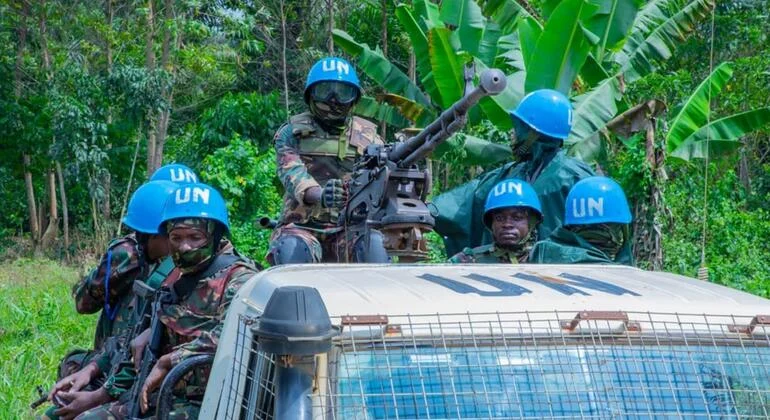
NEW YORK — In a landmark move aimed at safeguarding the lives of those serving under the United Nations flag, the Security Council has adopted Resolution 2823 (2026). The resolution represents a significant shift in the international community’s approach to the safety and security of peacekeepers, mandating a rigorous, institutionalized framework for accountability in the wake of attacks on UN personnel.
With unanimous backing from the Council and support from over 150 member states, the resolution marks a departure from previous diplomatic stances, moving from broad expressions of concern to concrete operational requirements designed to end the pervasive culture of impunity that has long emboldened those who target blue helmets.
The Core Mandate: Ending the Shadow of Impunity
Resolution 2823 (2026) is fundamentally an instrument of justice. It calls upon all relevant stakeholders—including host governments, non-state actors, and international bodies—to cooperate fully with the UN to facilitate the identification, investigation, and prosecution of perpetrators who target peacekeeping missions.
The text serves as a stark warning: the era of "uninvestigated casualties" is nearing an end. By requiring the UN Secretary-General to ensure that future attacks are met with rapid, evidence-based factual reporting, the Council is effectively closing the gaps that previously allowed perpetrators to evade justice. Host countries are now formally expected to facilitate these investigations, with the resolution emphasizing that cooperation is not merely a diplomatic suggestion but a fundamental requirement of international security obligations.
A History of Sacrifice: The Path to Resolution 2823
The impetus for this resolution did not emerge in a vacuum. It is the result of years of advocacy by troop-contributing countries (TCCs) who have watched the security environment for their personnel deteriorate.
Chronology of Escalation
- The Early Years: Historically, peacekeeping was characterized by "consent-based" operations where peacekeepers acted as neutral observers.
- The Paradigm Shift: Over the last two decades, the nature of conflict has shifted. Peacekeepers are increasingly deployed to areas with no peace to keep, facing asymmetric threats, improvised explosive devices (IEDs), and targeted insurgent attacks.
- The 2024-2025 Surge: Recent data indicated that the sophistication of attacks against peacekeepers reached an all-time high, with coordinated ambushes becoming more frequent in regions like the Sahel and the Great Lakes.
- Drafting the Consensus: In early 2026, Denmark and Pakistan, acting as co-sponsors, initiated a series of consultations. Recognizing that the Security Council had previously passed measures on safety, the co-sponsors argued that those measures lacked the "teeth" required for actual prosecution.
- The Vote: Following months of intensive negotiations, Resolution 2823 was brought to the floor, securing unanimous approval—a rare feat of consensus in a divided Council.
Supporting Data: The Human Cost of Service
The urgency of this resolution is underscored by the sobering statistics of the UN’s peacekeeping history. Ambassador Asim Iftikhar Ahmad of Pakistan, speaking on behalf of the co-sponsors, highlighted that nearly 4,500 UN peacekeepers have lost their lives in the line of duty since the inception of the mission.
Pakistan, a major contributor to UN missions, has lost 183 of its personnel. These figures are not mere data points; they represent a systemic failure to protect those who represent the international community’s collective will to maintain global order.
Ambassador Ahmad noted that the increased sophistication of attacks—ranging from cyber-warfare to advanced weaponry—has outpaced the protective measures currently in place. Without the systematic pursuit of justice, the "risk-reward" calculation for insurgents remains heavily skewed in their favor: they can attack international forces with the high probability of never facing a courtroom.
Official Responses and Diplomatic Perspectives
The adoption of the resolution has been hailed as a triumph of collective security. The discourse surrounding the resolution highlights the transition from passive mourning to active enforcement.
The Perspective of the Co-Sponsors
Ambassador Asim Iftikhar Ahmad emphasized the moral imperative of the Council. "When peacekeepers are killed or injured as a result of attacks while performing mandates authorized by this Council, then the Council must remain seized on what happens next," he stated. "Impunity for such crimes cannot be allowed to fester. There must be accountability."
The View from Denmark
Ambassador Christina Markus Lassen of Denmark highlighted the psychological and operational reassurance the resolution provides. For the 50,000 personnel currently deployed, the resolution serves as a "shield of legitimacy." She noted that the resolution communicates a three-pronged message:
- To the Peacekeepers: The Security Council stands firmly behind you.
- To Troop-Contributing Countries: The UN system is ready and able to act when your soldiers are harmed.
- To Perpetrators: The international community is watching, and justice is no longer a theoretical concept, but an operational target.
Institutional Implications: How the Resolution Changes the Ground Game
Resolution 2823 is not merely a document of intent; it introduces several structural changes to how the UN handles violence against its staff.
The Senior Focal Point
Perhaps the most significant structural change is the requirement for the Secretary-General to designate a "Senior Focal Point on Accountability." This individual will serve as the central node for coordinating evidence gathering, liaison with host governments, and tracking the status of investigations. By centralizing this responsibility, the UN aims to prevent the "bureaucratic drift" that often allowed past cases to vanish into the archives of regional offices.
Annual Reporting and Transparency
The requirement for an annual report on the status of cases related to violence against peacekeepers introduces a mechanism of public accountability. The first report is due within 120 days. This timeline forces the UN to immediately begin auditing past and current cases, ensuring that the Security Council is updated on the status of ongoing investigations.
Facilitating Factual Records
The resolution mandates the establishment of "clear factual records" immediately following an incident. In the past, investigations were often delayed by political disputes over the facts of an attack. By codifying the requirement to establish these records early, the resolution seeks to preserve evidence—such as ballistic data, witness testimonies, and surveillance footage—that would otherwise be lost to time or interference.
The Broader Implications for Global Security
The adoption of Resolution 2823 (2026) signals a potential shift in the relationship between the UN and host states. By insisting on cooperation with investigations, the Security Council is asserting that sovereignty does not grant a "get-out-of-jail-free card" for the killing of peacekeepers.
However, observers caution that the success of the resolution will depend entirely on implementation. The UN has historically struggled with enforcement when host states are uncooperative or when the perpetrators are non-state actors operating in lawless regions. The effectiveness of the new "Senior Focal Point" will be the litmus test for the resolution’s success.
Furthermore, the resolution places a renewed emphasis on the legal obligations of all states under international law to prosecute those who attack protected persons. As international humanitarian law continues to evolve, Resolution 2823 sets a precedent that peacekeeping is not a peripheral activity, but a central pillar of the international order that must be defended with the full weight of the legal system.
As the international community looks ahead, the 120-day deadline for the first report will be a critical moment. It will be the first opportunity for the Security Council to demonstrate that it has the political will to follow through on its promises. For the thousands of peacekeepers currently serving in dangerous environments, this resolution is more than just text—it is a promise that their sacrifice will be met with justice, and that the world they seek to protect is finally standing with them.
 Lina Hope
 Asro
Asro
 Layla Zulfa
