

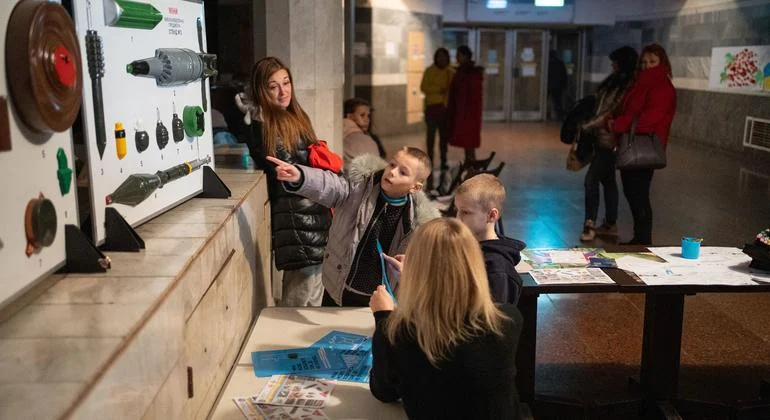
NEW YORK — The United Nations Security Council convened an urgent open debate on Thursday, June 24, 2026, to address a harrowing shift in the landscape of global warfare. As conflict zones from Eastern Europe to the Sahel continue to destabilize, the latest report from the Secretary-General has brought to light a grim milestone: for the first time in three decades of formal UN monitoring, state actors and government-aligned forces have been identified as the primary perpetrators of grave violations against children, surpassing the atrocities committed by non-state armed groups.
The session, which drew high-level participation from member states and international human rights advocates, underscored the urgent need for a paradigm shift in how the international community protects the most vulnerable during times of war.
The Reality of War: Key Findings from the Secretary-General’s Report
The Secretary-General’s 2026 report serves as a scathing indictment of the failure of parties to conflict to uphold international humanitarian law. According to verified data, the year 2025 witnessed a staggering 38,558 grave violations against children. These incidents—ranging from summary execution and maiming to abduction and the denial of humanitarian access—impacted at least 24,174 individual children.
Perhaps most alarming is the data regarding the nature of these violations. Many children did not suffer a single trauma; they were subjected to multiple, compounding horrors. In subterranean shelters and bombed-out classrooms, the psychological and physical scars of these violations are creating a "lost generation" whose recovery will require decades of sustained international intervention.
Defining the "Grave Violations"
The UN monitoring and reporting mechanism tracks six specific categories of violations that constitute the baseline for international accountability:
- Killing and maiming of children.
- Recruitment and use of children as soldiers.
- Sexual violence against children.
- Abduction of children.
- Attacks against schools and hospitals.
- Denial of humanitarian access to children.
A Chronology of Crisis: Thirty Years of Monitoring
To understand the gravity of the current moment, one must view it through the lens of history. Since the inception of the UN’s monitoring and reporting mandate in the mid-1990s, the international community has struggled to curb the impact of war on minors.
- 1996: Graca Machel’s landmark report, Impact of Armed Conflict on Children, is presented to the General Assembly, establishing the framework for what would become the Special Representative’s mandate.
- 1999: The Security Council passes Resolution 1261, officially placing the issue of children in armed conflict on its agenda.
- 2005: Resolution 1612 establishes the Monitoring and Reporting Mechanism (MRM), allowing the UN to systematically document violations.
- 2010–2020: Decades characterized by the rise of non-state actors—militant groups and insurgency movements—as the primary violators of child rights.
- 2025 (The Turning Point): A significant pivot occurs as state-sanctioned military actions, characterized by the use of explosive weaponry in populated areas and the systematic targeting of infrastructure, push government forces to the top of the "list of shame."
- June 2026: The Security Council debate forces a global confrontation with the reality that state actors are now the leading drivers of child-related war crimes.
Supporting Data: Analyzing the Shift
The 2025 data points to a disturbing trend: the formalization of violence against minors. Historically, non-state groups were viewed as the primary threat, largely due to their frequent use of child soldiers. However, the modern battlefield has evolved.
The Rise of State-Driven Violations
Modern conflicts are increasingly fought in urban environments, where the distinction between military targets and civilian centers is blurred. The data indicates that:
- Explosive Weaponry: The use of heavy artillery and airstrikes in densely populated areas has led to a record-high number of child casualties.
- State Accountability: The shift in responsibility towards government forces suggests that either direct policy decisions are facilitating these violations, or state militaries are failing to exercise the necessary restraint required by the Geneva Conventions.
- The Burden of Complexity: Many children identified in the report were victims of more than one violation, illustrating the systemic nature of their victimization. A child recruited as a messenger may also be a victim of sexual violence or be present during an attack on a school.
Official Responses and Diplomatic Tensions
The open debate served as a venue for intense diplomatic posturing. While the majority of member states expressed "grave concern," the rhetoric diverged significantly when discussing accountability.
The Humanitarian Appeal
Special Representatives and agency heads, including representatives from UNICEF, argued that diplomatic condemnation is no longer sufficient. "We are seeing a normalization of violence against children," one delegate noted during the session. "When a state force kills a child, it is not just a breach of law; it is a breach of the social contract that the state is supposed to represent."
The Call for Sanctions
There was a mounting push for the Security Council to utilize its "List of Shame" more aggressively. By naming and shaming not just non-state groups, but also sovereign governments, advocates argue the UN can trigger domestic and international political pressure. Some member states proposed that the Security Council mandate automatic travel bans and asset freezes for commanders whose forces appear on the list for two consecutive years.
Implications: A World at a Crossroad
The findings of this report carry profound implications for the future of global security and international law.
1. Erosion of International Humanitarian Law (IHL)
If state actors, who are the primary signatories to international treaties, are the primary violators of those treaties, the entire architecture of IHL is in jeopardy. This creates a "culture of impunity" that emboldens other regimes to ignore the rules of war, viewing them as optional rather than binding.
2. Long-term Socio-Economic Fallout
The trauma inflicted on over 24,000 children in a single year represents an intergenerational crisis. These children are missing out on education, suffering from permanent physical disabilities, and enduring severe psychological trauma. The cost to the global community—in terms of future humanitarian aid, peacekeeping, and the destabilizing effect of traumatized populations—is incalculable.
3. The Need for New Protection Strategies
The traditional methods of protection—such as monitoring groups and NGO advocacy—are clearly insufficient against state-led military campaigns. The Security Council is now under pressure to develop new tools, such as:
- Enhanced Monitoring: Utilizing satellite imagery and digital forensics to document state violations in real-time.
- Direct Engagement: Forcing military leaders to sign action plans with specific, time-bound targets for ending violations, backed by the threat of referral to the International Criminal Court (ICC).
- Civilian Protection Mandates: Integrating child-protection experts directly into peacekeeping missions with the authority to intervene in areas where children are at immediate risk.
Conclusion: The Path Forward
As the Security Council debate concluded, the message from the international community was clear but fragile: the status quo is unsustainable. The shift toward state-perpetrated violations demands a more robust, less politicized approach to human rights.
The children currently living in underground train stations, makeshift camps, and rubble-filled cities are the litmus test for the United Nations’ efficacy. If the Security Council fails to hold state actors accountable for these 38,558 violations, the institution risks losing its credibility as the guardian of global peace.
For those watching from the sidelines, the hope remains that this report will act as a catalyst for action rather than another document archived in the halls of the UN. As the Secretary-General’s report makes painfully clear, for thousands of children around the world, there is no tomorrow; there is only the fight to survive today.
For ongoing updates on this developing story, subscribe to the UN News daily bulletin or download the official UN News app via the iOS or Android stores.
 Lina Hope
 Asro
Asro
 Layla Zulfa
