

By International Tech Correspondent
24 June 2026
In a landmark decision that promises to redefine the landscape of global transportation, the United Nations Economic Commission for Europe (UNECE) has officially ratified the first-ever global regulatory framework for fully autonomous driving systems (ADS). This pivotal move, enacted by the World Forum for Harmonization of Vehicle Regulations, marks the transition of self-driving technology from the realm of speculative science fiction to a standardized, regulated, and viable industrial reality.
As the automotive sector grapples with the complexities of artificial intelligence and machine learning, this framework serves as a universal blueprint. By aligning safety protocols across major markets—including the European Union, the United States, China, Japan, Canada, and the United Kingdom—the UN has effectively cleared the road for the mass deployment of vehicles that require no human intervention.
The Core Mandate: Harmonizing Safety in an Automated World
For over a decade, the promise of “level 5” autonomous driving—vehicles capable of navigating any road condition without a human operator—has remained elusive. Early industry predictions of widespread adoption in the mid-2010s failed to materialize, largely due to a patchwork of inconsistent national regulations, varying technical definitions, and a profound lack of public trust.
The new UNECE framework addresses these bottlenecks by establishing common safety requirements and a rigorous, shared methodology for validating ADS performance. By moving away from fragmented national approaches, the regulation provides manufacturers with the legal certainty needed to invest in long-term infrastructure.
Key Regulatory Pillars:
- Life-Cycle Management: Manufacturers must implement audited safety management systems that oversee the vehicle’s software and hardware from the design phase through to retirement.
- Credible Validation: Testing is no longer confined to physical tracks. The regulations mandate that virtual testing tools and simulation environments meet stringent credibility criteria to ensure that “edge cases”—rare but dangerous traffic scenarios—are accounted for.
- Data Transparency: Every vehicle equipped with an ADS must feature a dedicated data storage system. This “black box” for autonomous driving ensures that in the event of an incident, safety-relevant data is accessible to regulatory authorities for oversight and forensic analysis.
- Continuous Performance Monitoring: The regulation demands that manufacturers report on the real-world performance of their fleets. This creates a feedback loop, allowing for iterative safety improvements based on actual road usage.
A Chronology of the Road to Autonomy
The path to this week’s adoption was paved by years of technical deliberation and slow-moving policy shifts.
- 2014–2016: The initial “hype cycle.” Tech giants and traditional automakers began widespread testing, but early accidents and software glitches led to a cooling of public and regulatory sentiment.
- 2018–2020: The realization that “common rules” were essential. UNECE began drafting foundational documents, focusing on Automated Lane Keeping Systems (ALKS) as a precursor to full autonomy.
- 2022–2024: The refinement of cybersecurity and software update protocols. It became clear that autonomous vehicles were essentially “data centers on wheels,” requiring new standards for OTA (over-the-air) updates.
- 2025: A year of intense diplomatic pressure. Stakeholders pushed for a global consensus to prevent a “digital iron curtain” where different regions would mandate incompatible software architectures.
- 24 June 2026: The official adoption of the comprehensive ADS regulatory framework, creating a singular global standard for the next generation of transportation.
Supporting Data and the "Competent Human" Threshold
At the heart of the new regulation lies a deceptively simple benchmark: An automated system must perform as well as, or better than, a competent human driver.
While the concept of a “competent human” is subjective, the UN has codified it through specific performance metrics. An ADS must demonstrate the ability to handle all dynamic driving tasks—steering, accelerating, braking, and signaling—while maintaining total compliance with international traffic laws.
The Role of Simulation
The sheer volume of miles required to statistically prove that a robot is safer than a human is astronomical. Traditional road testing would take centuries to achieve the necessary confidence intervals. Consequently, the UN framework explicitly approves the use of high-fidelity simulation. By subjecting virtual avatars of autonomous vehicles to billions of synthetic miles, manufacturers can prove their systems can handle rare, high-risk scenarios that are impossible to replicate safely on public roads.
Legislative Resilience: The 90-Amendment Overhaul
The forum did not simply create new rules; it updated the past. Alongside the new framework, the UN adopted amendments to approximately 90 existing vehicle regulations. These changes ensure that legacy rules—such as those governing steering wheels, mirrors, and driver visibility—do not become legal hurdles for vehicle designs that lack traditional controls. This modernization allows for innovative cabin configurations, where the interior of a vehicle can be redesigned as a living or working space rather than a cockpit.
Official Responses: Navigating the Shift
The reception from the international community has been one of cautious optimism. UNECE officials emphasized that the regulation is designed to balance the hunger for innovation with the non-negotiable requirement of public safety.
“By preventing fragmented national approaches, the regulation offers clarity for manufacturers, confidence for consumers and a pathway to scale innovation safely across markets,” a spokesperson for the UNECE stated shortly after the vote.
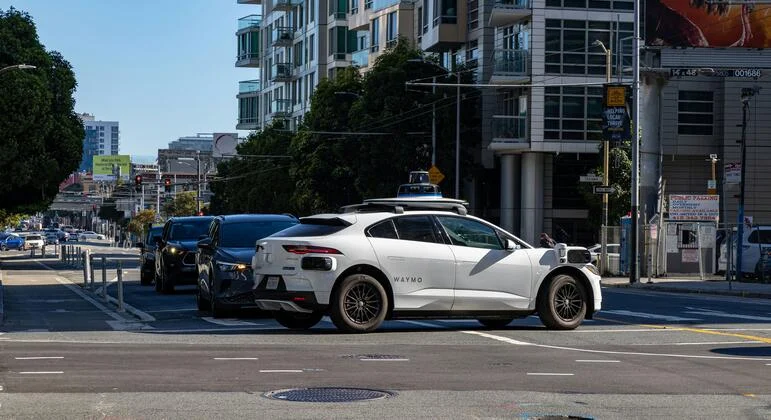
Industry analysts have noted that this regulation is likely to spark a surge in investment. For companies like Waymo, Tesla, and traditional OEMs like Toyota and Volkswagen, the lack of a global standard has been a significant barrier to scaling their fleets internationally. With this barrier removed, the cost of manufacturing and deploying autonomous vehicles is expected to drop, as companies will no longer need to produce bespoke, market-specific software versions for every country.
However, some advocacy groups have called for even stricter oversight, particularly regarding the privacy of data collected by autonomous vehicles. The UN has signaled that while the current regulations are comprehensive, they are also "living documents" that will be updated as AI technology evolves.
Implications: The Future of Mobility
The implications of this regulatory framework extend far beyond the automotive industry.
1. Urban Planning and Infrastructure
As fully autonomous vehicles move toward commercialization, urban planners must rethink the concept of the city. If vehicles can navigate and park themselves, the need for centralized parking lots in city centers may diminish, potentially freeing up prime real estate for housing or green spaces.
2. The Economic Impact on Labor
The transition to a driverless world remains a sensitive economic topic. The UN framework is designed to facilitate safe deployment, but the social implications—specifically for the trucking, logistics, and taxi industries—are significant. Governments are now expected to shift their focus toward workforce retraining and the legal liability frameworks that will govern a world where the “driver” is a lines-of-code algorithm.
3. Sustainability and SDGs
The integration of autonomous systems is explicitly linked to the UN’s Sustainable Development Goals (SDGs). Autonomous fleets are expected to be predominantly electric, and by optimizing traffic flow through machine-to-machine communication, they could significantly reduce energy consumption and urban congestion.
4. A New Era of Liability
Perhaps the most complex implication involves insurance and legal liability. With the adoption of these rules, the burden of safety shifts from the operator to the manufacturer and the software developer. The “data storage system” mandated by the UN will be the primary source of truth in legal proceedings, turning every traffic incident into a data-driven inquiry.
Conclusion: Entering the Driverless Decade
As these regulations move toward their implementation date—expected in roughly one month—the global automotive industry stands at a crossroads. The era of the "test vehicle" is ending, and the era of the "autonomous commodity" is beginning.
The UN’s action is not merely a technical update; it is a declaration that the future of mobility will be defined by software, shared across borders, and governed by a global commitment to safety. While the path ahead will undoubtedly face technical, ethical, and societal challenges, the roadmap is now officially set. For the first time, the global community has agreed not just on how autonomous vehicles should look, but on how they must behave to earn their place on the world’s roads.
The driverless revolution, long heralded as a distant future, has officially been granted a permit to drive.
 Siti Muinah
 Lina Hope
 Asro
Asro
