

Published: June 25, 2026
For over a century, the Morgan Motor Company has stood as a defiant bastion of British automotive tradition. Known primarily for its hand-crafted, ash-framed roadsters that evoke the golden age of motoring, the Malvern-based manufacturer has long been synonymous with wind-in-the-hair, open-top exhilaration. However, in a strategic pivot that honors its heritage while embracing modern bespoke engineering, Morgan has officially unveiled the Midsummer Coupé. This new, limited-production hardtop marks the marque’s first venture into the enclosed-roof segment in over a decade, signaling a bold evolution in the company’s design language.
Main Facts: A New Chapter for a Legacy Brand
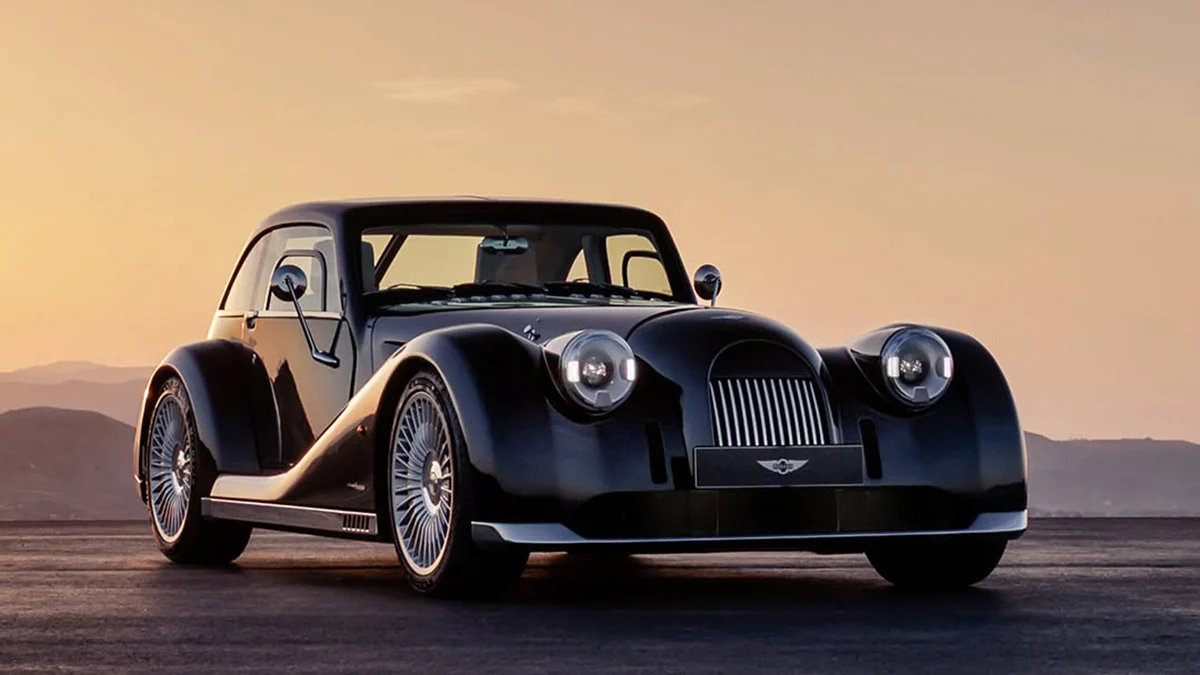
The Midsummer Coupé is not merely a "roof-on" variant of its predecessor; it is a profound reimagining of the Pininfarina-designed Midsummer barchetta that captivated the automotive world when it debuted in 2024. By transitioning from an open-cockpit speedster to a refined hardtop, Morgan has had to fundamentally rethink the car’s structural integrity, aesthetic proportions, and interior ergonomics.
The most striking visual element is the complex roof assembly. Featuring expansive glass panels, the roof is bisected by a prominent central structural spine that runs from the base of the windshield to the trailing edge of the rear deck. This design choice serves a dual purpose: it creates a dramatic, high-contrast aesthetic that draws the eye, while simultaneously providing the necessary rigidity that an open-top barchetta lacks. To accommodate this new silhouette, engineers had to redesign the vehicle’s chassis, implementing taller, more substantial doors and reinforced mounting points. The result is a machine that feels both vintage in its spirit and modern in its execution.
Chronology: From Concept to Bespoke Reality
The story of the Midsummer Coupé is a testament to the relationship between a boutique manufacturer and its clientele. The journey began in 2024 with the launch of the original Midsummer, a collaborative project with the legendary Italian design house Pininfarina. The roadster was an instant success, limited to just 50 units, and praised for its seamless blend of Morgan’s traditional "plank" aesthetic with Pininfarina’s sculptural Italian flair.

Following the delivery of the first roadsters, a high-profile collector—intrigued by the engineering collaboration but desiring the year-round utility of a hardtop—approached Morgan with a unique commission: could the Midsummer design be adapted into a coupé?
Morgan’s design team, led by a small, agile group of engineers and artisans, treated the request as a challenge to push the brand’s boundaries. Over the subsequent 18 months, the company transitioned from that singular customer request to a limited production run of 10 vehicles. This shift from one-off commission to a "small-batch" series represents a significant milestone in Morgan’s modern history, illustrating a transition toward more exclusive, high-value coachbuilding.
Supporting Data and Technical Specifications
While Morgan has remained characteristically tight-lipped regarding specific performance benchmarks for the new Coupé, the vehicle inherits the powertrain architecture that has made its recent models the most potent in the brand’s history.
At the heart of the Midsummer Coupé sits the BMW-sourced 3.0-liter turbocharged inline-six engine. This powerplant, which serves as the centerpiece for the flagship Supersport 400, is a marvel of efficiency and power delivery. In the Supersport configuration, this engine generates a robust 402 horsepower and 369 ft-lbs of torque. Given the increased weight and structural requirements of the Coupé’s glass-heavy roof, it is expected that the driving dynamics will favor a grand-touring ethos rather than the raw, visceral track performance of a lightweight roadster.
The transmission remains the eight-speed automatic, which has been calibrated to match the refined, long-distance nature of a luxury coupé. The interior, despite the architectural changes to the roofline, retains the hallmark Morgan charm. Hand-stitched leather, exposed wood, and bespoke analog gauges remain, ensuring that the driver is cocooned in a cabin that feels both intimate and timeless.

Official Perspectives: The Philosophy of Exclusivity
In the world of ultra-luxury automobiles, exclusivity is the ultimate currency. Morgan’s decision to limit the production of the Midsummer Coupé to just 10 units—a number that includes the original client’s commission—is a calculated move to ensure the vehicle remains a collector’s item from the moment it leaves the assembly line.
"The Midsummer project was always about exploring the outer limits of what a Morgan can be," a company spokesperson noted during the unveiling. "When our clients asked for a hardtop, we realized we weren’t just building a car; we were creating a bridge between the roadster experience and the refined comfort of a traditional grand tourer. The Coupé is a testament to the fact that we can adapt our craft without losing the soul of the brand."
The lack of an official price tag has only fueled speculation. Industry analysts suggest that given the labor-intensive nature of the build and the extreme scarcity of the model, the price will likely exceed the $250,000 threshold set by the original roadster. For the prospective buyer, however, the cost is secondary to the access; owning one of these ten vehicles grants entry into one of the most exclusive clubs in the automotive world.
Implications: The Future of the "Boutique" Automaker
The introduction of the Midsummer Coupé carries significant weight for Morgan’s future trajectory. For years, the brand was criticized for its slow pace of innovation. By successfully executing this project, Morgan has proven that it can successfully integrate modern design, complex structural engineering, and client-led bespoke requests without abandoning the hand-crafted techniques that have defined it for over a century.
1. The Revival of the Coachbuilding Spirit
The Coupé signifies a return to the era of true coachbuilding, where the relationship between the client and the builder dictates the form of the vehicle. This model suggests that Morgan is shifting away from mass-production mentalities and toward a "boutique-first" business model that prioritizes individual expression and limited-volume rarity.

2. Modernizing the Brand Identity
By collaborating with Pininfarina and then iterating on that design, Morgan has effectively modernized its visual identity. The Midsummer Coupé serves as a visual bridge; it is clearly a Morgan, yet it looks like nothing the company has produced in the last 20 years. This flexibility is vital as the brand looks to attract a younger, more design-conscious demographic of collectors.
3. Sustainability and Longevity
In an automotive landscape increasingly dominated by electric powertrains and software-defined vehicles, Morgan’s commitment to internal combustion and analog beauty is a form of rebellion. The Midsummer Coupé proves that there is a enduring market for vehicles that celebrate the mechanical connection between man and machine.
Conclusion: A Masterpiece in Miniature
The Morgan Midsummer Coupé is more than a vehicle; it is a physical embodiment of a brand in transition. It honors the lineage of the Aero Coupe while pushing into the future with a design that is as sophisticated as it is rare. For the ten individuals who will eventually park this machine in their climate-controlled garages, it represents the pinnacle of British craftsmanship. For everyone else, it stands as a reminder that in an age of standardized, automated production, there is still room for the hand-made, the bespoke, and the profoundly beautiful.
As the automotive industry rushes toward an automated, electrified future, Morgan has chosen to carve its own path—one roof, one chassis, and one bespoke detail at a time. The Midsummer Coupé is not just a car for the season; it is a car for the ages.
 Ali Ikhwan
 Laily UPN
 Raul Delapena Setiawan
