

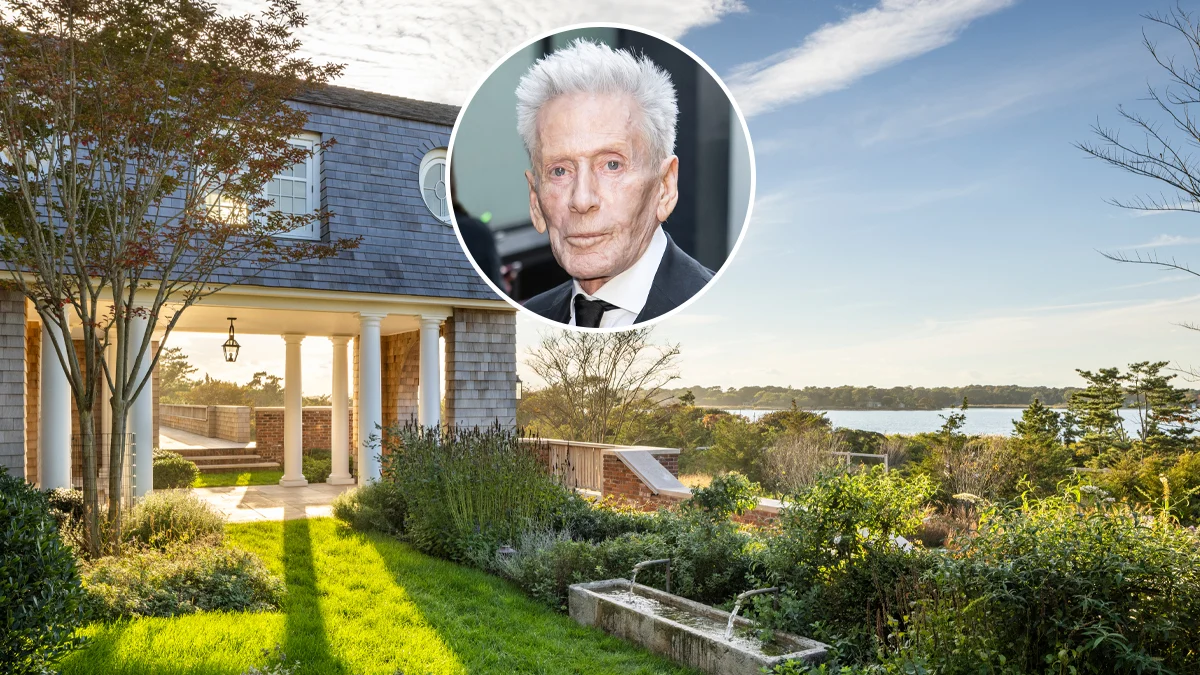
In the rarefied world of East Hampton real estate, few properties carry as much cultural weight or architectural pedigree as the oceanfront compound at 75 West End Road. Once the personal sanctuary of fashion titan Calvin Klein, the 8.2-acre estate has returned to the market with a staggering $165 million price tag. If it achieves anything close to this valuation, the sale would shatter existing records for the Hamptons, cementing the property’s status as the crown jewel of the South Fork.
The listing, held by Ed Petrie, James Petrie, and Charles Forsman of Compass, represents more than just a real estate transaction; it is the culmination of a decade-long evolution for a site that has seen history pass through its doors for over 130 years.
The Evolution of an Icon: A Historical Chronology
The story of this estate begins long before the era of designer denim and global fashion empires.
The Gilded Age Origins (1890s)
Completed in the early 1890s, the shingle-style residence was originally commissioned for socialite Laura Brevoort Sedgwick. The architectural vision was provided by Joseph Greenleaf Thorp, the same legendary architect behind the infamous "Grey Gardens." Thorp’s design captured the quintessential spirit of East Hampton—a marriage of robust, traditional construction and the airy, coastal elegance that defined the late Victorian period. Following her marriage to prominent New York attorney Henry James, the property became a focal point for elite gatherings in the region.

The Trippe Era (1935–1987)
In 1935, the estate entered a half-century of stewardship under Juan Trippe, the visionary founder of Pan American World Airways. Under the Trippe family, the property was maintained with a level of preservation that allowed the house to retain its original character while the Hamptons transformed from a sleepy summer retreat into a global bastion of wealth.
The Calvin Klein Influence (1987–2021)
The property achieved its most famous iteration when Calvin Klein and his then-wife, Kelly, acquired the estate in 1987 for $3.6 million. For decades, the home served as a private retreat for the designer, who—true to his brand—refined the interiors into a masterclass of minimalism and light. During his tenure, Klein utilized the residence as a backdrop for both his personal life and the high-society events that defined the Hamptons’ social calendar throughout the 1990s and early 2000s.
The "Traumhaus" Restoration (2021–Present)
In 2021, Klein quietly divested from the property in two separate off-market deals. He sold the 6.8-acre parcel containing the main house for $75 million and the adjacent 1.6-acre vacant lot for $10 million, totaling $85 million—a massive return on his original investment. The anonymous buyer, a Delaware-based LLC, immediately set about a top-to-bottom, multi-year restoration, bestowing the property with the name Traumhaus—German for "dream home."
Architectural Grandeur and Modern Amenities
The current iteration of the estate is a study in the intersection of Gilded Age architecture and 21st-century luxury. The 9,000-square-foot primary dwelling, characterized by its iconic gambrel roof, has been meticulously updated to honor its history while integrating modern mechanical and aesthetic standards.

The Interior Experience
Stepping into the double-height foyer, guests are greeted by a soaring metal fireplace, a dramatic structural centerpiece that anchors the home. The main level flows into an all-white living room topped by a glass catwalk, creating a sense of transparency and space that is rarely achieved in historic homes.
The culinary facilities are particularly impressive, featuring a trio of kitchens equipped with top-tier appliances from La Cornue, Viking, and Sub-Zero. Whether for grand entertaining or intimate family gatherings, the space is designed for functional luxury. Additional highlights include:
- The Owner’s Suite: A palatial upstairs sanctuary featuring a private fireplace and dual walk-in closets and bathrooms.
- The Tower: A unique architectural feature offering a domed ceiling, a sweeping curved staircase, a private bedroom suite, and a family room complete with a wet bar.
- The Lower Level: Meticulously finished to include a private sauna, reflecting the current market demand for wellness-oriented amenities.
The Grounds and External Assets
Beyond the main structure, the property commands 500 feet of pristine Atlantic Ocean frontage. Perhaps most notably, the grounds include a 1930s boathouse—the last working private boathouse permitted on the coastal lagoon of Georgica Pond. This feature alone creates an insurmountable barrier to entry for any competitor, as such a permit would be impossible to secure under current zoning laws.
The outdoor space encompasses 5,000 square feet of decks, patios, and gardens, complemented by a newly installed red clay tennis court. For a buyer looking to expand, the adjacent 1.6-acre lot comes with fully approved architectural plans for a three-story residence and garage, offering a rare opportunity to build a secondary compound from scratch.

Market Context and Economic Implications
The $165 million asking price is not merely an arbitrary figure; it is a calculated bet on the shifting demographics of the ultra-wealthy. According to reporting from The Wall Street Journal, the timing of this listing is deliberate. Brokers have synchronized the launch with the anticipated SpaceX initial public offering, positioning the property as the ultimate trophy asset for the next generation of tech-forward, liquid-wealth billionaires.
The "Record-Breaking" Ambition
The Hamptons real estate market has seen a rapid appreciation in value, but a $165 million sale would represent a significant leap in the market ceiling. This pricing strategy reflects the scarcity of "compound" properties—where multiple acres of oceanfront land are combined with historical, fully restored structures. As land in the Hamptons becomes increasingly finite, the premium on such properties is expected to grow, potentially justifying the valuation to the right buyer.
Comparative Market Performance
The current listing arrives at a time when other high-profile properties are testing the market’s depth. For instance, the recent listing of Meg Ryan’s Bridgehampton farmhouse at $15.3 million and other estates featuring dual pickleball courts and expansive acreage highlights a trend: the market is increasingly segmented between "move-in-ready, modernized historical estates" and "lifestyle-driven, amenity-heavy compounds."
Official Perspectives and Future Outlook
While the owners have remained behind the corporate veil of their Delaware LLC, the brokers at Compass are optimistic about the property’s reception. The decision to renovate rather than rebuild signifies an appreciation for the "bones" of the house—a trend toward preservation that is increasingly favored by elite buyers who want history without the headache of a crumbling structure.

The inclusion of the boathouse and the development potential of the adjacent parcel provides a twofold value proposition: it is both a finished, high-end residence and a development opportunity.
The Road Ahead
As the property sits on the market, it serves as a bellwether for the health of the ultra-luxury real estate sector. If the $165 million price point is met, it will signal that the "new money" entering the market from the tech and finance sectors is willing to pay a premium not just for space, but for the legacy and status associated with owning a piece of Hamptons history.
For now, Traumhaus remains a silent monument to the changing guard of the American elite. Whether it finds a new owner in the coming months or serves as a long-term hold for its current investors, the estate at 75 West End Road remains a definitive chapter in the story of East Hampton.
 Jia Lissa
 Ali Ikhwan
 Laily UPN
