

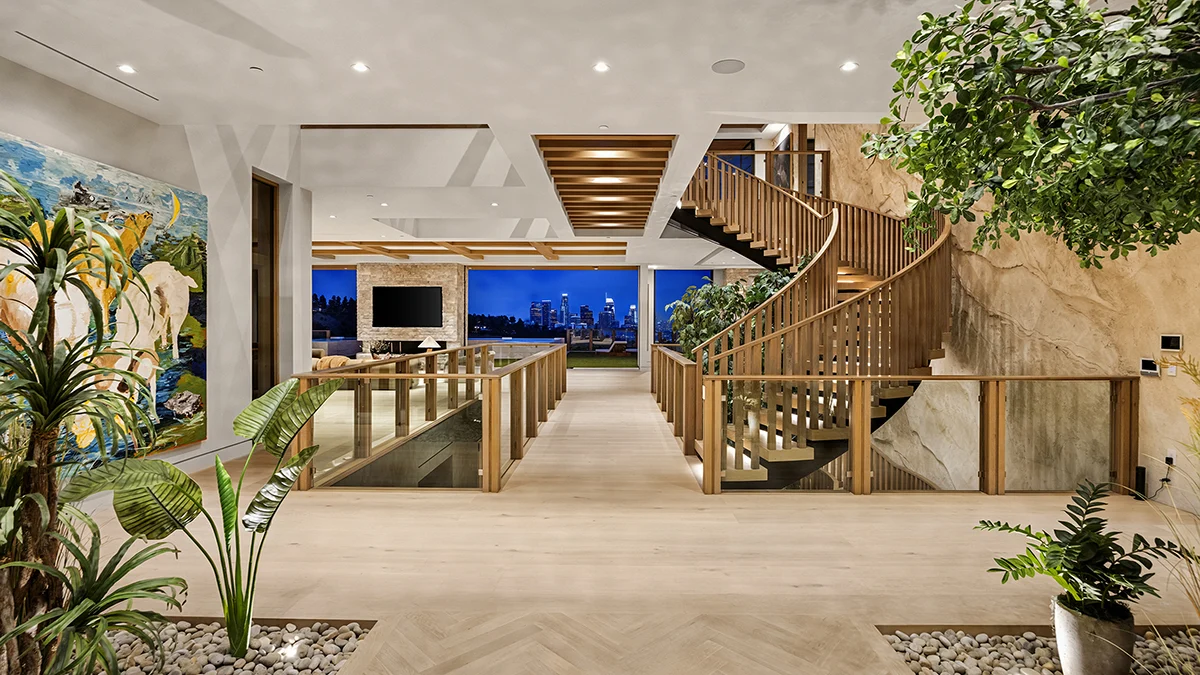
In the hyper-competitive landscape of Southern California’s ultra-luxury real estate market, few developers command as much attention as Huntington Estate Properties. Since 2009, the Los Angeles-based firm, led by the visionary Ramtin Ray Nosrati, has consistently pushed the boundaries of residential architecture, leaving an indelible mark on prestigious enclaves ranging from the hills of Brentwood to the storied avenues of Hollywood. Their latest magnum opus, a sprawling Beverly Hills estate aptly named "Opal," serves as the ultimate distillation of the firm’s design philosophy: a marriage of epic proportions, uncompromising materiality, and a seamless fluidity between interior comfort and the rugged beauty of the California outdoors.
Main Facts: A Study in Scale and Sophistication
"Opal" is not merely a residence; it is a sprawling 19,100-square-foot sanctuary that redefines the concept of the modern mansion. Situated on nearly 1.4 acres of prime, gated Beverly Hills real estate, the property is a triumph of contemporary aesthetics. The exterior is a meticulously curated composition of natural wood and stone, softened by the delicate touch of espaliered greenery that climbs the façade.
Upon entering, guests are greeted by a soaring two-story foyer, anchored by exquisite oak parquet flooring and a sense of volume that is rare even by Beverly Hills standards. With ceiling heights reaching up to 24 feet, the home feels monumental yet surprisingly intimate. The residence boasts six expansive bedrooms and ten bathrooms, each designed with a meticulous attention to detail that borders on the obsessive.

Perhaps the most striking architectural feature is the inclusion of a 20-foot indoor tree, which serves as a living, breathing focal point for the residence, grounding the vast open spaces in nature. Among the myriad amenities, the home features a temperature-controlled glass wine room, a double-height dining room for grand-scale entertaining, and a primary suite that functions more like a five-star hotel wing, complete with a private espresso bar. Every piece of furniture—custom-designed in Europe—is included in the sale, ensuring the buyer inherits a perfectly curated lifestyle from the moment they receive the keys.
Chronology: The Evolution of a Vision
The story of Opal began long before the first stone was laid. It is the culmination of Ramtin Ray Nosrati’s decade-plus career in the luxury sector. Since founding Huntington Estate Properties in 2009, Nosrati has observed a distinct shift in the preferences of the ultra-high-net-worth demographic. Early in his career, the focus was primarily on scale; today, the emphasis has shifted toward "experiential architecture."
The development process for Opal was a multi-year endeavor. From the initial site acquisition on Laurel Way to the final stages of interior styling, the project was designed to be a landmark for the firm. By the time the foundation was poured, the vision was clear: to create a home that felt like a rare gemstone—hence the name.

"Opal is an incredibly rare and beautiful stone, and I felt the name perfectly captured the essence of this home," Nosrati remarked in a recent interview. "The residence reveals different layers of beauty and emotion depending on how you experience it. It is meant to be discovered."
The development reached its crescendo in 2026, as the finishing touches were applied to the rooftop pickleball court and the glass-bottomed pool, marking the transition from a construction site to one of the most significant listings in the Los Angeles market.
Supporting Data: Engineering the Extraordinary
The sheer technical prowess required to bring Opal to life is reflected in its specifications. The property is designed to cater to a lifestyle that values both privacy and high-octane entertainment.

- The Arrival: The property is accessed via a private, gated motor court capable of accommodating up to a dozen vehicles, further supported by a massive eight-car garage—a necessity for the automotive-obsessed buyer.
- The Great Room: This central space is defined by its coffered ceilings and dual limestone fireplaces. The walls are not walls at all, but vast, glazed openings that retract to merge the living area with a lushly landscaped, turfed terrace.
- Culinary Excellence: The primary kitchen is a masterpiece of travertine finishes, equipped with top-tier professional appliances. It is supported by a secondary, hidden catering kitchen, complete with a walk-in refrigerator, ensuring that grand events are executed with military precision.
- The Entertainment Wing: The lower level of the mansion is dedicated to leisure. It houses a home theater beneath a "celestial" ceiling, a professional-grade gym, and a media area featuring a nine-screen video wall. For those who prefer a quieter pace, the home is dotted with reading nooks designed for solitude.
- Outdoor Living: The exterior is anchored by two infinity pools, one of which features a glass bottom, creating a visual connection between the swimming levels and the depths below.
Official Responses and Developer Philosophy
Ramtin Ray Nosrati has long been a proponent of the "lifestyle-first" approach to development. Unlike developers who prioritize square footage over utility, Nosrati’s philosophy is rooted in how a space makes its inhabitant feel.
When asked about the inclusion of such high-concept amenities as the Brazilian "Tiffany" stone wet bar with its bold teal veining, Nosrati noted that these design choices are intentional conversation starters. "A home should be an expression of the owner’s personality," he says. "We want the space to feel curated, not just constructed."
The collaboration with listing agent Sally Forster Jones of Compass has also been pivotal. By positioning Opal as a turnkey, lifestyle-ready estate, the team is targeting a specific breed of global buyer who demands perfection without the wait. The $53 million price tag reflects not just the land and construction costs, but the scarcity of such a bespoke, ready-to-move-in experience in the heart of Beverly Hills.

Implications: The New Standard for Beverly Hills Real Estate
The listing of Opal comes at an interesting juncture for the Southern California market. Following the high-profile sale of neighboring estates and the shifting landscape of tax and zoning regulations, the ultra-luxury market has seen a trend toward consolidation. Buyers are no longer looking for "fixer-uppers" in prestigious zip codes; they are looking for properties that function as private, self-contained ecosystems.
Opal fulfills this demand by incorporating everything from a rooftop pickleball court—a nod to the sport’s meteoric rise in popularity among the elite—to an espresso bar in the primary suite. The message is clear: the modern buyer does not want to leave their home to find their entertainment.
Furthermore, the integration of technology, such as the nine-screen video wall and the automated indoor-outdoor transitions, suggests that the future of high-end real estate lies in "smart luxury." It is about the seamless integration of technology that anticipates the occupant’s needs rather than requiring their interaction.

As Opal hits the market, it serves as a barometer for the health of the $50 million-plus segment in Los Angeles. Should it secure its asking price, it will confirm that the appetite for extreme, high-concept, fully-furnished modernism remains robust. For Huntington Estate Properties, the success of Opal would not just be another line item in their portfolio; it would be a testament to the fact that in the world of luxury real estate, art and architecture are becoming increasingly indistinguishable.
In the final analysis, Opal is more than a mansion. It is a bold statement of intent. By blending the organic beauty of stone and wood with the clinical precision of modern engineering, Ramtin Ray Nosrati has created a residence that challenges the status quo. It is a property that demands to be experienced, a structure that functions as a gallery for the owner’s life, and a definitive addition to the storied architectural history of Beverly Hills.
 Ali Ikhwan
 Laily UPN
 Raul Delapena Setiawan
