

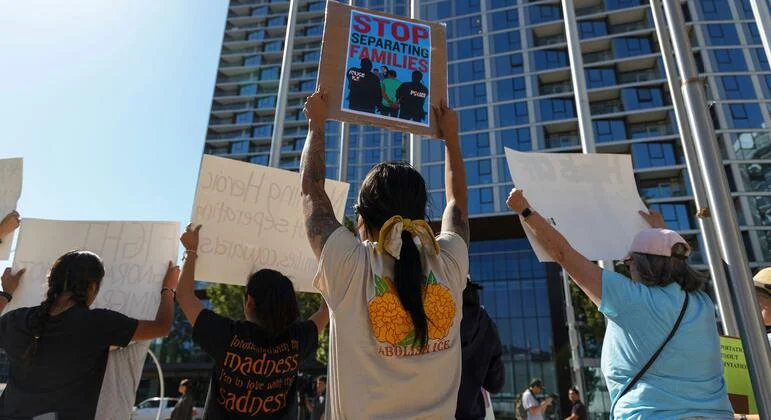
Introduction: A Growing Human Rights Emergency
The United Nations High Commissioner for Human Rights, Volker Türk, has issued a searing indictment of the United States’ immigration detention system, calling for urgent, independent investigations into a sharp rise in deaths among those held in the custody of U.S. Immigration and Customs Enforcement (ICE). In a formal statement released this month, Türk emphasized that the current trajectory of the U.S. detention apparatus is not only unsustainable but represents a fundamental failure to uphold international human rights standards.
The High Commissioner’s intervention comes at a moment of heightened scrutiny for the American immigration system. With reports of “inhuman conditions,” systemic lack of transparency, and an alarming spike in fatalities, Türk has demanded that the U.S. government provide justice, truth, and reparation to the families of the victims. He asserted that those responsible for legal violations must be held to account to ensure that such tragedies do not recur.
The Escalating Death Toll: A Statistical Breakdown
The urgency of the High Commissioner’s call is underscored by a disturbing trend in recent mortality data. According to statistics released by ICE, the first five months of 2026 have already seen 18 people die while in custody. With an additional death reported on June 4, the current total for the year stands at 19—a significant increase compared to the eight deaths reported during the same period in 2025.
The data reveals a broader, worsening pattern. In 2024, there were 11 recorded deaths within ICE facilities. By 2025, that number had surged to 33, signaling a tripling of fatalities within a single year. This upward trend has drawn the attention of international observers, particularly as the U.S. government continues to expand its detention infrastructure. Currently, ICE holds over 60,000 individuals, with official projections aiming to increase that capacity to 90,000 by the end of 2026.
Chronology of Concern: From Oversight to Crisis
The deterioration of conditions within detention centers has been a subject of ongoing debate for years, but 2026 marks a pivotal turning point in international concern.
- 2024: The base year for recent comparisons, seeing 11 deaths. At this time, civil society groups began raising alarms regarding the inconsistent reporting of deaths and the lack of medical oversight.
- 2025: A year of rapid expansion and tragedy. The death toll tripled to 33. Observers noted an increase in reports regarding psychological distress, exacerbated by the long-term uncertainty of legal status for detainees.
- Early 2026: The crisis reached a new threshold. In the first five months alone, fatalities exceeded the total for the entire first half of previous years.
- June 2026: Volker Türk issues a formal statement expressing “alarm” at the state of the detention system, specifically citing five deaths classified as suicides and persistent allegations of excessive force.
The Anatomy of Inhumanity: Conditions Behind Bars
The critique leveled by the UN rights chief goes beyond mere statistics. It addresses the systemic nature of the suffering within these facilities. Türk highlighted several critical areas where U.S. detention centers fall short of international norms:
Inadequate Healthcare and Nutrition
Detainees frequently report receiving substandard medical care, ranging from delayed diagnosis to the denial of essential prescriptions. Alongside poor nutritional quality, these factors have been linked to the spread of preventable diseases. Türk noted that these cumulative factors significantly exacerbate the vulnerability of the detained population, making many of these deaths potentially preventable.
The Scourge of Solitary Confinement
Perhaps most concerning is the reliance on solitary confinement. The UN High Commissioner stated that the prolonged or indefinite use of this practice is not merely an administrative tool; it constitutes “cruel, inhuman or degrading treatment.” Under international human rights law, such practices are strictly prohibited, yet reports suggest that it remains a common disciplinary measure within ICE facilities.
Lack of Transparency and Accountability
A recurring theme in Türk’s statement is the "opacity" of the system. Families of the deceased often struggle to obtain clear information regarding the circumstances of their loved ones’ deaths. Furthermore, the practice of moving detainees between facilities without adequate notification to legal counsel or families creates a "black hole" of information, leading to severe psychological distress for those caught in the system.
Policy Implications and International Standards
The United Nations’ stance on immigration detention is clear: it should be a measure of last resort, and it must never be used for children.
A Call for Alternatives
Türk urged the U.S. government to prioritize alternatives to detention, particularly for vulnerable populations, including pregnant women, the elderly, and those with significant medical or mental health needs. He emphasized that the psychological toll of indefinite detention—compounded by the uncertainty of one’s legal status—is a primary driver of the mental health crises that often lead to suicide attempts and other deaths.
The Role of Congress
The High Commissioner underscored the responsibility of the United States Congress, which holds the "power of the purse." He argued that Congress must exercise more rigorous oversight over detention conditions and the public funding allocated to them. Without a legislative mandate to ensure compliance with human rights, the detention system will continue to operate with insufficient checks and balances.
Dehumanization and Criminalization
Beyond the physical walls of the detention centers, Türk denounced the broader political rhetoric in the United States that seeks to "dehumanize and criminalize" migrants and refugees. By framing individuals seeking asylum as a threat to national security, the political discourse facilitates a environment where the violation of human rights becomes normalized.
Official Responses and the Path Forward
While the U.S. government has yet to issue a comprehensive response to the specific charges brought by the High Commissioner, the pressure on the administration is mounting. Advocates, faith-based organizations, and civil society groups have rallied behind Türk’s statement, viewing it as a vital validation of their long-standing efforts to reform the U.S. immigration system.
In his concluding remarks, the UN rights chief offered a clear path forward for American authorities:
- Compliance: Ensure that all detention facilities strictly adhere to international human rights norms, including providing timely healthcare and access to legal counsel.
- Protection: Guarantee that no individual is returned to a country where they would face "serious human rights violations or other irreversible harm," upholding the principle of non-refoulement.
- Reform: Abolish the detention of children immediately, regardless of their immigration status or that of their parents.
- Justice: Launch independent, transparent investigations into the recent deaths, ensuring that the families of the deceased are granted the truth they are owed.
Conclusion: The Moral Imperative
The situation in U.S. immigration detention is no longer just a matter of domestic policy; it has become a global human rights concern. As the United States looks to increase its detention capacity, the warnings from the UN are a stark reminder that human rights cannot be sacrificed for the sake of administrative convenience or political expediency.
Volker Türk’s message serves as a final, urgent call for the United States to align its actions with its stated values. The international community is watching, and the families of those who have died in custody are waiting for accountability. Whether the U.S. government will pivot toward a more humane and transparent approach remains to be seen, but the cost of inaction—measured in human lives—is now too high to ignore.
The path forward requires a fundamental shift in how the United States treats the most vulnerable among us. If the U.S. is to maintain its credibility as a defender of human rights on the global stage, it must first ensure that the same standards are applied within its own borders, ensuring dignity, safety, and justice for every person held in its custody.
 Lina Hope
 Asro
Asro
 Layla Zulfa
