

One year after the release of her critically acclaimed and deeply personal album Virgin, Lorde has offered fans an unprecedented glimpse into the crucible of its creation. The New Zealand singer-songwriter, known for her meticulous approach to pop craftsmanship, surprised the music world this week by releasing a sprawling archive of 49 raw demos, candid photographs, and personal notes dating back to 2022.
Titled by the artist as “X-rays,” these audio files serve as a stark contrast to the polished, finalized tracks that dominated global charts over the past twelve months. For Lorde, this release is not merely a collector’s item for superfans; it is a profound act of transparency, an attempt to deconstruct the "marketing and commodifying" of her own emotional labor.
The Architecture of the Release: What Fans Are Hearing
The collection, accessible via digital streaming platforms, provides a granular look at the evolution of Virgin. Rather than providing "cool composites" or edited versions, Lorde insisted on presenting the material in its most unvarnished state. These are the skeleton versions of the songs—the "crookedness and slant" of the creative process captured in real-time.
The collection includes early iterations of tracks that would eventually define the Virgin sound, capturing the artist at her most uncertain. From half-formed melodies to mumbled lyrics that eventually coalesced into the album’s sharp, incisive storytelling, the demos document a period of immense personal metamorphosis. The release also includes a trove of personal documentation, ranging from diary-like reflections to intimate photography that contextualizes the headspace Lorde occupied during the album’s gestation.
A Chronology of Creation: From 2022 to the Present
The journey of Virgin was never linear. By Lorde’s own admission, the album was born out of a period of profound internal friction.
The Early Stages: Navigating Personal Crisis
In 2022, as the world moved into a post-pandemic reality, Lorde began the work of "hacking her way out" of a creative and personal rut. During this time, she was battling a long-gestating eating disorder, an experience she details with harrowing honesty in her anniversary letter. She describes the act of reclaiming her relationship with nourishment, noting that the songs "Shapeshifter" and "What Was That" were written during a time when she was actively working to prove to herself that "breakfast wasn’t a negotiation."
The Middle Period: Breakups and Breakthroughs
As the production of Virgin intensified, so did the volatility of her personal life. The artist underwent a significant breakup, an experience that left her transient, staying in the spare rooms and on the couches of friends. She credits the "care these women showed me" as a foundational pillar for the album’s existence.
It was during this period that the physical toll of her creative intensity became undeniable. A friend’s observation regarding her recurring, intense depressive episodes during her menstrual cycle led to a diagnosis of Premenstrual Dysphoric Disorder (PMDD), a realization that helped Lorde understand the physiological dimensions of her suffering.
The "Brat" Influence and Public Exposure
The narrative of Virgin took a distinct turn with the cultural phenomenon surrounding Charli XCX’s Brat. Lorde notes that seeing the fearlessness and fragility of that era forced her to confront her own state of existence. The resulting interplay between the two artists—the space Charli gave her, and the communal feeling of the festival circuit—restored Lorde’s faith in music as a "social technology."
Supporting Data: The Emotional Cost of Artistry
The documentation provided by Lorde alongside these 49 demos offers a rare, data-driven look at the cost of high-level creative production.
- Mental Health Context: Lorde candidly discusses the transition from a state of burnout to seeking clinical support, confirming she is currently on an SSRI and feeling "much better."
- The Physicality of the Process: The singer describes the mundane, unglamorous reality of her daily life during production: wearing the same pair of men’s jeans and a black zip hoodie, struggling with acne, and feeling "monstrous and sacred" as she moved through the city.
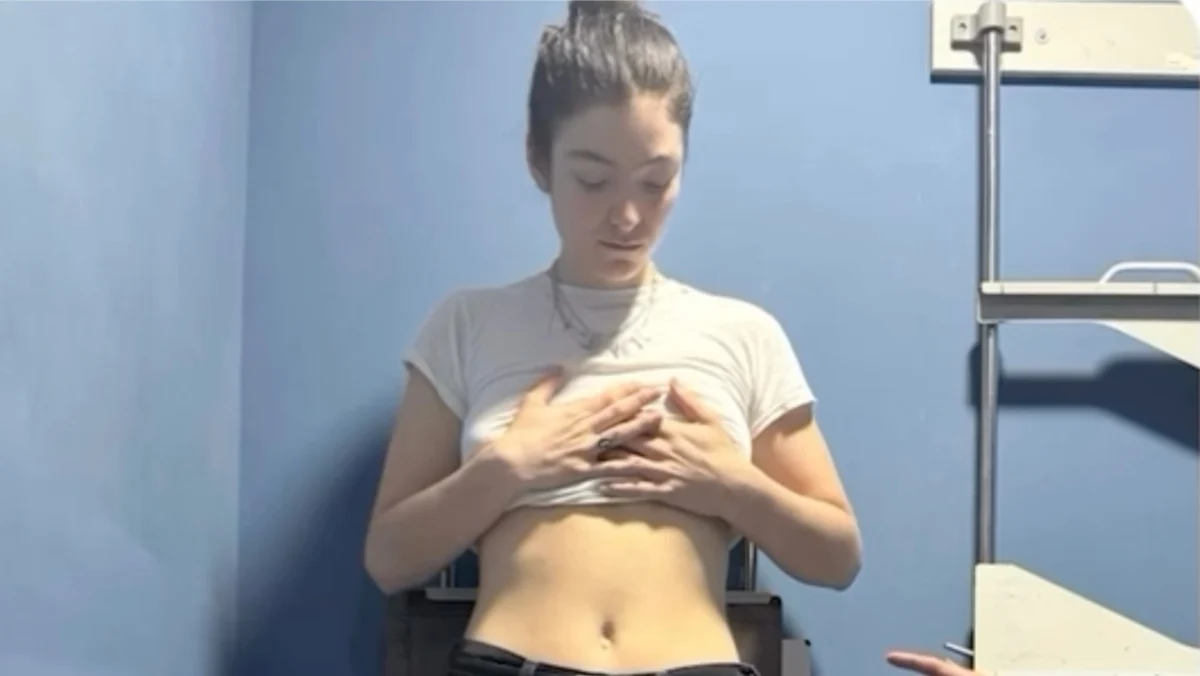
- The "X-Ray" Concept: The album cover, shot on March 2, 2025, was not just an aesthetic choice but a literal and metaphorical medical event. Taken in a medical facility, the shoot felt like an "exorcism" to Lorde, who feared the machine would reveal a profound "ugliness" within her. The photographer, Eric, served as a grounding force, reminding her that "any way you are today is perfect and right."
Official Reflections: The Artist’s Perspective
In her public note, Lorde addresses the difficulty of discussing a project that felt so physically and emotionally demanding. She admits that after the album’s release, she was effectively "quiet for a while," unable to reconcile the finished, commercialized product with the raw, internal work she had performed to create it.
"Making an album is an absurd act," she writes. "The self-absorption and belief required make you tough to be around." Her decision to release the demos was a direct reaction to this absurdity. By sharing the "skeleton versions," she is effectively stripping away the "marketing" layer, inviting listeners to engage with the "repetitions, the acne, the journey," rather than just the final product.
Implications for the Industry and Future Tours
This release signals a shifting trend among major pop artists toward radical transparency. By providing the "X-rays" of her work, Lorde is challenging the industry standard of the "perfected" release. She is asserting that the value of an album lies not just in its polish, but in its provenance—the messy, uncertain, and deeply human path taken to arrive at a finished song.
As she moves into the final leg of her “Ultrasound World Tour,” the release serves as a bridge between her previous cycle and the future. With major festival appearances scheduled, including Lollapalooza, Hinterland, and Austin City Limits, Lorde is clearly in a space of re-engagement. The "Ultrasound" tour, now a year old, has evolved from a promotional necessity into a communal celebration of the work that saved her.
The Future: The Lume Platform
The postscript of Lorde’s letter hints at future digital endeavors. She mentions that the collection will be moved to a new platform called "Lume," currently being developed by her inner circle. This suggests a desire for greater autonomy over how her work is distributed and consumed, moving away from traditional gatekeepers and toward direct, curated fan experiences.
Conclusion: A Celebration of the Process
Lorde’s release of these 49 demos is a testament to the idea that true artistry is not found in the absence of struggle, but in the willingness to document it. By sharing the raw files, she has invited her audience to participate in the "holy site" she built for herself during her darkest months.
Whether these demos are viewed as a historical record or a final, defiant act of creative catharsis, they serve as a powerful reminder of the artist’s ethos: that "truly you is beautiful." As she continues her summer tour, fans are left not just with more music, but with a deeper understanding of the person behind the sound—a person who has learned that the way of traveling is just as important as the destination.
For those who have followed Lorde since her debut, this anniversary gift confirms her status as an artist who refuses to remain static. She is an architect of her own healing, and in opening up her archives, she has provided a blueprint for how one might navigate the messy, beautiful, and often overwhelming work of being human.
 Asro
Asro
 Lina Irawan
 rifanmuazin
