

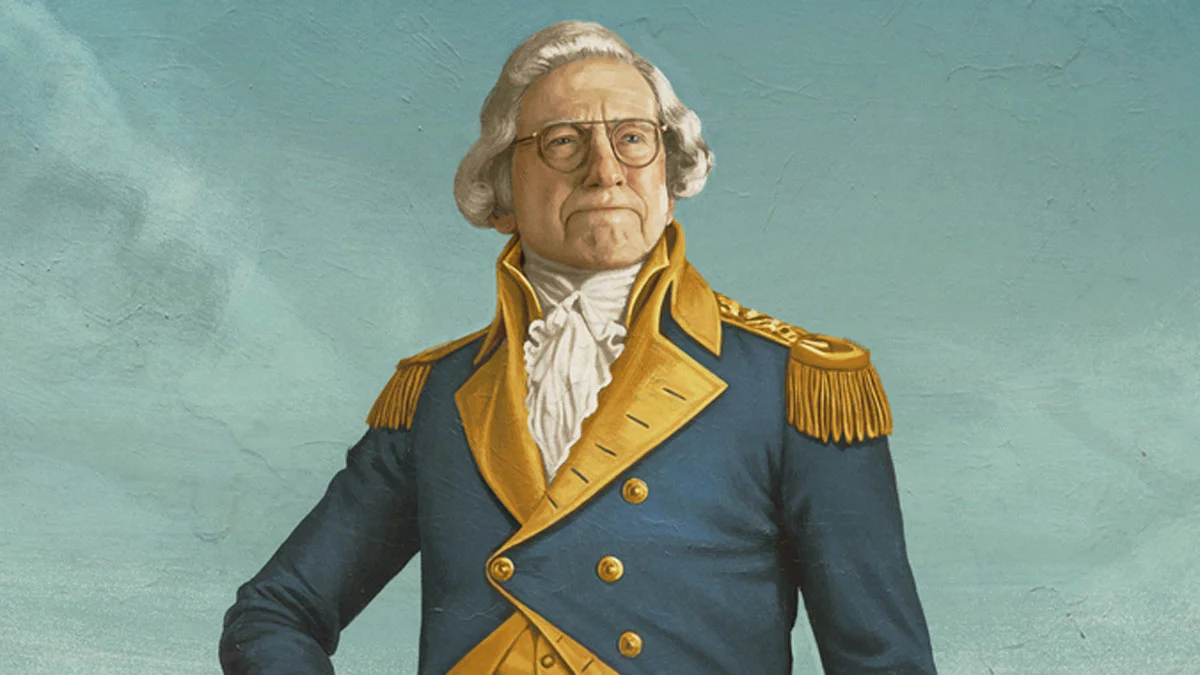
In the landscape of modern television, few figures have cast a shadow as long—or as begrudgingly hilarious—as Larry David. After twelve seasons of defining the "social assassin" archetype in HBO’s Curb Your Enthusiasm, David has returned to the network with a project that feels both wildly ambitious and quintessentially petty. Life, Larry, and the Pursuit of Unhappiness is an irreverent, sketch-based exploration of American history, executive produced by Barack and Michelle Obama.
At its core, the series is a comedic dissection of the American experiment, filtered through the lens of a man who finds fault in everything from the Declaration of Independence to the invention of the telephone. With a staggering initial cast of 27 guest stars across its first seven episodes, the show serves as a "who’s who" of the comedy world, creating a vibrant, often absurd tapestry of historical revisionism.
The Genesis of an Irreverent History Lesson
Life, Larry, and the Pursuit of Unhappiness is the brainchild of Larry David and his longtime collaborator Jeff Schaffer. The creative duo, whose partnership has spanned decades, has traded the petty social politics of Los Angeles for the grand, sweeping theater of the United States’ past. The show utilizes a sketch format to bridge the gap between historical gravity and David’s trademark neuroticism.
The show is not merely a collection of gags; it is an interrogation of the American psyche. By placing David into the shoes of figures like Robert Livingston or Alexander Graham Bell, the series highlights the friction between the grandiosity of historical events and the mundane, often selfish, concerns of the individuals involved. As fans of Curb Your Enthusiasm will recognize, David’s characters are rarely interested in the "greater good." Instead, they are preoccupied with the social faux pas, the linguistic annoyances, and the personal slights that history books typically ignore.
A Chronological Breakdown: Episode 1, “Livingston”
The series premiere, titled “Livingston,” sets the tone for the season. The episode opens with a cameo from former President Barack Obama, who manages to balance a patriotic appreciation for the nation with a sharp, meta-commentary on David’s own reputation for being difficult. Following this, the legendary Samuel L. Jackson steps into the role of narrator, providing a dry, rhythmic anchor to the proceedings.
The Declaration of Petty Grievances
In the primary sketch, Larry David portrays Robert Livingston, one of the "Committee of Five" tasked with drafting the Declaration of Independence. The sketch posits a hilarious counter-history where Livingston attempts to include his own obscure, personal complaints alongside the grievances against King George III. His fellow revolutionaries—played by comedy titans Henry Winkler, Chris Parnell, and Alan Tudyk—serve as the straight men, attempting to maintain historical decorum while David descends into his usual spiral of irrational frustration.
The Telephone and the Kind Factor
The second major segment tackles the birth of the telephone. David steps into the role of Alexander Graham Bell, joined by Mo Gaffney as his long-suffering wife, Mabel. The scene is stolen by Richard Kind, who portrays the recipient of the first phone call. It has become an unspoken rule in the industry that a comedy series is incomplete without a Richard Kind appearance, and his performance here—drenched in confusion and quintessential "Kind-ian" energy—proves exactly why he remains a staple of the craft.
The scene is bolstered by a background cast that includes Alison Becker, known for her sharp comedic timing in Parks and Recreation; Mary Sohn, a breakout star from A.P. Bio; and character actor Rodney J. Hobbs. Together, they provide the texture of a 19th-century audience witnessing technological history, albeit with a modern, cynical polish.
The Trenches of World War I
Moving forward in time, the show transitions to the grit of World War I. Michael Chiklis, known for his powerhouse performances in The Shield and The Commish, brings a commanding, gruff authority to the role of a Sergeant preparing his troops for the front lines. The sketch features David alongside fellow soldiers played by Mike Castle and Jake Reiner. The casting of Reiner—the son of Rob Reiner—adds a layer of Hollywood lineage that permeates the production, reinforcing the series’ status as an industry-wide "all-hands-on-deck" event.
The Rosa Parks Paradigm
The episode concludes with a poignant and surprisingly grounded sketch featuring Jurnee Smollett as Rosa Parks. Smollett, whose resume includes Friday Night Lights and Birds of Prey, delivers a performance that demands respect. By pitting the historical weight of the Montgomery Bus Boycott against the absurdist, "Larry-esque" character of a bus passenger, the show manages to walk a tightrope of tone. Smollett’s resemblance to Parks and her ability to anchor the scene against David’s antics serves as a testament to the casting department’s commitment to quality over mere cameos.

Supporting Data: The Guest Star Machine
The sheer scale of Life, Larry, and the Pursuit of Unhappiness is reflective of David’s influence within the comedy community. To date, 27 actors have been confirmed for the first seven episodes. This approach of utilizing high-caliber talent in short, sharp bursts ensures that the viewer’s attention is constantly reset.
The production team, led by Schaffer, has opted for a rotating door of recognizable faces. This is a deliberate aesthetic choice: by using actors whom the audience already knows from other iconic roles, the show creates a sense of "historical recognition." When the viewer sees a familiar face, they are instantly grounded in the sketch, allowing David to skip the exposition and dive straight into the comedic conflict.
Official Responses and Creative Philosophy
In various interviews, Larry David has described the show as an attempt to "humanize" history by making it as inconvenient as possible. The inclusion of the Obamas as executive producers has raised eyebrows regarding the show’s political content. While some sequences remain within the realm of the observational, others lean into a more biting political satire.
Jeff Schaffer has noted that the collaboration was born out of a mutual desire to look at history not as a series of statues, but as a series of human errors. "We wanted to see what happened when the ‘Great Men of History’ had to deal with the same annoyances we face today," Schaffer said. "What if the person who wrote the Constitution was just as bothered by a loud chewer as Larry is?"
Implications for the Future of Sketch Comedy
The success of this project could signify a shift in the landscape of streaming television. By leaning into the "limited series" format—seven episodes, high-budget production, and an A-list cast—HBO is betting that the audience’s appetite for sketch-based narratives remains robust, provided the star power is sufficient.
Furthermore, the show’s reliance on the Curb Your Enthusiasm fanbase creates an interesting dynamic. The audience is invited to play a game of "spot the alum," creating a communal viewing experience that is rare in the era of binge-watching. However, the show must tread carefully; relying too heavily on nostalgia or "insider" comedy risks alienating casual viewers.
As the series progresses, the challenge for David and Schaffer will be to maintain the balance between the historical premise and the, at times, hyper-specific grievances of the lead character. If the first episode is any indication, the show is more than capable of navigating this tension.
Conclusion: A History of Unhappiness
Life, Larry, and the Pursuit of Unhappiness is not a documentary, nor does it claim to be. It is a mirror held up to the past, reflecting the same small-minded, petty, and undeniably human impulses that define our present. Whether it is the drafting of the Declaration or the quiet dignity of the Civil Rights movement, the show insists that behind every great historical moment, there is a Larry David somewhere, complaining about the lighting or the seating arrangement.
As the show continues to roll out new episodes every Friday on HBO and Max, audiences should prepare for more surprises. With dozens of guest stars still to be revealed, the series is positioning itself to be a permanent fixture in the cultural conversation—or at least, a very loud, very argumentative one. One thing is certain: if you are looking for a history lesson, you might find one, but you will almost certainly find a headache, a shout, and a very frustrated man in the middle of it all.
 Asro
Asro
 Lina Irawan
 rifanmuazin
