

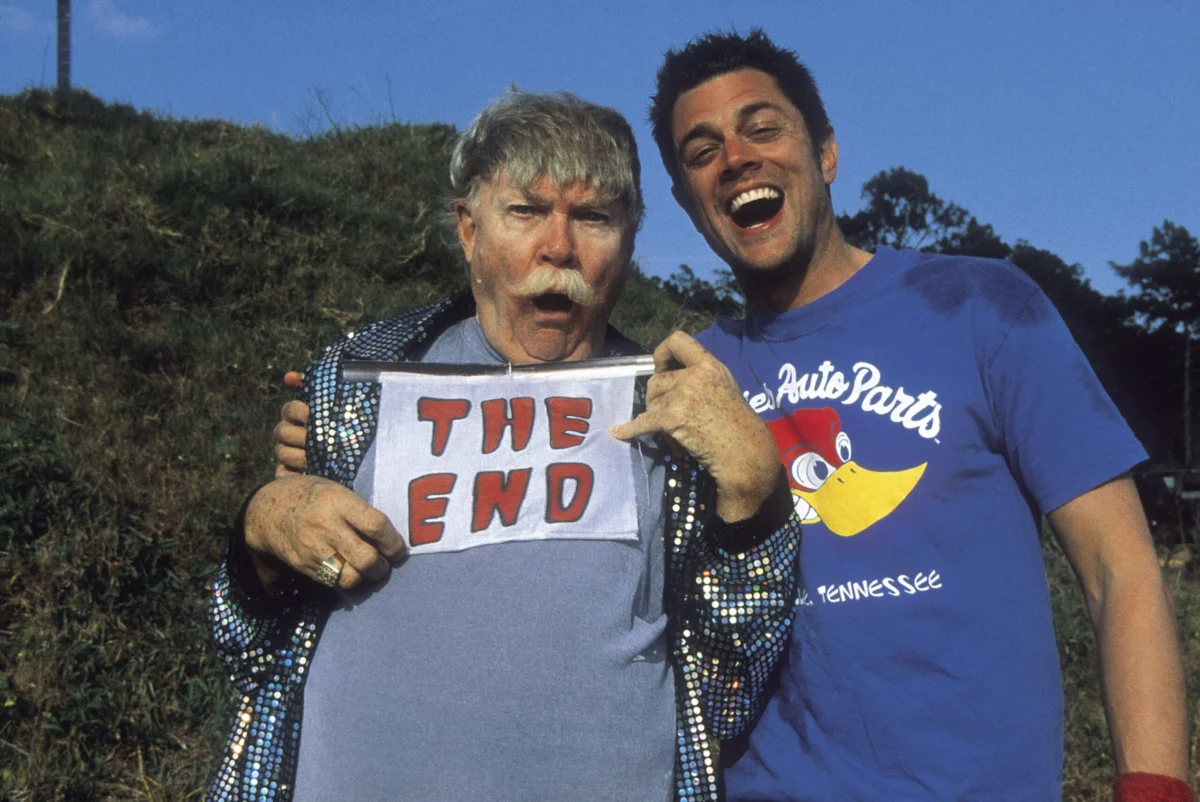
In the volatile world of stunt performance and gonzo filmmaking, few names carry as much weight—or as many scars—as Jeff Tremaine and Johnny Knoxville. For over a quarter of a century, the Jackass franchise has balanced on a razor’s edge between avant-garde comedy and life-threatening catastrophe. However, according to director Jeff Tremaine, the era of the "human wrecking ball" has finally reached its terminal velocity.
Speaking on a recent episode of the Filmmaker Toolkit Podcast, Tremaine confirmed that the latest installment, Jackass: Best and Last, represents the absolute conclusion of the franchise. While the group has "retired" multiple times in the past, Tremaine cites a sobering reality for this finality: the human body, specifically that of Johnny Knoxville, can no longer sustain the "magic" that defined their brand of entertainment.
Main Facts: The Finality of ‘Best and Last’
The core of the announcement centers on the realization that the primary engine of Jackass—Johnny Knoxville’s willingness to endure extreme physical trauma—has reached a medical breaking point. Tremaine noted that while every previous film felt like it could be the last, Jackass: Best and Last is the first time the decision feels permanent and non-negotiable.
The Medical Mandate
The primary catalyst for this retirement is a traumatic brain injury (TBI) sustained by Knoxville during the production of 2022’s Jackass Forever. During a stunt involving a charging bull, Knoxville was leveled with such force that it resulted in a brain hemorrhage and significant cognitive decline during the recovery period.
"It became apparent we can’t hit him in the head anymore," Tremaine explained during the interview. "We can kick him in the dick and punch his body, but it’s risky to get him another concussion." This medical boundary effectively neuters the high-stakes escalation that the audience expects from a Jackass production, leading the creators to decide that ending on a high note is preferable to a diminished return.
A Retrospective Conclusion
Jackass: Best and Last serves as both a documentary and a eulogy. It utilizes deep-dive archival footage to show the mechanics of stunts that were previously only seen in their final, edited forms. This includes behind-the-scenes glimpses into the "fateful bull hit" and the psychological toll the director-performer relationship has taken on Tremaine over twenty-six years.

Chronology: From MTV Anarchy to Cinematic Milestone
To understand why the end of Jackass is a significant cultural moment, one must trace the improbable longevity of a franchise that was designed to "burn bright and fast."
2000–2002: The Television Genesis
The series debuted on MTV in 2000, born from the intersection of Big Brother skate magazine and the performance art of Johnny Knoxville. It was an immediate lightning rod for controversy, criticized by politicians and parental groups for its perceived influence on youth. Despite—or perhaps because of—this, it became a global phenomenon.
2002–2010: The Golden Age of the Trilogy
Transitioning to the big screen, Jackass: The Movie (2002) proved that the format could thrive in a theatrical setting. This was followed by Jackass Number Two (2006) and Jackass 3D (2010). Each film increased the budget and the danger, moving from backyard pranks to elaborate, high-concept stunts involving apex predators and heavy machinery.
2011–2021: The Long Hiatus and Loss
Following the tragic death of cast member Ryan Dunn in 2011, the franchise entered a decade of relative dormancy. The cast aged, and many struggled with the physical and mental fallout of their careers. It wasn’t until the announcement of Jackass Forever that the "old guard" reunited for one final, multi-generational effort.
2022–Present: The Final Reckoning
Jackass Forever introduced a younger cast, suggesting a potential hand-off. However, the severe injury to Knoxville during the bull stunt changed the internal calculus. The release of Jackass 4.5 and now Jackass: Best and Last marks the formal closing of the book.
Supporting Data: The Physics and Philosophy of Failure
The Jackass methodology has always been rooted in a unique cinematic philosophy: the "Design of Failure." In traditional action filmmaking, the goal is for the protagonist to succeed in a dangerous feat. In Jackass, the stunt is only successful if the performer fails.

The "Double Take" Analysis
In Best and Last, Tremaine reveals a critical piece of data regarding the infamous bull stunt in Jackass Forever. It is revealed that Knoxville actually took two hits. The first hit was from a smaller bull; it was powerful enough to break two of Knoxville’s ribs, but because he didn’t "fly" or fall in a visually dramatic way, the footage was deemed unusable.
"The worst-case scenario to me is always something is gnarlier than it looks," Tremaine said. This reveals the brutal economics of their work: a performer can sustain life-altering injuries, but if the camera doesn’t capture a "spectacular" visual, the pain is effectively wasted in terms of the film’s narrative.
Survival Statistics
Tremaine reflected on the sheer improbability of the cast’s survival over 26 years. The group has survived:
- Dozens of high-speed vehicular crashes (including the 2002 golf cart flip that Tremaine believed had decapitated Knoxville).
- Countless concussions and bone fractures.
- Encounters with apex predators (bears, bulls, sharks, and snakes).
- Severe psychological stress resulting from the "prank" culture inherent in the production.
Official Responses: Tremaine on the "Magic" of the Cast
A recurring question in the industry is whether Jackass can be "rebooted" with a younger generation. While Jackass Forever introduced new faces like Poopies and Zachass, Tremaine remains skeptical about the franchise’s viability without its original DNA.
On Replacing the "Gnarly"
Tremaine threw "cold water" on the idea of a brand-new crew taking over the mantle. "We could get new people to come in… but I would need to find a new gnarly me, too," he stated. He emphasized that Jackass isn’t just a format; it is a specific chemistry between a group of friends who grew up together. "It feels like a bigger idea, but really it’s magic because of the guys in it."
The Director’s Burden
The podcast interview shed light on a side of Tremaine rarely seen: the traumatized witness. While he is often depicted as the laughing mastermind behind the camera, Tremaine admitted to being "shook" by the violence he has had to authorize.

He recalled the 2002 golf cart incident: "From my angle, that golf cart swallowed him up and broke his neck… I was shook the whole night." Now approaching 60, Tremaine expressed a weary desire to stop being the person who has to ask his best friend to "do it again" for the sake of a better shot.
Implications: The Legacy of the Human Wrecking Ball
The retirement of Jackass marks the end of a specific type of physical comedy that may never be replicated in the modern era.
The Rise of the "Vlog" Era
Jackass was the progenitor of modern YouTube and TikTok stunt culture. However, Tremaine’s films maintained a level of cinematic craft and high-budget absurdity that solo creators struggle to match. The end of the franchise leaves a vacuum in the "stunt-comedy" genre that is currently being filled by uncurated, often more dangerous, and less "artful" internet content.
Ethical Shifts in Entertainment
As our understanding of TBIs and long-term brain health has evolved (largely due to research in the NFL), the cultural appetite for watching people sustain repeated head trauma has shifted. The decision to end Jackass is, in part, a reflection of this new ethical landscape. What was once seen as hilarious in 2000 is now often viewed through the lens of medical concern and long-term disability.
The Final Shot
The closing image of the franchise—a motel room clip from 2002 showing a traumatized Tremaine and a smiling, bloodied Knoxville—serves as a perfect summation of their 26-year journey. It highlights the central paradox of Jackass: the director’s fear versus the performer’s adrenaline.
By choosing to end now, Tremaine and Knoxville are preserving a legacy of survival. They are stepping away from the "marathon" before it claims a life, ensuring that the "ridiculous" 26-year run ends with a reflection on friendship rather than a tragedy on set. As Tremaine concluded, "The fact that we survived 26 years is ridiculous." In the end, the greatest stunt the Jackass crew ever pulled was knowing when to finally walk away.
 Jia Lissa
 Lina Irawan
 Iffa Jayyana
