

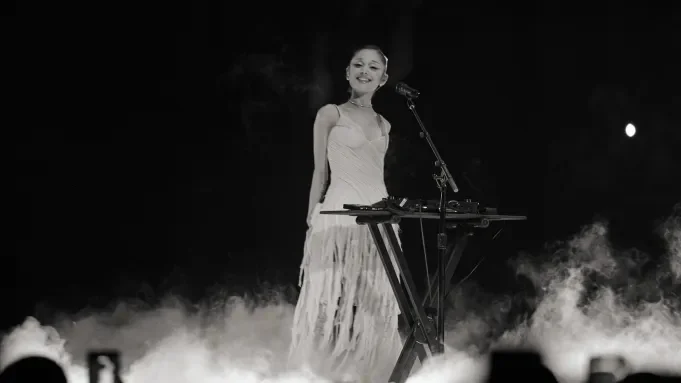
On June 6, the music world shifted its focus to the opening night of Ariana Grande’s Eternal Sunshine Tour. While the spectacle itself—a masterfully curated blend of high-concept stagecraft and vocal acrobatics—was the headline, the subtext was unmistakable: the unofficial commencement of a strategic Grammy campaign for her upcoming album, Petal. As Grande embarks on her first major concert tour in seven years, she is not merely celebrating her past successes; she is actively laying the groundwork to ensure that Petal, slated for a July 31 release, receives the critical and industry recognition that has, at times, eluded her in the General Field.
The Context: A Strategic Pivot
Grande’s previous album, 2026’s Eternal Sunshine, was a commercial success, anchored by the streaming juggernaut “We Can’t Be Friends.” However, its reception at the Recording Academy was mixed. While the album secured wins within the Pop categories, it was conspicuously absent from the General Field—the coveted top four awards—and notably failed to secure a nomination in the Best Pop Solo Performance category, a first for Grande since her 2014 breakout with My Everything.
The transition from Eternal Sunshine to Petal appears to be a calculated correction. Where the former’s lead single, “Yes, And?”, saw tepid reception, Petal’s lead track, “Hate That I Made You Love Me,” has been a fixture at the top of the Global Spotify charts since its release last month. By leveraging the momentum of a massive, globally anticipated tour, Grande is signaling that Petal is not just a follow-up, but a definitive statement of her artistic evolution.
Chronology: From Opening Night to the Balloting Horizon
The timeline of this campaign is precise. With the tour launch in early June, Grande has positioned herself to maintain high visibility throughout the summer—a season that historically dictates the conversation leading into the Grammy nomination window.
- June 6, 2026: The Eternal Sunshine Tour commences. Early reports indicate a focus on vocal precision and narrative-driven performance, effectively shifting the public discourse away from tabloid scrutiny surrounding her personal life—specifically her high-profile split from Wicked co-star Ethan Slater—and back toward her identity as a world-class vocalist.
- July 31, 2026: The release of Petal. Dropping the album in the heart of the touring cycle ensures that the live audience is primed for new material, creating an immediate feedback loop between concert-goers and streaming platforms.
- September 1, 2026: The tour concludes in London after 41 sold-out performances. This timing is critical; it places the completion of the tour just weeks before the Recording Academy begins the balloting process for the 69th Annual Grammy Awards.
- October 2026: The official start of Grammy voting. By this point, the "touring effect"—the cultural residue left by a successful, high-grossing live production—will be at its peak, providing voters with a tangible, recent memory of the artist’s prowess.
Supporting Data: The Power of the Live Experience
The correlation between a successful tour and Grammy recognition is well-documented. Data provided by recent industry reports suggests that the Eternal Sunshine Tour has acted as a catalyst for a massive resurgence in Grande’s overall discography. Yahoo Entertainment recently reported that her broader catalog has seen an 18% spike in engagement, with the Eternal Sunshine album itself experiencing a 60% surge in streams since the tour began.

This phenomenon is not an anomaly. It is a proven mechanism for "asserting cultural dominance." Consider the trajectory of Taylor Swift’s The Eras Tour, which served as the backdrop for her fourth Album of the Year victory. Similarly, Coldplay’s Music of the Spheres Tour transformed the narrative surrounding that band, propelling them into an unexpected Album of the Year nomination. Even when artists are not explicitly campaigning, the sheer logistical achievement of a sold-out global tour forces the industry to take notice.
Furthermore, the guest lists at these early shows are telling. Industry titans, peers, and voting-eligible artists—including Flo, Tame Impala, Demi Lovato, Lizzo, and Jennifer Lopez—have been spotted in attendance. These appearances are not merely social; they represent a high-level networking opportunity that places Grande’s craft directly in front of the very individuals responsible for shaping the Academy’s consensus.
Implications: Changing the Narrative
The most significant hurdle for Grande in recent years has not been commercial viability, but rather the "narrative" component of the Grammy voting process. In 2023, the media landscape was dominated by reports of her relationship with Ethan Slater. At the time, this threatened to overshadow her musical output and invite a level of public backlash that often colors the reception of an artist’s work.
However, the Eternal Sunshine Tour has served as a professional reset. By prioritizing the stage, Grande has regained control of her image. Critics have lauded her performances of staples like “Into You” and “Dangerous Woman,” reinforcing her reputation as a formidable live act. This pivot from "tabloid subject" to "touring virtuoso" is essential for securing votes from the Recording Academy, an institution that rewards artists who can successfully bridge the gap between pop stardom and artistic legitimacy.
The Road to the General Field
Grande has already secured three Grammy statuettes in the pop categories, but the "General Field"—Album of the Year, Record of the Year, Song of the Year, and Best New Artist—has remained elusive. Her previous attempt with Thank U, Next resulted in high-profile nominations but ultimate losses across the board, leaving a lingering sense of unfinished business.

The Petal campaign is, in many ways, an attempt to bridge this final gap. The strategy is clear: use the tour to generate undeniable momentum, ensure the music reaches the broadest possible audience through strategic streaming dominance, and maintain a narrative of growth and professionalism.
Whether Petal will finally be the record to earn her that elusive General Field trophy remains to be seen. However, by aligning her live performance schedule with the nuances of the Grammy calendar, Grande has maximized her chances. She is no longer just a pop star hitting the road; she is a seasoned industry veteran orchestrating a campaign designed to ensure that when the ballots are cast, her name is at the top of the list.
Conclusion
Ariana Grande’s return to the stage is more than a concert series; it is a meticulously planned campaign for artistic validation. By transforming the Eternal Sunshine Tour into a multi-month, global exhibition of her talent, she has effectively neutralized the background noise of her personal life and amplified her musical presence. As she prepares to drop Petal and march toward the September tour finale, the music industry is watching closely. The question is not whether the Eternal Sunshine Tour is a success—the sold-out arenas and streaming spikes confirm that—but whether this success will be enough to finally secure her the ultimate validation from the Recording Academy. If the current trajectory holds, the upcoming Grammy season may well be the one where Ariana Grande finally sees her career fully bloom.
 Ammar Sabilarrohman
 Siti Muinah
 Iffa Jayyana
