

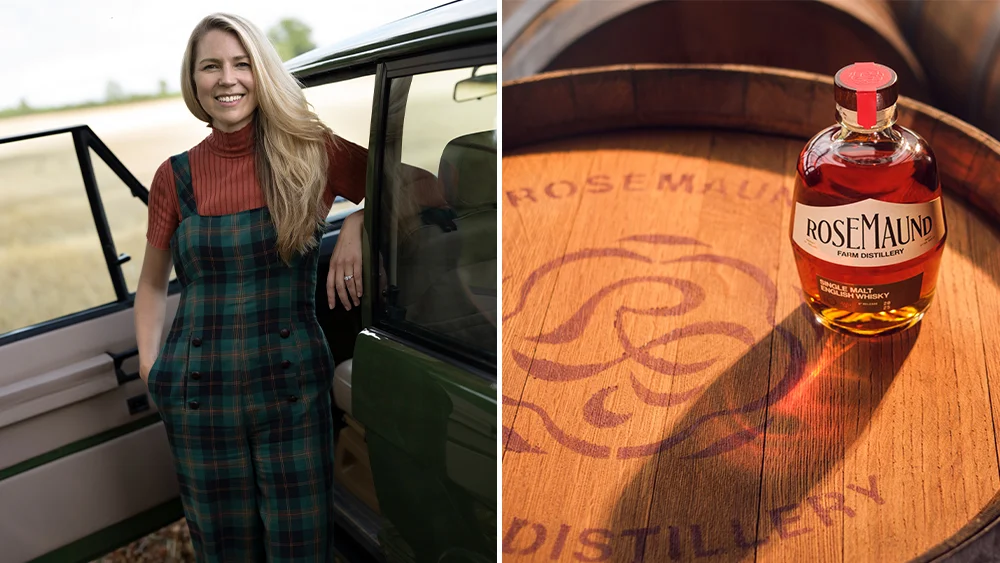
For the Chase family, the passage of time is no longer measured solely by the harvest calendar; it is now distilled into liquid form. At Rosemaund Farm Distillery, the changing of the seasons has acquired a distinct flavor profile. Their latest release, The Orchard Cut, is a 10-year-old English single malt drawn exclusively from ex-bourbon casks. It is a spirit conceived not as an exercise in heavy-handed wood influence, but as a "true taste of English spring"—orchard-led, bright, and quietly energizing.
This release represents more than just a new entry into the burgeoning English whisky category; it is the culmination of a decade-long journey of reclamation, resilience, and a profound commitment to the land.
The Philosophy of "Alive" Whisky
At the heart of the Rosemaund brand is cofounder and marketing director Lorna Chase. A formidable brand builder with a storied history of elevating British food-and-drink imprints onto the global stage, Chase brings a distinct perspective to the spirits world.
"We’re not looking for the darkest or richest whisky," Chase explains, her tone reflecting a desire for authenticity over industry convention. "We’re searching for the one that feels most alive."
This philosophy defines every aspect of the Rosemaund operation. In a market often obsessed with age statements or aggressive sherry-cask finishes, the Orchard Cut offers a refreshing pivot toward the vibrant, green notes of Herefordshire’s landscape. It is a spirit that captures the specific atmospheric pressure of an English spring—the dew on the barley, the awakening of the orchards, and the crisp, clean air of the countryside.
A Chronology of Resilience: From North Yorkshire to Herefordshire
To understand the character of the whisky, one must understand the character of its maker. Born in Harrogate in 1987, Lorna Chase’s early life was framed by the rugged landscape of a North Yorkshire farm. It was a childhood of stone walls, horses, and working dogs, where the clock was governed by the rhythm of the seasons rather than the rigidity of a nine-to-five.
The trajectory of her life shifted dramatically when she was just three years old. Her father’s passing left her mother with three young daughters and the weight of a working farm. This early trauma served as a formative lesson in the necessity of resilience, the value of family loyalty, and the strength found in sticking together during the leanest years.

The Professional Climb
Chase’s career path was defined by a series of high-stakes environments. After completing her studies at Harper Adams University in Shropshire, she gained invaluable experience during a stint at Tyrrells Crisps. In 2008, she joined the founding team of the original Chase Distillery. As global marketing manager, she was instrumental in transforming a small Herefordshire start-up into one of the most respected craft-spirits producers in the United Kingdom.
The 2021 acquisition of that venture by industry giant Diageo—a deal reported to be in the region of £70 million—was a professional milestone, yet it brought an unexpected existential crisis. Selling a business she helped build from the ground up felt, in many ways, like losing a part of her own identity.
The Return to Roots
The year 2024 marked the beginning of a new chapter. Seeking to reclaim both her heritage and her autonomy, Chase, alongside her husband Harry and her brother-in-law James, purchased the original farm and distillery site at Rosemaund. This was not merely a business acquisition; it was a homecoming. They relaunched the site as a distinct, field-to-bottle whisky venture, free from the corporate mandates of her previous tenure.
Supporting Data: The Anatomy of a Farm Distillery
Rosemaund is situated in the agricultural heart of Herefordshire, a region defined by its fertile red soil and historic apple orchards. The distillery operates on a model of extreme provenance, ensuring that every element of the production process is accounted for within the estate’s boundaries.
The Agricultural Foundation
- Heritage Grains: The distillery utilizes Maris Otter barley, a variety prized for its flavor, grown using regenerative agricultural practices on the estate.
- Water Security: The site features its own dedicated water source, ensuring that the terroir of the Herefordshire landscape is preserved in the water chemistry of the spirit.
- Maturation: Unlike many distilleries that transport barrels to climate-controlled warehouses, Rosemaund matures its whisky in converted farm buildings on-site, allowing the ambient Herefordshire environment to influence the spirit’s development over time.
The Spirits Portfolio
The initial Rosemaund offerings have surprised industry analysts with their depth. The debut 10-year-old single malt, composed of bourbon and sherry casks filled between 2014 and 2016, exhibited an unusual level of maturity for a relatively young English distillery. While that initial expression was noted for being rounded and softly spiced, the Orchard Cut shifts the register toward a greener, fresher profile. Early reviews from specialist publications have already categorized the Rosemaund output as a serious, distinctly English contender in the global single malt market.
Official Perspectives and Creative Collaborations
The Rosemaund project has attracted attention not only for its quality but for its unique collaborative structure. Standing alongside the Chase family is film director Guy Ritchie.
Ritchie’s involvement is not a mere celebrity endorsement; it is a substantive creative partnership. He has invested both capital and time into the project, taking a hands-on role in the aesthetic and experiential aspects of the distillery. From designing the "Wild Kitchen" feasting tables—where guests can experience the whisky in its native environment—to weaving the narrative of the distillery into his own storytelling world, Ritchie’s input has helped define the brand’s rugged yet refined identity.

When asked about the role of a female entrepreneur in a traditionally male-dominated industry, Chase is pragmatic. She focuses on the shift from industrial scale to human-centric production. "It’s about patience over scale," she notes. Her leadership style emphasizes empathy, creative storytelling, and an unwavering commitment to the integrity of the product at every touchpoint.
Implications: The Future of English Whisky
The rise of Rosemaund Farm Distillery suggests a broader shift in the global spirits market. Consumers are increasingly moving away from mass-produced heritage brands in favor of "hyper-local" producers who can articulate a clear, transparent story of provenance.
1. The "Farm-to-Bottle" Movement
Rosemaund serves as a template for the next generation of distillers. By controlling the growth of the grain, the water source, and the maturation environment, they are creating a product that is inextricably linked to the geography of Herefordshire. This level of vertical integration is the ultimate defense against the dilution of brand identity.
2. Redefining the "English" Profile
For decades, English whisky struggled to find a voice distinct from its Scottish or Japanese counterparts. Rosemaund’s focus on the "orchard-led" profile suggests that English whisky need not imitate the peat-heavy or sherry-dominant styles of established regions. By leaning into the agricultural strengths of the region—the orchards and the red soils—they are carving out a unique identity that feels fresh and distinctly English.
3. A Legacy of Stewardship
Lorna Chase’s journey—from the loss of her father to the sale of her first company and the eventual reclamation of her family’s land—is a narrative of stewardship. Her hope for the brand is simple but ambitious: that a new generation of drinkers will remain open-minded about the possibilities of whisky.
As the spirits industry continues to grapple with the challenges of sustainability and authenticity, Rosemaund stands as a testament to the idea that the best way to move forward is to stay deeply rooted in the soil. Whether through the crisp notes of the Orchard Cut or the quiet, enduring presence of the farm itself, the distillery is not just making whisky; it is capturing the fleeting, vibrant, and ever-changing spirit of the English countryside.
For the Chase family, the work is far from finished, but in the amber glow of a 10-year-old single malt, one can hear the echoes of the North Yorkshire fields of 1987 and see the clear, bright future of Herefordshire.
 Ali Ikhwan
 Laily UPN
 Raul Delapena Setiawan
