

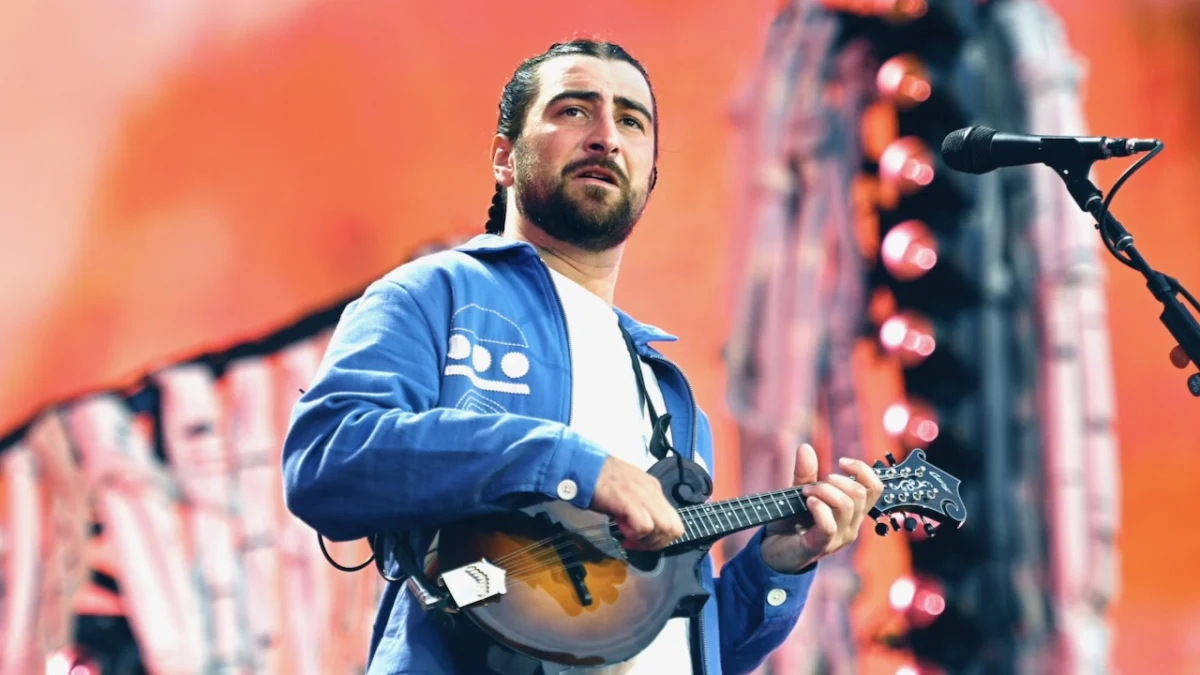
The intersection of extreme fandom and live event logistics has hit a bizarre and unsanitary new low. During his recent performance in Philadelphia, folk-pop sensation Noah Kahan was forced to address a highly unconventional disruption: a fan reportedly defecated near the stage, leaving both the artist and venue staff stunned. This incident, which has since ricocheted across social media platforms, highlights a growing trend of boundary-pushing concert behavior that is testing the patience of touring acts and the fortitude of venue employees.
The Philadelphia Incident: A Breakdown of Events
On Friday night, as Noah Kahan commanded the stage in Philadelphia, the energy of the crowd—typically characterized by emotive sing-alongs and indie-folk enthusiasm—was overshadowed by a visceral disturbance near the front row. While the specifics of the incident were initially confined to the immediate vicinity of the floor, the aftermath quickly migrated to social media.
Witnesses and bystanders began posting videos and accounts of the cleanup process, which appeared to involve venue security and maintenance staff struggling to address a biological hazard in the middle of a packed crowd. The incident was not merely a matter of concert-goers losing their personal space; it became a public health and sanitation concern that effectively halted the equilibrium of the performance area.
By Saturday, the digital discourse surrounding the "Philly incident" had become inescapable. Kahan, known for his dry wit and active engagement with his fanbase on platforms like X (formerly Twitter), felt compelled to step in and manage the fallout.
Kahan’s Direct Address: A Plea for Human Decency
In a post that has since garnered tens of thousands of interactions, Kahan issued a blunt, tongue-in-cheek, yet deeply serious plea to his audience.
"If you have to poop at a show please dear god just go to the bathroom lmao," Kahan wrote on Saturday. "I’ve pooped my pants as much as the next 29 year old but you guys gotta understand there’s a venue worker out there with a 1000 yard stare after dealing with that."
The statement was characteristic of Kahan’s brand—self-deprecating and relatable—but it carried an underlying tone of exhaustion. For an artist who prides himself on fostering a communal, safe environment for his listeners, having to address the basic biological functions of his audience was clearly not on his tour itinerary. The mention of the "1000-yard stare" was a nod to the often-overlooked service workers—security guards, janitorial staff, and stage hands—who bear the brunt of fan behavior.
A Growing Pattern of Behavioral Challenges
This incident in Philadelphia is not an isolated occurrence of questionable fan behavior during the "Great Divide World Tour." In fact, it serves as the second major behavioral correction issued by the artist in just 48 hours.
Only a day prior to the Philadelphia show, Kahan had to publicly request that fans cease the unauthorized removal of street signs in his native Vermont. The signs, which hold significance due to their lyrical references in his breakout album Stick Season, were being pilfered at an alarming rate by fans seeking a piece of the "Kahan lore."
The dual nature of these incidents—one involving the desecration of public property and the other the violation of basic sanitary standards at a concert—paints a concerning picture of parasocial entitlement. When fans feel so deeply connected to an artist’s work that they believe they are entitled to steal from the artist’s hometown or treat a concert venue as their own private living room, the line between "devoted fan" and "disruptive individual" becomes dangerously thin.
The Evolution of Concert Etiquette: From Diapers to Disturbances
The Kahan incident has prompted a broader conversation regarding the current state of live music etiquette. There is a palpable shift in how audiences behave at high-profile shows. Recently, we have seen a rise in the "extreme fan" phenomenon, where concert-goers go to absurd lengths to maintain their front-row positioning.
Earlier this year, reports surfaced regarding fans at Olivia Rodrigo concerts allegedly wearing adult diapers to avoid losing their place in the barricade for bathroom breaks. While that practice remains a choice made by the individual, the Philadelphia incident involving Kahan marks a shift from self-preservation to public disturbance. It raises a critical question: At what point does the "stan" culture—the obsessive devotion to a celebrity—override the basic social contract of attending a public gathering?
Supporting Data: The Logistics of Venue Management
To understand the severity of the Philadelphia incident, one must look at the logistical burden placed on venue operators. Modern arenas are designed to handle high volumes of people, but they are not designed for biological hazards in standing-room-only sections.
- Crowd Density: In a sold-out stadium or arena, the average floor space per person is extremely limited. A single incident of this nature can cause a chain reaction, leading to crowd surges as people attempt to flee the area, creating a genuine safety hazard.
- Staffing and Sanitation: Venue sanitation teams are trained to handle spills and trash, not hazardous bio-waste. The psychological toll on staff—the "1000-yard stare" Kahan referenced—is a documented issue in the service and event industry.
- Legal and Liability Concerns: If a fan is injured or falls ill due to an unsanitary environment caused by another attendee, the venue’s liability becomes complex. These incidents aren’t just funny anecdotes for the internet; they represent significant operational liabilities.
Implications for the "Great Divide World Tour"
The "Great Divide World Tour" is currently one of the most successful ventures in the music industry, with sold-out dates across five continents. However, the sheer scale of the tour makes it a lightning rod for these types of behavioral incidents.
As the tour continues, Kahan’s team will likely be forced to implement stricter security protocols. This could include increased surveillance of the pit area, more frequent sweeps by security personnel, and perhaps even a shift in how the tour communicates with fans prior to showtime.
When an artist has to spend their downtime on social media policing the hygiene and criminal activity of their audience, it detracts from the creative process. Kahan, who is currently in the prime of his career, is forced to manage a "PR crisis" that has nothing to do with his music and everything to do with the fundamental lack of self-awareness among a minority of his supporters.
The Broader Cultural Context: Parasocial Entitlement
Psychologists have long studied the phenomenon of parasocial relationships—the one-sided emotional bonds fans develop with celebrities. In the age of social media, these bonds are stronger than ever. Fans feel they "know" the artist personally, which can lead to a sense of comfort that manifests as inappropriate behavior.
When a fan feels that they are "part of the family" because they listen to Stick Season on repeat, they may feel empowered to act in ways they never would in a classroom or a professional office. The "poop incident" is an extreme manifestation of this lack of boundaries. The individual likely felt a sense of belonging so intense that the normal societal rules—like "don’t defecate in public"—seemed to vanish.
Official Responses and Industry Outlook
While no formal statement has been issued by the Philadelphia venue, it is understood that such incidents lead to internal reviews of crowd management policies. Most major venues have strict codes of conduct that allow for the immediate ejection of patrons who disrupt the performance or jeopardize the health and safety of others.
Industry experts suggest that we may see a "crackdown" era in concert culture. If artists continue to be interrupted by erratic fan behavior, the "front row experience" might change entirely. We could see an increase in assigned seating even for floor tickets, or the implementation of "no-return" policies for those who leave the barricade for any reason.
Conclusion: A Call for Respect
Noah Kahan’s intervention was not just a viral moment; it was a necessary boundary-setting exercise. As the "Great Divide World Tour" continues its global journey, the hope is that fans will internalize the message: the artist, the venue staff, and the fellow concert-goers deserve respect.
The music industry thrives on the passion of the fans, but that passion must be tempered by the reality of shared public space. If the price of seeing an artist perform live is a degradation of basic human decency, then the industry—and the artists themselves—will be forced to take increasingly restrictive measures. For now, the takeaway from the Philadelphia incident is simple: enjoy the music, respect the venue, and please, for the sake of everyone involved, use the bathroom before the set begins.
 Pevita Pearce
 Asro
Asro
 Lina Irawan
