

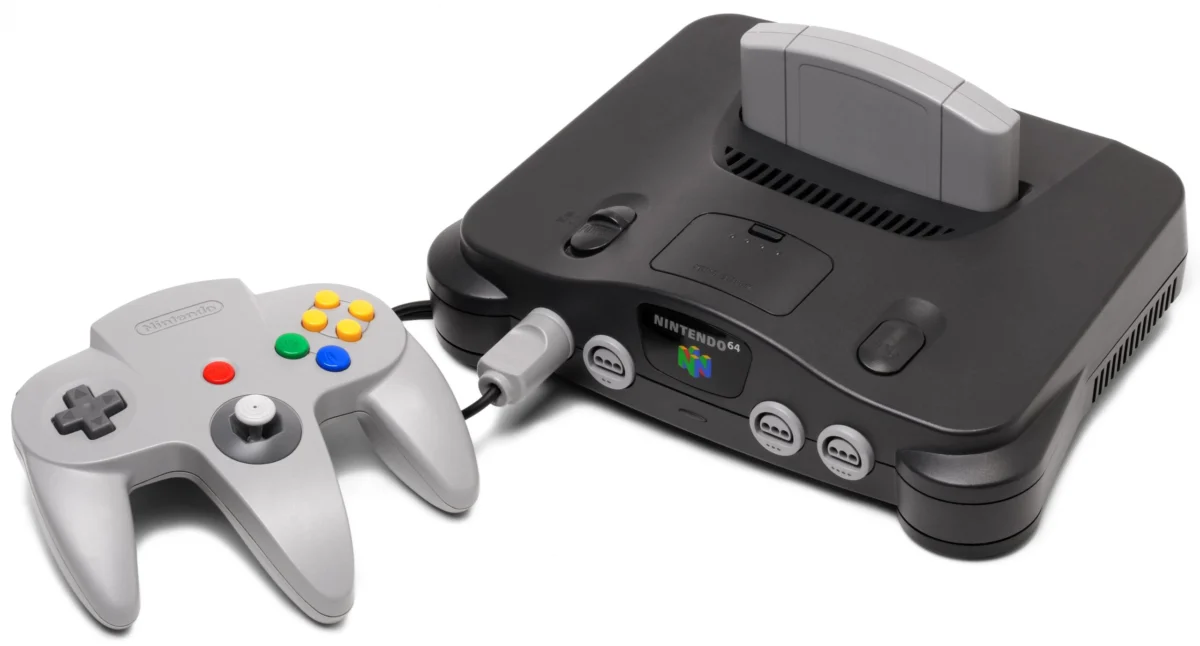
Thirty years ago, the video game industry was in the midst of a violent, tectonic shift. The transition from the 16-bit era to the age of 3D polygons was fraught with uncertainty, technical hurdles, and the looming threat of obsolescence for companies that couldn’t adapt. Nintendo, then the undisputed king of the living room, faced this transition with the Nintendo 64—a console that was, by many accounts, an ambitious gamble.
While the system is remembered today as a titan of the medium, its early days were defined by a thin release schedule and a desperate need for a “killer app” to prove that its experimental hardware was more than just a passing curiosity. It was in this environment that Mario Kart 64 arrived. Far from being a mere follow-up to the SNES original, it served as the critical bridge that transformed a quirky spin-off into the bedrock of Nintendo’s commercial and cultural longevity.
The Context: A System in Need of Substance
When the Nintendo 64 (N64) hit the market, the landscape of gaming was rapidly evolving. Sony’s PlayStation had already begun to capture the imagination of a slightly older, tech-focused demographic with its CD-ROM capabilities and sleek, edgy aesthetic. Nintendo, conversely, remained tethered to the cartridge format, betting the house on the power of its first-party intellectual properties.
In Japan, the N64 launched with a modest lineup: Super Mario 64, Pilotwings 64, and, perhaps surprisingly, a chess title. The Western launch mirrored this limited scope. While Super Mario 64 proved that 3D platforming was not only possible but revolutionary, the console lacked the breadth of multiplayer experiences that had defined the Super Nintendo era.
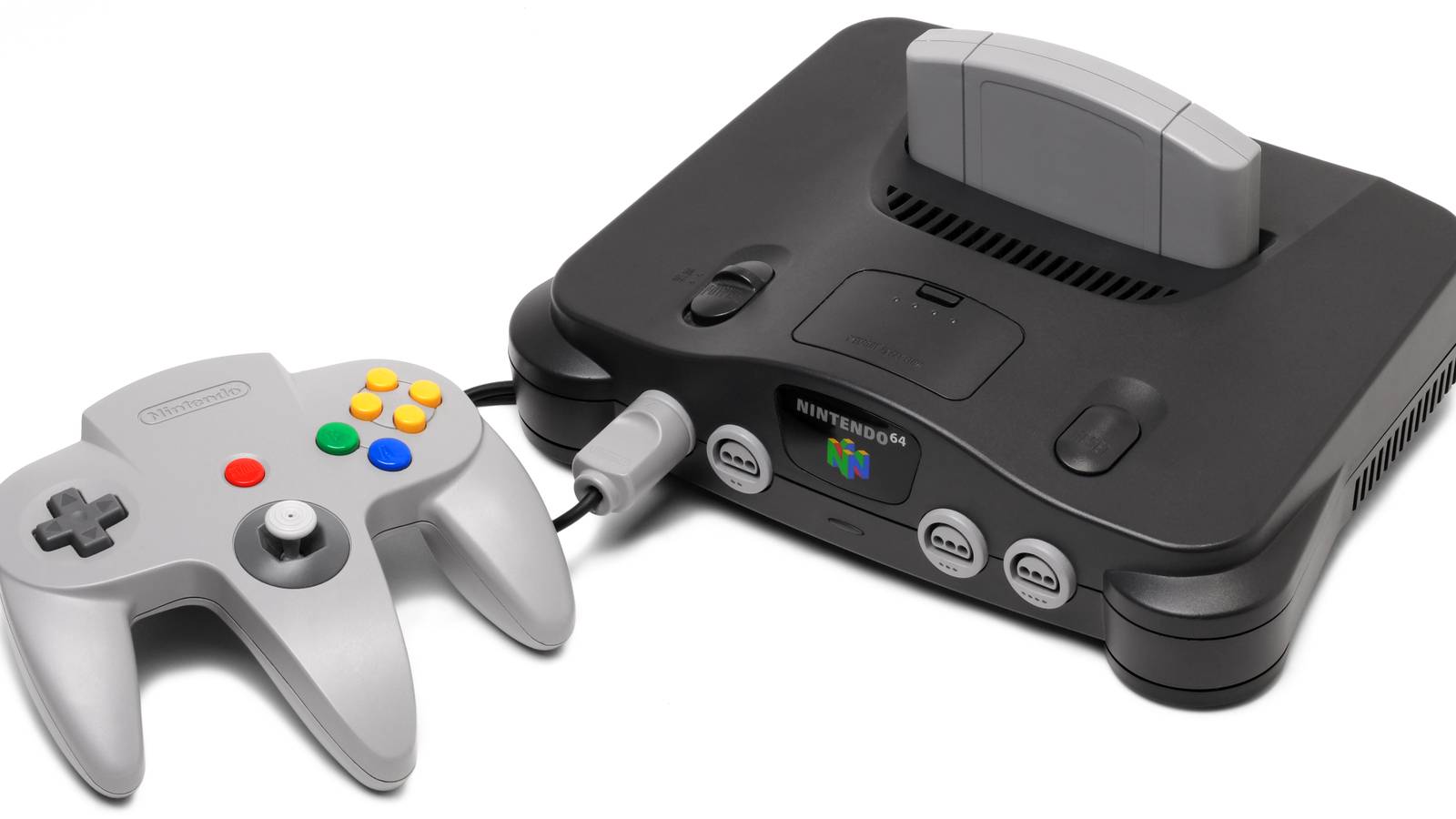
The arrival of Mario Kart 64—launched in Japan just weeks after the console and following shortly thereafter in Western markets—was the stabilizer the N64 needed. It provided the necessary proof that Nintendo could retain its trademark accessibility and "fun-first" philosophy while embracing the complex demands of a 3D environment.
A Chronology of Evolution: From SNES to N64
To understand the weight of Mario Kart 64, one must first look at its predecessor, Super Mario Kart (1992). The original game was a masterpiece of Mode 7 graphics, using a pseudo-3D technique to simulate depth. It was, at its core, a 2D game wearing a 3D mask.
Mario Kart 64, however, was a different beast entirely. It was built from the ground up for the N64’s Silicon Graphics hardware.
- The Pre-Launch Gap (1996): The N64 launched in the summer of 1996. The initial months were defined by a "drought" of software that tested the patience of early adopters.
- The Japanese Release (Dec 1996): Mario Kart 64 hit shelves in Japan, immediately signaling a shift in the console’s library depth.
- The Western Expansion (1997): By the time the game arrived in North America and Europe, the N64 had gained momentum. The introduction of four-player local multiplayer fundamentally changed the social fabric of living room gaming.
- The Legacy Period (1998–Present): Over the next three decades, the foundational mechanics introduced in this title—the drifting, the item balancing, and the track design philosophy—would become the blueprints for every subsequent iteration, culminating in the record-shattering success of Mario Kart 8 Deluxe and the recent experimental Mario Kart World.
Supporting Data: The Economics of the "Blue Shell"
The success of Mario Kart 64 wasn’t just a matter of critical acclaim; it was a masterclass in game design mechanics that ensured player retention. Central to this was the implementation of "dynamic difficulty," often pejoratively referred to by the community as "rubber banding."

In the 16-bit era, if you were a superior driver, you could lap your opponents and maintain a lead until the checkered flag. Mario Kart 64 introduced the "Blue Shell" (Spiny Shell), a targeted equalizer that specifically hunted the leader. While competitive purists despised the item, the data suggests it was a stroke of genius for mass-market appeal. By keeping the gap between the first and last place players artificially tight, the game ensured that every race felt like a nail-biter.
This design choice turned Mario Kart into a perennial "party game." It transformed the experience from a test of raw skill into a social equalizer where anyone—from a seasoned veteran to a child picking up a controller for the first time—had a fighting chance. Today, that accessibility is the primary driver behind the franchise’s massive commercial footprint, with Mario Kart 8 having moved nearly 80 million units across its lifecycle, cementing it as one of the best-selling games in history.
The Technical Shift: Drifting and "Snaking"
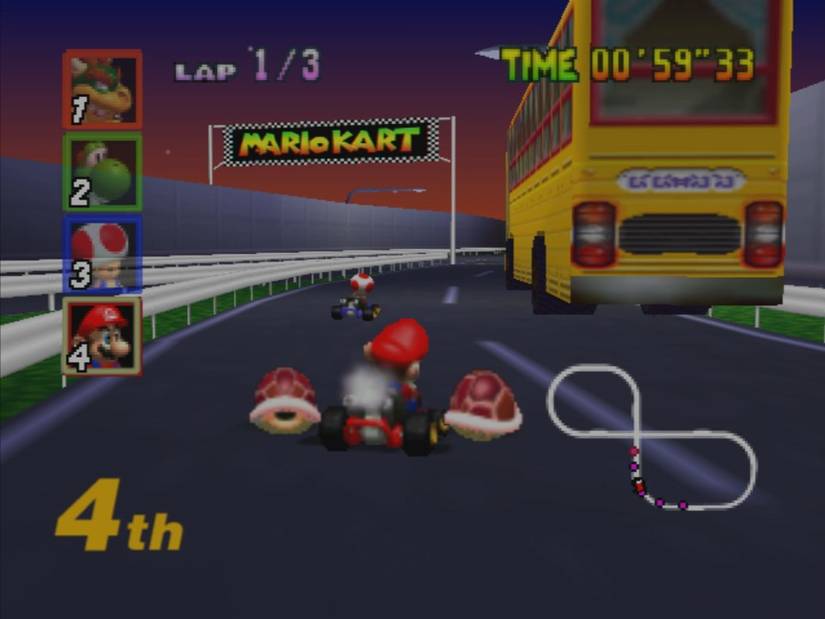
Perhaps the most significant contribution Mario Kart 64 made to the series was the refinement of the "Drift." In the SNES game, hopping to round corners was a rudimentary mechanic. In the N64 version, the developers implemented a sophisticated system where the player could maintain momentum by holding a power slide.
This eventually birthed the advanced technique known as "snaking," where players could generate speed boosts on straightaways by continuously drifting back and forth. This provided a "skill ceiling" that allowed hardcore players to squeeze every millisecond of performance out of their karts, effectively creating two games in one: a casual party game for the masses and a high-speed competitive racer for the dedicated.
Official Perspectives and Industry Impact
In various retrospective interviews, Nintendo developers have noted that the challenge of the N64 era was ensuring that the "soul" of Nintendo remained intact while the "body" of the games moved into 3D.
"We were terrified that 3D would make our games cold and clinical," one anonymous developer remarked during a 25th-anniversary retrospective. "The goal with Mario Kart 64 was to keep the personality of the characters in the foreground, even when the environments became vast and complex."
The industry took notice. Competitors scrambled to replicate the "kart racer" formula, leading to a glut of clones in the late 90s, from Crash Team Racing to Diddy Kong Racing. None, however, managed to achieve the same level of cultural ubiquity. The reason was simple: Nintendo’s commitment to iterating on the Mario Kart 64 foundation rather than abandoning it.
Long-term Implications: Paving the Way for Switch 2
Looking at the current state of the industry, the ripples of 1996 are still being felt. The recent launch of the Nintendo Switch 2 was anchored by Mario Kart World, a title that attempts to marry the classic track-based racing of the 64 era with a massive, open-world social environment.
Critics have pointed out that while Mario Kart World is a fantastic technical achievement, it feels "half-baked" in its open-world ambitions compared to the tight, focused design of its predecessors. This irony is not lost on long-time fans: the more the series evolves, the more it highlights how perfect the 1996 blueprint truly was.
Without the success of Mario Kart 64, it is highly improbable that Nintendo would have had the financial stability to weather the ups and downs of the GameCube and Wii U eras. It provided the recurring revenue and brand recognition necessary to keep the company’s R&D labs running during the lean years.
Conclusion: A Legacy That Endures
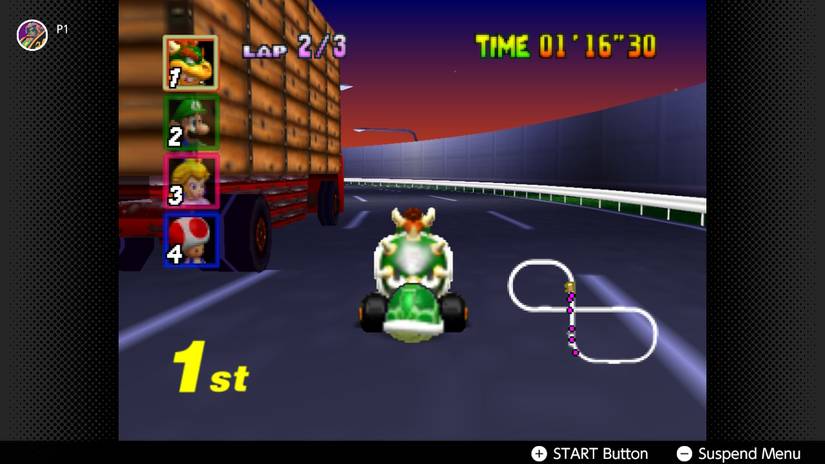
Thirty years later, the N64 controller is often mocked for its unusual design, and the game’s 2D sprites in a 3D world look like a relic of a bygone era. Yet, if you boot up Mario Kart 64 today—via the Nintendo Switch Online Expansion Pass or on original hardware—the magic remains.
The game’s capacity to turn a living room into an arena of laughter, frustration, and triumph is exactly the same as it was in 1996. It wasn’t just a sequel; it was the moment Nintendo stopped being a company that made games and became an institution that defined the way we play. As we look toward the future of the medium, it is clear that as long as there is a Nintendo console, there will be a blue shell waiting to disrupt the leader, a drift mechanic to master, and a legacy that began on a grey plastic cartridge three decades ago.
 Nana Muazin
 Layla Zulfa
 Basiran
