

The frontier of artificial intelligence has moved beyond the terrestrial. As demand for compute power hits a fever pitch, Silicon Valley’s most influential figures are looking toward the stars. Elon Musk, the CEO of SpaceX, has proposed an ambitious, albeit polarizing, vision: orbital data centers. By placing server arrays in low Earth orbit (LEO), Musk suggests the industry can bypass the regulatory "red tape" and energy constraints currently crippling the expansion of massive AI server farms on Earth.
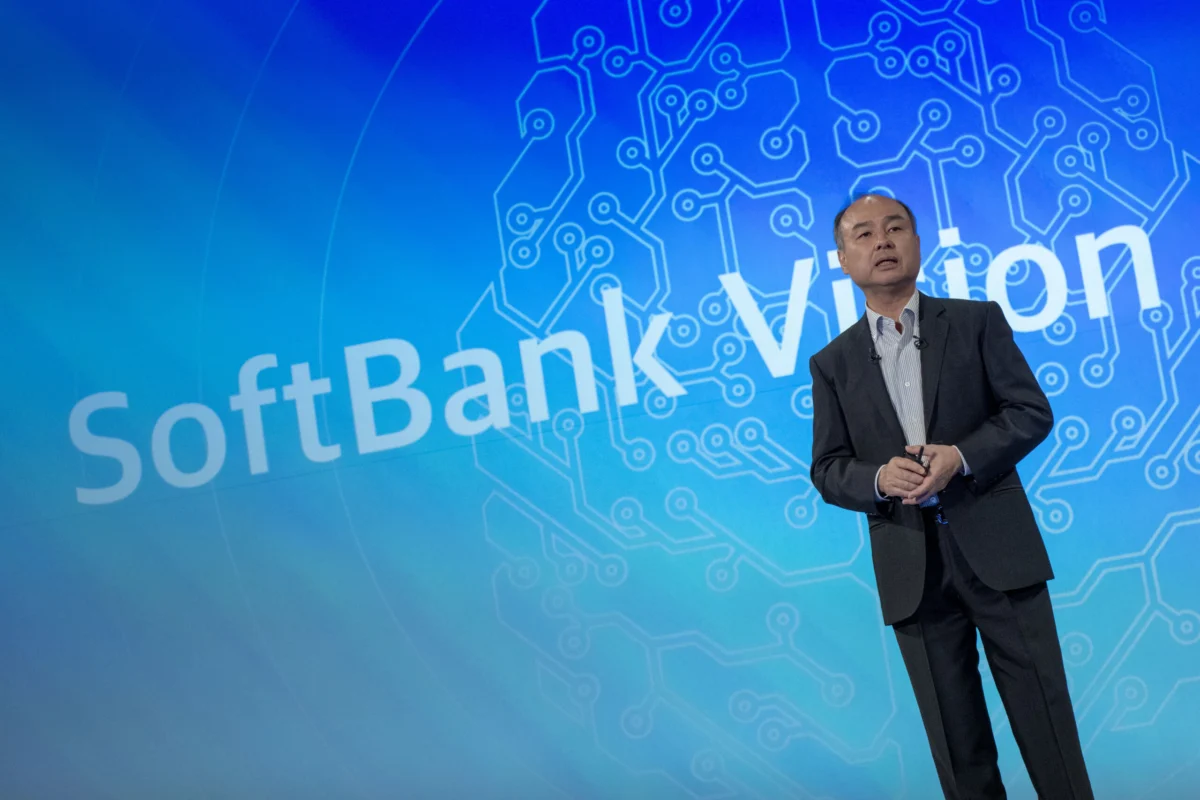
However, this vision is meeting stiff resistance from industry veterans. Most notably, SoftBank founder and CEO Masayoshi Son has publicly dismissed the concept, arguing that orbital infrastructure is an inefficient, long-term play that fails to address the immediate, burning need for compute power in the next three to five years.
The Core Conflict: Immediate Need vs. Long-Term Ambition
The central tension in the current AI landscape is a severe "compute constraint." As companies like OpenAI, Google, and Anthropic race to train increasingly sophisticated models, the demand for high-end GPUs and the data centers to house them has skyrocketed.
Musk’s thesis for orbital data centers rests on the idea that Earth-based data centers are becoming difficult to permit and energy-intensive to maintain. By launching compute to space, SpaceX could effectively create a global, low-latency network. But critics, including Son, point out the physics and the timeline. Launching hardware into orbit is astronomically expensive compared to terrestrial construction, and the maintenance of such hardware—which must be replaced or upgraded periodically—presents a logistical nightmare that Earth-bound facilities simply do not face.
"In the battle for AI, the next few years will be far more important than what might happen a decade or so from now," Son remarked during a recent shareholder meeting. His skepticism suggests that for the current AI gold rush, space is a distraction, not a solution.
A Chronology of the "Neo-Cloud" Era
To understand why orbital data centers are even being discussed, one must look at the broader shift toward the "neo-cloud."
- 2024–2025: The explosion of generative AI leads to a global shortage of H100 and B200 GPUs. Companies that possess compute capacity become the most valuable players in the tech ecosystem.
- Early 2026: SpaceX begins marketing its spare compute capacity, effectively positioning itself as a boutique cloud provider for AI labs.
- April 2026: Public discourse intensifies regarding Musk’s vision for orbital data centers, with analysts questioning whether the concept is a genuine technical roadmap or a justification for SpaceX’s massive valuation.
- June 2026: A series of developments, including OpenAI’s pivot toward custom chip design and Groq’s $650 million funding round, highlight the desperation of the industry to secure compute.
- Late June 2026: Masayoshi Son formally challenges the orbital data center narrative, framing it as a non-starter for the current AI cycle.
The "Talking Your Book" Phenomenon
A recurring theme in this debate is the concept of "talking your own book"—the tendency for executives to advocate for technologies or strategies that directly benefit their own corporate interests.
As noted by industry observers on the TechCrunch Equity podcast, every major player in this debate has a vested interest in the outcome of the infrastructure war:
- Elon Musk (SpaceX): By promoting orbital data centers, Musk creates a perpetual demand for his primary business: rocket launches. If a constellation of satellites requires constant hardware refreshes and maintenance, SpaceX effectively creates a "locked-in" customer for its own launch services.
- Masayoshi Son (SoftBank): SoftBank has committed billions to terrestrial data center projects in Europe and beyond. Son’s dismissal of the space-based alternative is, in many ways, an attempt to protect his massive existing bets on traditional, ground-based infrastructure.
- Sam Altman (OpenAI): Having previously worked with Musk, Altman has expressed skepticism regarding the timelines and economic viability of space-based compute. His focus remains on terrestrial chip supply chains and energy efficiency.
The Economic Implications: Is Space a Service or a Strategy?
The economic viability of an orbital data center remains highly suspect to many analysts. Sean O’Kane, a leading tech journalist, highlights the "guaranteed business" aspect of Musk’s plan. If SpaceX can convince the market that space is the next frontier for compute, they essentially turn the global AI industry into a long-term, captive client for the SpaceX launch manifest.
Furthermore, the launch market itself is currently dominated by SpaceX—holding roughly 80% to 90% of the market share. Much of this dominance is fueled by the Starlink constellation. Adding "orbital data center" maintenance to this workload would further entrench SpaceX’s monopoly, making the company the gatekeeper of both global connectivity and global compute.
Challenges to the Orbital Vision
Beyond the economic skepticism, the engineering challenges are immense:
- Latency and Throughput: While light travels faster in a vacuum than through fiber optic cables, the overhead of transmitting massive AI training datasets to and from orbit remains a technical hurdle.
- Thermal Management: Data centers generate significant heat. In a vacuum, heat dissipation is significantly more complex than on Earth, requiring massive radiator arrays that complicate satellite design.
- Hardware Longevity: Radiation in LEO is hostile to delicate silicon. Developing chips that can withstand the orbital environment while remaining performant enough for AI training is a hurdle that has yet to be cleared by any major semiconductor manufacturer.
SoftBank’s Ironic Skepticism
There is a palpable irony in Masayoshi Son being the primary skeptic of "wild bets." SoftBank’s history—from the massive investment in WeWork to the Vision Fund’s sprawling portfolio—is defined by high-risk, high-reward gambles.
Kirsten Korosec of TechCrunch notes that it is highly telling that someone with Son’s appetite for risk is slamming the brakes on this specific idea. When a venture capitalist known for "swinging for the fences" calls an idea inefficient or premature, it suggests that the economic metrics for orbital data centers are likely failing to pass even the most optimistic stress tests.
Future Implications for the AI Industry
As the dust settles on this debate, a few key takeaways emerge for the future of the industry:
1. The Compute Shortage is Structural: The fact that companies are considering placing data centers in space speaks volumes about how desperate the industry is. We are moving toward a world where compute is the primary currency.
2. Vertical Integration is the Goal: Whether it’s OpenAI building custom chips, Groq raising massive capital to compete with Nvidia, or SpaceX using its launch dominance to lease compute, the trend is toward total vertical integration. Companies no longer want to rely on third-party cloud providers.
3. The "NIMBY" Factor: Musk’s hatred of "red tape" is perhaps the most honest part of his orbital argument. As terrestrial energy grids and zoning laws struggle to keep pace with the massive power requirements of AI, the path of least resistance may literally be to leave the planet.
Conclusion
While the dream of orbital data centers captures the imagination, it remains a "science-fiction-adjacent" strategy in the near term. The industry, driven by the immediate need for survival in the AI race, is unlikely to wait for the technical and economic maturation of space-based compute.
Masayoshi Son’s dismissal, while perhaps self-serving, highlights the pragmatic reality of the current market. For the next decade, the battle for AI supremacy will be won in the terrestrial data centers of the world, powered by the next generation of custom silicon. SpaceX may eventually find a niche for space-based computing, but for now, the stars will have to wait for the terrestrial servers to catch up.
 Asep Darmawan
 Siti Muinah
 Ali Ikhwan
