

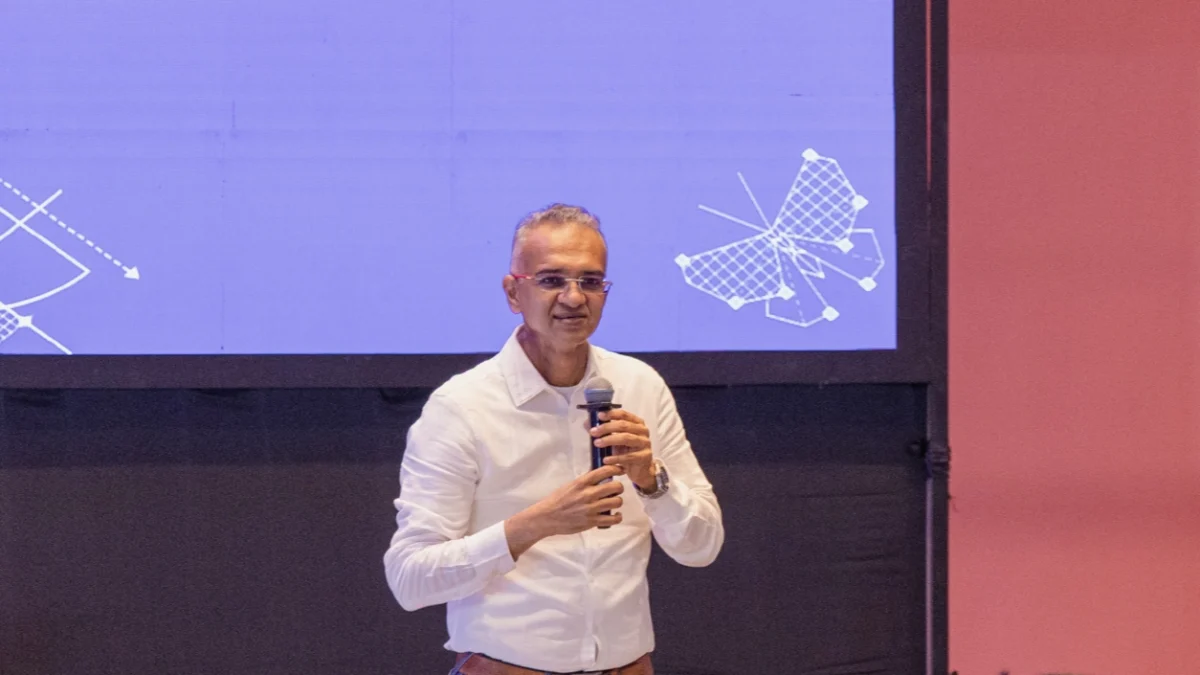
India’s digital payment infrastructure, anchored by the Unified Payments Interface (UPI), stands at a critical juncture. Having revolutionized how a nation of 1.4 billion transacts, the system now processes upwards of 750 million daily transactions. However, the National Payments Corporation of India (NPCI)—the umbrella organization for retail payments—is not content with current benchmarks. According to Dilip Asbe, Managing Director and CEO of NPCI, the path to surpassing a billion daily transactions lies not just in expanding reach, but in a radical technological pivot toward Artificial Intelligence (AI).
Speaking at Mumbai Tech Week (MTW) 2026, Asbe outlined a visionary roadmap where AI serves as the primary engine for financial inclusion, fraud mitigation, and credit democratization. As India prepares for the "next half a billion" digital users, the integration of AI is being positioned as a sovereign necessity rather than a corporate trend.
The Evolution of UPI: From Ubiquity to Intelligence
The journey of UPI has been nothing short of a global case study in rapid digital transformation. Launched in 2016, it bridged the gap between traditional banking and the smartphone revolution. Yet, as the volume of transactions grows, so does the complexity of maintaining a secure, efficient, and inclusive ecosystem.
Chronology of UPI’s AI Integration
- 2023: NPCI launches "Hello UPI," a voice-based interactive payment system, signaling the first major step toward conversational commerce.
- 2024: NPCI spins off the BHIM UPI app as a wholly-owned subsidiary to focus on sovereign security and competitive independence.
- 2025: Successful pilot programs for agentic commerce and AI-led e-commerce are conducted in collaboration with partners like Razorpay.
- 2025 (Late): NPCI debuts FIMI, an AI-driven language model specifically designed to streamline user dispute resolution, currently serving over a million users.
- 2026: NPCI focuses on the deployment of Small Language Models (SLMs) tailored for the nuances of Indian financial data.
The Triad of AI Application: Protection, Credit, and Inclusion
Asbe emphasizes that AI is not a monolith; its application within the NPCI ecosystem must be granular and targeted. He identifies three core pillars where AI will define the next generation of UPI:
1. Fraud Detection and Mule Identification
With the scale of transactions rising, the threat landscape has evolved. Criminal syndicates use "money mules"—individuals who allow their accounts to be used for laundering illicit funds—to bypass traditional security layers. Asbe believes that AI is the only tool capable of identifying patterns of abnormal behavior in real-time. By leveraging machine learning models, NPCI aims to proactively flag suspicious accounts, shielding the average citizen from increasingly sophisticated phishing and fraud tactics.
2. Credit Democratization
A massive portion of India’s population and small-to-medium enterprise (SME) sector remains underserved by traditional lending institutions. AI offers a solution by processing "digital footprints"—the vast repository of transaction data generated by UPI. By analyzing spending habits, consistency, and volume, AI models can determine creditworthiness, allowing banks and fintech firms to extend micro-loans to those previously deemed "unbankable."
3. Simplified Onboarding through Multilingual AI
India’s linguistic diversity remains a hurdle for universal digital adoption. Asbe notes that while "voice as an interface" is still in its nascent stages, it is critical for future growth. The goal is to create AI systems that understand regional dialects, allowing users to interact with payment systems as easily as they would talk to a friend. This reduces the barrier of entry for rural and semi-urban populations who may not be comfortable with complex digital interfaces.
Building "Small" for Specificity: The Rise of SLMs
While global giants like OpenAI and Google compete to build massive General Purpose Models, Asbe sees a different opportunity for the Indian financial sector. He advocates for the development of Small Language Models (SLMs).
"We believe that models will differentiate from each other based on the data sets available to them," Asbe explained. "We have a very rich data set in our ecosystem. There is a big opportunity for Indian banks and fintechs to create small language models which are sharp, specific, and as deterministic as possible."
The success of FIMI, the dispute-resolution model currently handling mandates and grievances, serves as a proof of concept. Unlike broad LLMs that may "hallucinate" or provide vague answers, a deterministic SLM focused on financial regulations can provide exact, legally sound, and consistent outcomes. This reduces the burden on human customer support and increases user trust in the digital system.
The Regulatory Horizon and Agentic Commerce
The intersection of AI and finance brings with it a complex set of risks. In the U.S., the rise of autonomous agents—programs that can execute trades or manage accounts on behalf of a human—has prompted regulatory scrutiny. NPCI is approaching this space with cautious optimism.
Asbe suggests that for India to adopt AI-powered finance, a robust regulatory framework is non-negotiable. This framework must prioritize "consent and instruction." If an AI agent executes a transaction, the system must be able to audit the specific instructions given by the user, ensuring that accountability is never lost to an algorithm. By establishing clear guardrails, NPCI aims to foster innovation while maintaining the sanctity of the financial system.
The Market Share Debate: Competition and Concentration
A perennial topic in the Indian fintech space is the dominance of private players, specifically PhonePe and Google Pay, which together command over 80% of the market. The industry has long awaited the implementation of the 30% market share cap, a policy designed to prevent systemic risk and encourage a more competitive, decentralized ecosystem.
Asbe offers a pragmatic view on this concentration. He argues that the dominance of these two players is not merely a product of luck, but the result of massive capital investment. The switching cost for a user to move from one app to another is low, yet the "commercial viability" for new players remains a challenge.
"The moment we see a commercial model being available to the ecosystem, I believe newer players will start investing very heavily," Asbe noted.
The NPCI’s own app, BHIM, serves as a "sovereign and secure alternative." While it currently holds a modest 1% market share, its purpose is not necessarily to capture the majority of the market, but to provide a foundational, neutral platform that ensures the integrity of the entire UPI architecture.
Implications for the Future of Digital India
The vision laid out by NPCI reflects a broader shift in India’s digital strategy. The country is moving from the "build" phase—where the focus was on infrastructure and penetration—to the "optimize" phase, where the focus is on intelligence and stability.
For investors, the signal is clear: the next wave of Indian fintech will not be about building more payment apps, but about building the AI-powered infrastructure that sits behind them. From fraud detection systems to proprietary small language models and automated dispute resolution, the opportunities for innovation are immense.
As the December 31, 2026 deadline for market share caps looms, the ecosystem is bracing for a transformation. If the regulator sticks to its plan, the market will likely see a surge of interest from new entrants looking to capitalize on the AI-first financial landscape.
Ultimately, as Asbe highlighted, the success of the next phase of UPI will be measured by the security and ease afforded to the user. By embedding AI into the fabric of the payment stack, India is attempting to build a system that is not only the most efficient in the world but also the most resilient. As the billion-transaction target nears, the world will be watching to see if India’s AI-first approach can serve as a global blueprint for digital economies everywhere.
 Asep Darmawan
 Siti Muinah
 Ali Ikhwan
