

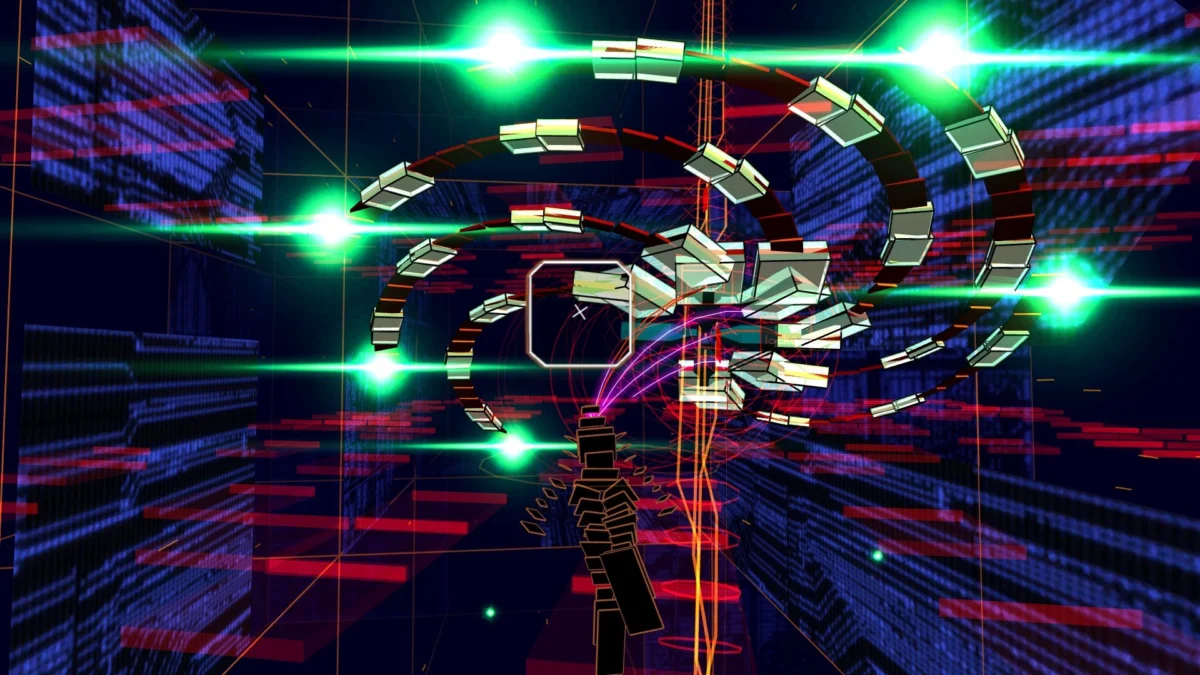
In the vast, expansive history of video games, few genres have experienced as precipitous a decline as the rail shooter. Once the undisputed king of the arcade floor—a medium-defining spectacle that demanded lightning-fast reflexes and rewarded the high-score chaser—the rail shooter has largely been relegated to the status of a relic. While developers have pivoted toward open-world exploration and emergent gameplay, the "on-rails" experience, characterized by a fixed path and a relentless forward momentum, has felt increasingly archaic.
Yet, amidst this landscape of forgotten tropes, one title stands as a defiant monument to the potential of the medium: Tetsuya Mizuguchi’s Rez. Far from being a mere relic of the early 2000s, Rez represents the apex of its genre, transforming the act of digital destruction into a synesthetic, spiritual, and deeply human experience.
The Moribund State of the Rail Shooter
To understand the brilliance of Rez, one must first acknowledge the precarious state of the genre it inhabits. Rail shooters—games like Space Harrier, Panzer Dragoon, and the Star Fox series—are fundamentally defined by their constraints. The player is not an explorer; they are a passenger on a predetermined path, an observer tasked with clearing a visual field of obstacles.
For years, this design philosophy was the vanguard of technological progress. As hardware advanced, the "rail" became the ideal vehicle to showcase 3D capabilities, sweeping players through sprawling, cinematic environments. However, as the industry shifted toward player agency, the inherent linearity of the rail shooter began to be viewed as a design limitation. Today, the genre is a ghost, occasionally revived by nostalgic remakes like Nintendo’s recent efforts with Star Fox 64. While these titles are undeniably entertaining, they often serve as museum pieces—tributes to a bygone era of arcade-style twitch gaming—rather than evolutions of the form.
Chronology: From Dreamcast Dream to Virtual Reality Apex
The journey of Rez is as unconventional as its gameplay. Originally released in 2002 for the Sega Dreamcast and PlayStation 2, the game was a product of United Game Artists, a studio led by the visionary Tetsuya Mizuguchi. At the time, the gaming world was in a state of transition; the high-fidelity 3D era was hitting its stride, but the experimental spirit of the 1990s was beginning to wane.
- 2002: The Genesis. Rez launches, introducing the world to its unique "synesthesia" mechanic, where the player’s inputs directly modulate the game’s soundtrack.
- 2008: The HD Evolution. Rez HD arrives on the Xbox 360, bringing the game’s minimalist, vector-based aesthetic to modern displays.
- 2016: The Infinite Transformation. Rez Infinite launches on PlayStation 4 and PC, featuring the legendary "Area X"—a brand-new, free-roaming level that pushed the game’s sensory philosophy to its absolute limit.
- 2026: The Modern Standard. Today, Rez Infinite stands as a benchmark for VR design, proving that the core mechanics established over two decades ago remain not only playable but transformative in an immersive environment.
The Architecture of Synesthesia
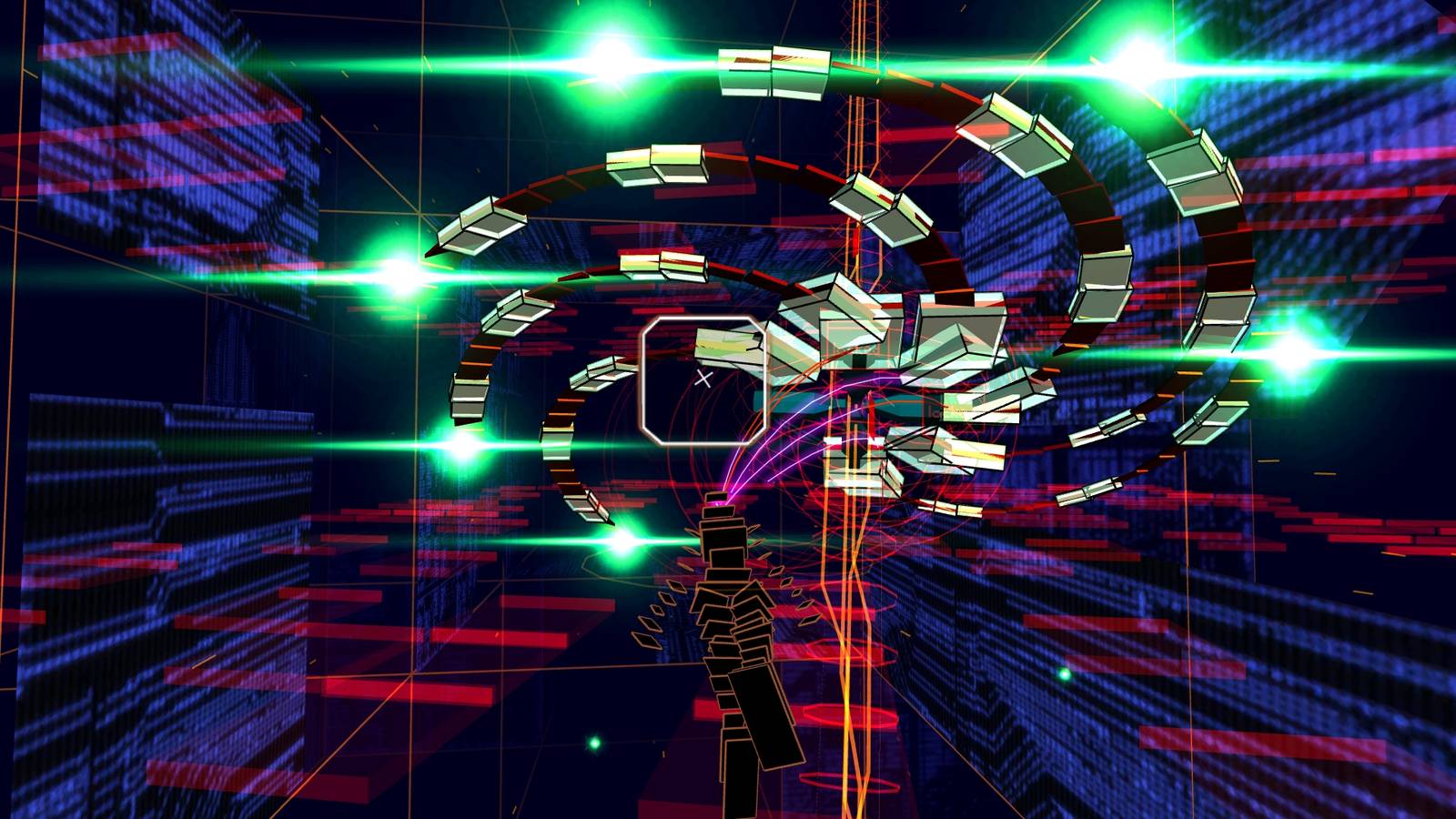
What elevates Rez above its peers is not its technical execution, but its philosophical core. Mizuguchi didn’t just want to create a shooter; he wanted to create a vessel for synesthesia—the neurological condition where stimulation of one sense leads to involuntary experiences in another.
In Rez, the player does not merely shoot at enemies; they participate in a rhythmic call-and-response. Every lock-on and subsequent detonation of a target acts as a percussive or melodic element within the stage’s soundtrack. As the player clears the screen of data-corruption nodes, the music swells, adding layers of bass, synth, and vocal samples. By the time the player reaches the end of a level, the track has evolved from a sparse, ambient loop into a full-bodied, euphoric techno anthem.
This design choice fundamentally changes the player’s psychology. In a traditional rail shooter, the objective is aggression—survival through the elimination of threats. In Rez, the objective is composition. The enemies are not "bad guys" to be defeated, but instruments to be played. The act of shooting becomes as natural and rhythmic as breathing.

Supporting Data: Why "Area X" Matters
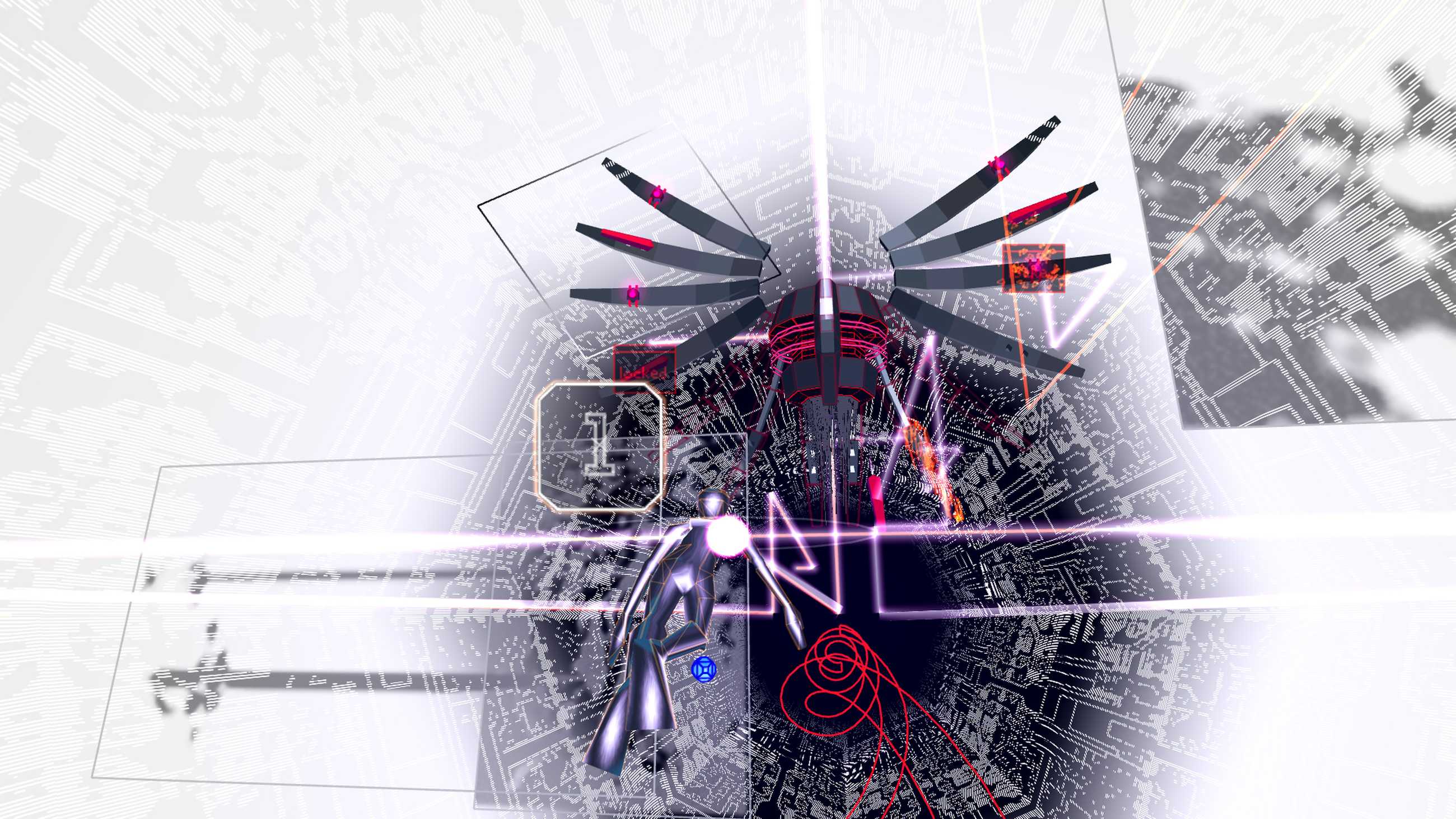
The inclusion of "Area X" in the Infinite release serves as the ultimate validation of Mizuguchi’s long-term vision. For years, critics argued that the "rail" was necessary to maintain the game’s rhythmic integrity. Area X dispenses with the fixed track, allowing the player to drift freely through a dense, particle-filled void.
The data from this iteration suggests that the "synesthetic loop" is not dependent on the constraints of a track, but on the connection between input and output. When players are given total freedom, they still instinctively seek the rhythm. The transition from the rigid, wireframe aesthetics of the main game to the organic, flowing particles of Area X represents the evolution of the player’s journey—from a hacker debugging a system to an entity merging with the architecture of a digital god.
Official Responses and Industry Impact
While Rez was not a commercial blockbuster upon its initial release, its critical reception has been nothing short of reverent. It is frequently cited by game designers as a seminal work, influencing everything from the rhythm-action genre to the modern meditative "walking simulator."
Tetsuya Mizuguchi has often spoken about his desire to move games away from the "war" metaphor that dominates the medium. In interviews, he has noted that he views the player’s interaction with the game as a process of "cleansing." By deconstructing the enemies—turning them into light and sound rather than ragdolls or explosions—he creates an experience that is inherently peaceful, despite the visual intensity of the combat.

Implications: The Future of Immersion
The enduring legacy of Rez lies in its ability to reconcile two disparate concepts: the high-intensity, "twitch" response of the classic shooter and the meditative, restorative power of music.
As we look toward the future of interactive media, the lessons of Rez are more relevant than ever. With the rise of high-fidelity VR and spatial computing, the challenge for developers is to create environments that feel responsive to the human body. Rez proves that the most profound experiences are those where the boundary between the player and the software dissolves.
We are currently seeing a resurgence of interest in "mindful" gaming—experiences that prioritize atmosphere and flow over traditional win-loss conditions. Rez was the pioneer of this movement, demonstrating that a game can be both a high-score chase and a spiritual journey. It remains a masterclass in minimalism, proving that you do not need photorealistic graphics or sprawling narratives to achieve a profound emotional impact.
Conclusion
The rail shooter may be a genre of the past, but Rez is a title for the future. It remains a testament to the idea that video games are, at their best, a unique form of art that requires the audience to participate in the creation of the experience.
In a world where games are often designed to demand our time and attention through aggressive loops of engagement, Rez asks something else entirely: it asks us to listen, to observe, and to find the rhythm within the noise. Whether you are playing it on a standard monitor or fully immersed in a VR headset, Rez continues to be a transcendent masterpiece—a beautiful, glowing reminder that even in a world of digital corruption, there is always music to be found.
As the industry continues to chase the next big trend, it is worth returning to this 2002 relic. It is a reminder that the most "advanced" technology is the human capacity for wonder, and that the best games are those that don’t just occupy our hands, but tune our senses to a different frequency.
 Basiran
 Nana Muazin
 Layla Zulfa
