

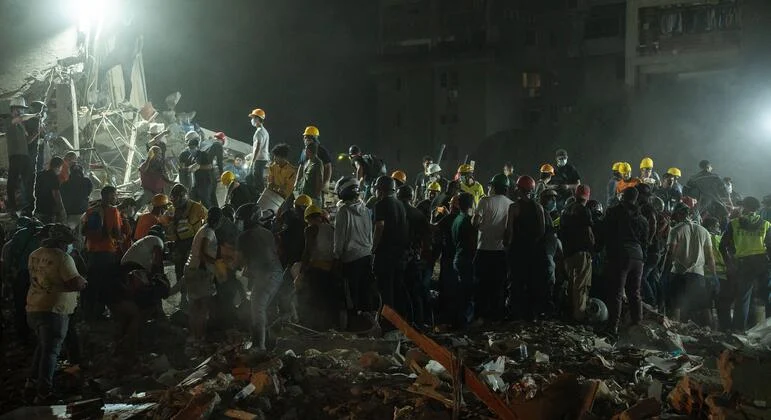
CARACAS/GENEVA – The humanitarian situation in Venezuela has reached a critical inflection point following a catastrophic series of seismic events that have left the nation reeling. As of Friday, 26 June 2026, the official death toll has climbed to 235, with international relief agencies warning that the figure is likely to rise significantly as search and rescue operations penetrate deeper into the debris of flattened urban centers.
United Nations agencies, coordinating with local authorities and international NGOs, have issued a dire warning: nearly seven million people—roughly one-quarter of the country’s population—may be directly or indirectly impacted by the disaster. The double-earthquake sequence, which struck earlier this week, has crippled critical infrastructure, severed supply chains, and left thousands of families without shelter, water, or access to medical care.
The Chronology of the Disaster
The seismic instability began in the early hours of Monday, 22 June 2026. According to the United States Geological Survey (USGS) and local monitoring stations, the first major tremor struck at 4:12 AM local time. Registering a significant magnitude, the quake was centered in a densely populated region, catching most residents in their sleep.
By Tuesday, 23 June, the initial panic had evolved into a frantic race against time. Rescue teams, hampered by aftershocks and unstable structural conditions, began the arduous task of tunneling through pancaked concrete. However, the situation deteriorated further on Wednesday, 24 June, when a secondary, high-magnitude tremor struck the same general fault line. This "double-hit" scenario proved devastating; structures already weakened by the first quake collapsed completely, trapping survivors and rescue workers alike.
As of Thursday and Friday, the focus shifted from acute search and rescue to a massive logistical mobilization. UN emergency response teams, arriving with specialized equipment and heavy-lifting machinery, have begun establishing triage centers, though communication blackouts in remote areas continue to obscure the full scale of the tragedy.
Supporting Data and Scope of Impact
The sheer scale of the destruction has strained Venezuela’s national emergency response capacity to its absolute limit. Current projections from the UN Office for the Coordination of Humanitarian Affairs (OCHA) highlight several alarming trends:
- Humanitarian Footprint: Approximately 6.8 to 7 million people are estimated to be in urgent need of humanitarian assistance. This includes access to clean water, sanitation, and emergency trauma healthcare.
- Structural Damage: Early assessments suggest that over 40,000 buildings, including residential apartment blocks, hospitals, and schools, have sustained moderate to total damage.
- Displacement: Preliminary estimates indicate that upwards of 500,000 individuals have been displaced from their homes, with thousands currently residing in makeshift camps or public squares.
- Medical Crisis: With several primary care hospitals severely damaged, the burden has shifted to field clinics. There is an urgent shortage of surgical kits, antibiotics, and blood supplies.
The geographic spread of the earthquakes is particularly concerning. Unlike isolated disasters, these tremors impacted a broad swath of the country, affecting both major urban hubs where population density is high and rural regions where access to the nearest medical facility can take hours.
Official Responses and International Coordination
The Venezuelan government has formally requested international assistance, declaring a state of emergency to expedite the flow of aid. Presidentially mandated response teams have been deployed alongside the military to ensure security and manage the distribution of essential supplies.
The United Nations has moved quickly to mobilize resources. "Our priority is to save as many lives as possible in these critical hours," said a spokesperson for the UN humanitarian office. "We are working in close cooperation with the government and local civil society to ensure that aid reaches the most vulnerable without delay."
International Support Packages
Global powers and regional neighbors have begun pledging support. The European Union has announced a multi-million-euro emergency aid package, while the World Food Programme (WFP) has already begun diverting food stocks to the hardest-hit areas. Search and rescue teams from Brazil, Colombia, and Mexico have arrived in the country, bringing specialized canine units and thermal imaging technology to assist in the recovery efforts.
"The solidarity shown by the international community is essential," the UN report stated. "However, the logistical challenges are immense. We are calling for an unhindered humanitarian corridor to ensure that medical supplies and personnel can move freely across affected zones."
Deepening Implications for Venezuela
The earthquakes have struck at a time when Venezuela was already navigating a fragile socioeconomic landscape. The implications of this disaster extend far beyond the immediate loss of life and property.
1. Economic Fragility
The destruction of physical capital—factories, power plants, and transportation networks—threatens to stall the country’s recent efforts at economic stabilization. The cost of reconstruction is expected to run into the billions of dollars, a sum that will likely require significant international debt relief or developmental aid.
2. Healthcare Infrastructure Collapse
Prior to the earthquake, the healthcare system was already struggling with aging facilities and staff shortages. The loss of several key hospitals has created a "medical vacuum" that will take years to rectify. Public health officials are now particularly concerned about the potential for waterborne diseases, given the damage to sewage and clean-water pipe networks.
3. Long-term Displacement and Social Stability
The massive displacement of people, particularly from urban centers, risks creating permanent "refugee pockets" within the country. If the government cannot provide adequate temporary housing and social support, the risk of civil unrest and migration pressures will escalate.
4. Environmental and Seismic Vulnerability
Experts have raised concerns about the structural integrity of older building codes in the region. There is an growing consensus that a national overhaul of construction standards is required to prevent such high casualty rates in future seismic events. The government faces the dual challenge of rebuilding for the present while planning for a more resilient future.
The Path Forward: A Call for Sustained Action
As the weekend approaches, the focus of the international community remains on the "golden window"—the period during which survivors are most likely to be found. Every passing hour decreases the probability of successful rescues, yet the resolve of the local population and the international aid workers remains unbroken.
"We are witnessing the resilience of the Venezuelan people in the face of unimaginable loss," said the UN coordinator on the ground. "But resilience alone cannot rebuild a country. This requires a sustained, multi-year commitment from the global community to ensure that this tragedy does not become a permanent scar on the nation’s development."
How to Stay Informed
For those looking to track the recovery, the United Nations encourages citizens to rely on official updates provided by the UN News portal.
- Daily Briefings: The UN will continue to provide real-time data regarding the death toll, missing persons, and regional distribution of aid.
- Subscription Services: For those wishing to receive ongoing updates, the UN News newsletter provides daily digests of the humanitarian situation.
- Digital Resources: The UN News app remains the most reliable source for mobile users to receive push notifications as the situation develops.
As the smoke clears and the dust settles, the road to recovery for Venezuela will be long and arduous. For now, the world’s attention remains fixed on the search-and-rescue efforts, holding out hope that more survivors will be pulled from the wreckage in the days to come. The international community stands at a crossroads, where the swift and effective delivery of aid will determine the future of millions of lives currently in the balance.
 Lina Hope
 Asro
Asro
 Layla Zulfa
