

By Daniel Johnson, Geneva
26 June 2026
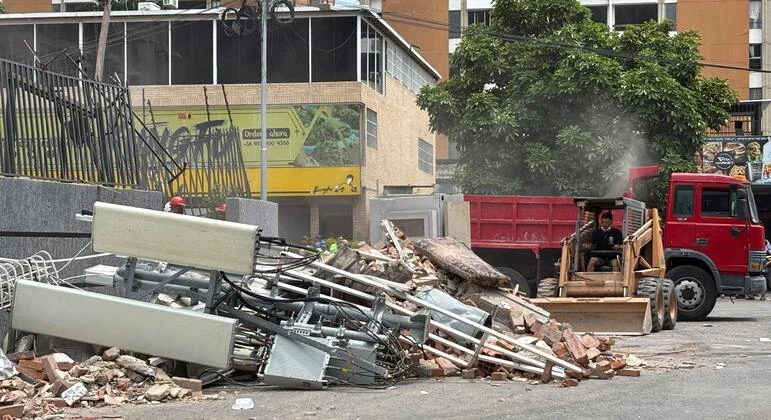
The humanitarian situation in Venezuela has reached a critical tipping point following a catastrophic double earthquake that has shattered communities, claimed at least 235 lives, and left millions in a state of precarious uncertainty. As search and rescue teams continue to navigate the debris of collapsed infrastructure, international aid agencies are warning that the scale of the disaster is compounding an already fragile socio-economic landscape. With 41,000 individuals currently listed as missing and millions more displaced or at risk, the international community is mobilizing to provide what officials describe as a "lifesaving race against time."
The Scale of the Catastrophe: Main Facts
The tremors, which struck on Wednesday, have effectively crippled the affected regions. According to the International Organization for Migration (IOM), the disaster has the potential to impact up to 6.8 million people—a staggering figure that underscores the density of the affected zones and the severity of the structural failures.
The immediate reality on the ground is one of profound terror. Survivors, many of whom have lost their homes and livelihoods, are refusing to re-enter any standing structures, fearing further aftershocks. This mass displacement has created an urgent need for temporary shelter, clean water, and sanitation, as standard utility services remain non-functional. The IOM has confirmed that an online portal dedicated to tracking the missing has already logged over 41,000 reports, a number that authorities fear may rise as rescue teams gain access to more remote or heavily damaged areas.
Chronology of the Emergency
The disaster began on Wednesday, when the initial seismic events struck, catching a nation already struggling with long-term infrastructure decay off-guard.
- Initial Impact (Wednesday): The twin quakes hit with enough force to cause widespread building collapses. Within hours, telecommunications networks began to fail, plunging the country into an information blackout.
- The First 48 Hours: Rescuers, in some instances forced to dig with their bare hands due to a lack of heavy machinery, began the grueling task of locating survivors. Medical teams from the Pan American Health Organization (PAHO) arrived to establish triage centers, despite significant challenges in accessing the affected zones.
- Friday Update: International aid agencies, including the IFRC and the UN, held press briefings in Geneva to highlight the "massive needs" of the population. At this stage, the death toll reached 235, and the focus shifted from pure rescue to the dual-track necessity of ongoing trauma care and the establishment of emergency relief pipelines.
Supporting Data and Human Impact
The data provided by UN agencies paints a harrowing picture of a nation in distress. Beyond the immediate death toll, the medical consequences are severe. Dr. Ciro Ugarte, Health Emergencies Director for PAHO, noted that medical facilities are currently overwhelmed by mass casualties.
"We are seeing a high volume of trauma cases—broken bones, severe burns, and crush injuries," Dr. Ugarte reported. The complexity of these injuries, combined with the lack of stable electricity and clean water, creates an environment where secondary health crises—such as infection or the spread of waterborne diseases—are highly probable.
The IFRC has emphasized that for many, the "essentials for survival" are currently absent. "People left everything and nothing is functioning as it should," said Loyce Pace, IFRC Regional Director for the Americas. The psychological toll is equally devastating; the collective trauma of the event has left a population hesitant to seek shelter indoors, even as the elements and the risk of further collapse threaten their physical health.
Official Responses and Humanitarian Challenges
The response effort is being hampered by both the physical destruction and pre-existing institutional barriers.
Access and Logistics
Dr. Ugarte pointedly remarked that access to the affected areas remains "very difficult." The damage to roads and the potential instability of the terrain have made it a logistical nightmare to transport medical supplies and rescue personnel. This has prevented a thorough assessment of the total damage, meaning the current casualty figures are likely to be conservative estimates.
Digital Blackout and Human Rights
The crisis has been exacerbated by an internet blackout. The UN Office of the High Commissioner for Human Rights (OHCHR) has expressed grave concern regarding this, noting that "pre-existing restrictions" on digital communication have hindered the flow of life-saving information.
OHCHR spokesperson Marta Hurtado issued a stern call for the restoration of digital freedoms, stating: "We call, as we’ve called before, to adopt measures to safeguard the digital space and guarantee the right to information and freedom of expression and access to digital media in Venezuela. During a disaster of this magnitude, the ability to communicate is a fundamental human right."
Long-term Recovery
While the immediate priority is survival, agencies are already looking toward the future. Zoe Brennan of the IOM stressed that the recovery process must be sustained. "We are looking at a long road ahead," Brennan stated. "It is not just about the rescue phase; it is about helping families rebuild their homes, restore their livelihoods, and eventually recover with dignity."
The Broader Implications: A Vulnerable Nation
The tragedy has hit a country already defined by deep-seated vulnerability. For years, Venezuela has been the subject of intensive scrutiny by the UN Human Rights Council due to a persistent economic crisis and documented human rights violations. This political and economic instability has led to millions of Venezuelans emigrating in search of safety and opportunity.
The earthquake effectively acts as a "crisis upon a crisis." The country’s healthcare system, which was already strained by years of underinvestment and the exodus of medical professionals, is now being tested by a disaster of epic proportions.
Furthermore, the diaspora, while often a source of remittances and support, is now facing a new kind of anxiety. With communication channels down, families abroad are unable to reach their loved ones, creating a secondary humanitarian concern regarding the mental health and well-being of the Venezuelan diaspora globally.
Conclusion: The Path Forward
The international community faces a complex challenge in Venezuela. Beyond the immediate provision of aid, there is the overarching question of how to deliver assistance effectively in a country with a fractured political landscape. Humanitarian agencies are currently operating under the mandate of neutrality, prioritizing the survival of the individual over political considerations.
As the search and rescue phase eventually transitions into a recovery phase, the world’s attention must remain on the millions who have lost everything. The "terror" of the survivors, as described by the IFRC, is the defining emotion of the moment—a stark reminder that for millions in Venezuela, the ground beneath their feet is no longer a foundation, but a source of fear.
The success of the upcoming relief efforts will depend not only on the volume of aid provided but on the ability of the international community to navigate the logistical, political, and communication hurdles that have defined the first days of this tragedy. For now, the priority remains singular: to find, to treat, and to protect the millions of lives currently caught in the rubble of a nation in crisis.
For ongoing updates regarding the humanitarian response in Venezuela, please consult the official UN News portal and the specialized bulletins from the IFRC and PAHO.
 Lina Hope
 Asro
Asro
 Layla Zulfa
