

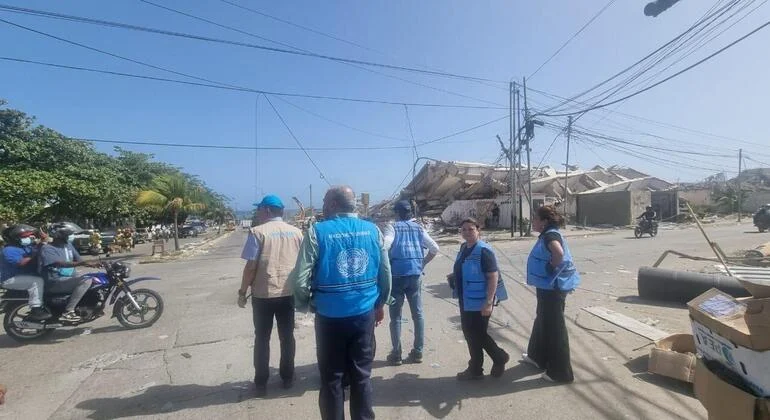
The Devastation: A Nation in Shocks
The humanitarian landscape in Venezuela has been fundamentally altered following two powerful earthquakes—measuring 7.2 and 7.5 on the Richter scale—that have left a trail of destruction, displacement, and profound sorrow. As the dust settles over the most severely affected regions, the human toll has become alarmingly clear: at least 1,430 people have lost their lives, and over 3,238 have sustained injuries. Beyond the casualty figures, the structural integrity of the nation’s infrastructure has been compromised, leaving more than 3,100 families homeless and millions of others grappling with the fear of recurring seismic activity.
The epicenter of the crisis is La Guaira, a region that has suffered the most acute damage. However, the impact extends far wider, affecting the Capital District, Carabobo, Aragua, and Falcón. The destruction of hospitals, schools, and essential water systems has not only complicated rescue efforts but has created a secondary crisis for the most vulnerable members of society: the children. UNICEF reports that 680,000 children are now in urgent need of humanitarian assistance, facing a future where access to education, clean water, and medical care is severely jeopardized.
Chronology of the Disaster and Response
The immediate aftermath of the seismic events triggered a massive international mobilization.
- Initial Impact: The twin earthquakes struck with devastating force, causing widespread structural failure in residential areas and critical public facilities.
- The First 48 Hours: Search and rescue (SAR) teams scrambled to reach those trapped under rubble. Local communities were the first responders, utilizing whatever tools were available to pull survivors from the debris.
- International Mobilization: Within days, an unprecedented coalition of international responders coalesced. Currently, 27 countries have dispatched over 2,200 rescuers and 140 specialized search-and-rescue dogs to aid the Venezuelan authorities.
- The UN Mission: On Saturday, UN Humanitarian Coordinator in Venezuela, Gianluca Rampolla, led a high-level mission to La Guaira. The objective was two-fold: to evaluate the needs of the displaced and to synchronize the activities of international agencies with local government efforts.
- Ongoing Operations: Search operations continue, though the focus is gradually shifting toward the long-term support of survivors and the establishment of temporary housing and medical facilities.
Supporting Data: The Magnitude of the Crisis
The data emerging from the field paints a grim picture of systemic fragility. The Pan American Health Organization (PAHO) has conducted preliminary assessments of 21 medical facilities in the region. The findings are sobering:
- Hospital Fragility: Three facilities are in critical condition, while six others have sustained significant structural damage, rendering them only partially operational.
- Educational Collapse: In the Capital District alone, 432 schools have been damaged—representing more than one-third of the total school infrastructure in the area.
- Displacement: Schools that remain structurally sound are being repurposed as makeshift shelters, further delaying the return to normalcy for students.
- UNICEF Intervention: The agency has already initiated a massive supply chain operation, with an initial 20-tonne shipment of medical and sanitation equipment already delivered. A secondary shipment is currently en route from the global supply hub in Copenhagen.
Official Responses and Global Solidarity
The humanitarian response is characterized by a mix of intense urgency and logistical coordination. UN Emergency Relief Coordinator Tom Fletcher, speaking on behalf of OCHA, underscored the severity of the situation, stating simply that "every minute, every hour, counts."
Gianluca Rampolla, during his visit to the disaster zones, emphasized that despite the "anguish and destruction," the spirit of global solidarity has been a beacon of hope. "At a time when we’re always focused on the bad things happening in the world, here’s a gesture of solidarity from around the globe to support Venezuelans," Rampolla remarked. He highlighted that the current strategy is a two-pronged approach: continuing the life-saving extraction of victims while simultaneously standing up support systems for those who have lost everything.
The International Federation of Red Cross and Red Crescent Societies has been instrumental in managing the emotional and physical recovery. Representatives on the ground have described the atmosphere as a volatile mix of hope and paralyzing fear, particularly as aftershocks continue to rock the region, threatening the stability of already compromised buildings.
Implications: The Long Road to Recovery
The disaster is not merely a seismic event; it is a profound development crisis.
1. The Children’s Emergency
UNICEF Representative in Venezuela, Manuel Rodríguez Pumarol, has sounded the alarm regarding the long-term impact on the country’s youth. With hospitals operating at maximum capacity and schools closed, the foundational pillars of childhood—health, education, and protection—are under immense strain. The need for sustained funding is not just a request for aid; it is a requirement to prevent a lost generation in the affected provinces.
2. Healthcare System Overload
The Venezuelan health system was already under stress prior to the earthquake. The current influx of trauma, orthopedic, and neurosurgical cases has pushed the system to its breaking point. To mitigate this, the UN has deployed three field hospitals in La Guaira equipped with intensive care units. However, the need for specialized medications and a reliable supply of electricity remains the primary challenge for medical personnel.
3. Psychosocial Needs
Beyond the physical injuries, there is a mounting crisis of mental health. The trauma experienced by families searching for missing loved ones, coupled with the burnout of first responders and medical staff, necessitates a robust mental health and psychosocial support program. The UN and local authorities are currently integrating these services into the new multi-service hubs being established in strategic locations.
4. Sustainable Infrastructure
As the emergency phase transitions into early recovery, the government and international partners are looking toward the establishment of permanent multi-service spaces. These centers are designed to offer more than just shelter; they are intended to be hubs for food security, water and sanitation, child protection, and gender-based violence prevention.
Looking Forward
The situation in Venezuela remains fluid. While the international community has responded with vigor, the scale of the destruction necessitates a multi-year commitment to rebuilding. The "fragility" mentioned by responders is not just a reflection of the crumbling buildings, but of the precariousness of the lives of hundreds of thousands of people who now find themselves in the precarious position of starting over.
For the international community, the challenge is to move beyond the initial surge of search and rescue and commit to the less visible, yet equally vital, work of reconstruction. Whether it is rebuilding the 432 damaged schools in the capital or ensuring that the three critical hospitals are fully restored, the path ahead is arduous. Yet, as noted by those on the front lines, the strength of the community and the persistence of the desire to save lives remains the driving force of the response. The world watches, but more importantly, the world acts, as the people of Venezuela attempt to find their footing amidst the ruins.
 Lina Hope
 Asro
Asro
 Layla Zulfa
