

Welcome back to TechCrunch Mobility, your essential briefing on the rapidly evolving landscape of transportation and the increasingly central role artificial intelligence plays in moving people and goods. As we navigate the complexities of a sector undergoing a fundamental transformation, we are tracking the friction between innovation, regulation, and public safety.
Please note: Due to the July 4th holiday, TechCrunch Mobility will be on hiatus next week. We look forward to returning with a full report the following week.
The Escalating Scrutiny of Tesla’s Automated Driving Systems
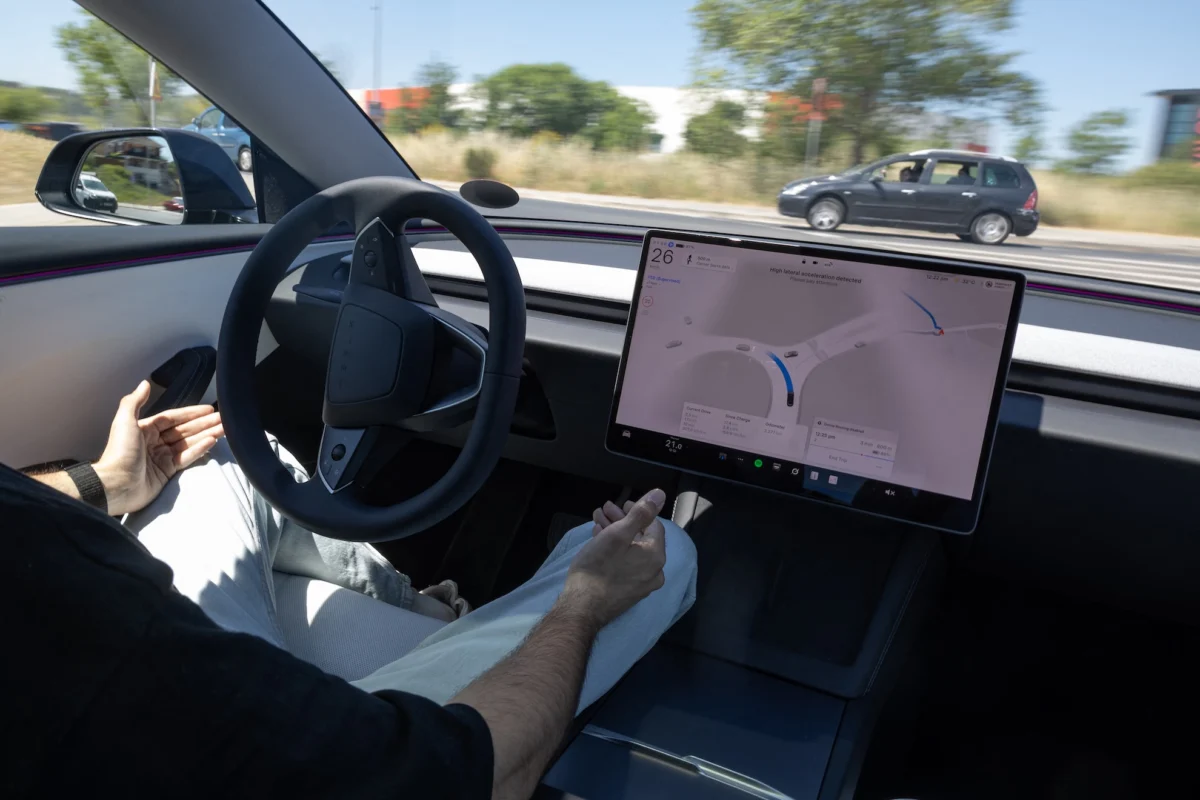
The automotive industry is currently fixated on a singular, critical question: How much responsibility rests with the driver versus the machine? This week, that debate reached a fever pitch following a series of incidents and regulatory actions surrounding Tesla’s "Full Self-Driving (Supervised)" (FSD) system.
The Texas Incident: A Divergence of Narratives
A fatal crash in Texas, which claimed the life of a 76-year-old woman after a vehicle struck a residential home, has become a flashpoint for national attention. Initial reports from the driver suggested that "Autopilot"—Tesla’s legacy driver-assistance suite—was engaged at the time of the collision. However, Ashok Elluswamy, Tesla’s VP of AI software, contested this on social media platform X. Elluswamy claimed that the vehicle was operating under FSD (Supervised) and that the driver had manually overridden the system by depressing the accelerator pedal to 100%.
This discrepancy highlights the ongoing challenge of "black box" telematics. Without an independent forensic analysis of the vehicle’s Event Data Recorder (EDR), the exact state of the system remains a point of contention. Recognizing the gravity of the situation, the National Highway Traffic Safety Administration (NHTSA) and the National Transportation Safety Board (NTSB) have launched formal investigations into the crash.

A Pattern of Legal and Regulatory Pressure
Simultaneously, Tesla has moved to settle a lawsuit related to a 2023 fatal crash involving FSD (Supervised). This settlement arrives as the NHTSA deepens its probe into whether Tesla’s vision-only approach is sufficiently robust to handle environmental factors such as sun glare, fog, or airborne dust—conditions that have historically challenged camera-based perception systems. As Tesla aggressively pivots its corporate identity toward being an AI and robotics enterprise, the commercial viability and public perception of FSD (Supervised) have never been more critical to the company’s bottom line.
Waymo’s Strategic Expansion and the "Ojai" Robotaxi
While Tesla faces a regulatory headwinds, Waymo is doubling down on its "hardware-plus-software" strategy. A new research report from MoffettNathanson, utilizing detailed Bill of Lading documentation, has shed light on the scope of Waymo’s "Ojai" robotaxi program.
The Supply Chain Behind the Fleet
The Ojai robotaxi, a minivan-style vehicle designed in Sweden and manufactured in China by Zeekr (a brand under Geely Holding Group), represents a calculated risk in an era of protectionist trade policy. To comply with U.S. regulations, these vehicles are imported without vehicle communication modules to avoid potential violations of laws regarding Chinese-connected vehicle technology.
Once stateside, Waymo integrates its sixth-generation autonomous driving stack. This sensor suite is formidable, comprising 13 cameras, four lidar sensors, six radar units, and an array of external audio receivers. According to MoffettNathanson’s analysis, Waymo is currently importing approximately 300 Ojai vehicles per month, putting them on track to add over 3,100 units to their fleet this year. This signifies a massive scaling effort intended to solidify Waymo’s dominance in the robotaxi sector.
Market Dynamics: A Wave of Capital and Strategic Pivots
The broader mobility ecosystem continues to see significant capital allocation, signaling that while the technology is maturing, the infrastructure supporting it is just getting started.

Recent Capital Raises and Partnerships
- Infrastructure: Aseon Labs, a Silicon Valley startup, secured $10 million in a seed round led by Crane Venture Partners. Their focus is the "pit stop" model—developing autonomous pods to inspect, clean, and charge robotaxis, a vital service for fleet operators.
- Commercial Expansion: CaoCao and May Mobility have formed a strategic partnership to commercialize robotaxi services, with an initial focus on European markets.
- Aerospace: Elroy Air, a leader in autonomous heavy-cargo drones, has announced plans to go public via a $1 billion merger with Columbus Circle Capital Corp II.
- Supply Chain AI: Partly, which utilizes AI to streamline the automotive repair supply chain, closed a $50 million Series B round led by DST Global Partners.
- Global Infrastructure: African EV platform Spiro secured $55 million from NewTrails Capital, underscoring the global push for electrified mobility in emerging markets.
- Financing the Future: Terawatt Infrastructure has finalized a $300 million senior secured credit facility to fund the acquisition and development of charging depots, directly supporting autonomous and electric fleets like Waymo.
Industry Implications and Future Outlook
The mobility sector is not just about the vehicles; it is about the regulatory frameworks and corporate strategies that define the next decade of transport.
The "No Pedal" Future
In a significant potential boost for companies like Tesla and Zoox, the U.S. Department of Transportation has proposed regulatory changes that could eliminate the requirement for brake pedals in vehicles designed exclusively for automated operation. This would represent a major milestone in the shift toward "purpose-built" autonomous vehicles.
Workforce and Strategic Consolidation
Not all news is bullish. Lucid Motors is undergoing a significant contraction, laying off 18% of its workforce—approximately 1,500 employees—and cutting its second shift of production in Arizona. This move, according to CEO Silvio Napoli, is intended to "simplify the company" and sharpen execution. It serves as a reminder that the path to profitability in the EV space is fraught with operational challenges.
The Sensor Standard Battle
Lyft’s recent announcement regarding a "multi-sensor safety standard" for its network has drawn a clear line in the sand. By effectively mandating that autonomous vehicles use more than just camera-based vision, Lyft has signaled that platforms like Tesla’s Cybercab, which rely on a vision-only FSD stack, may not qualify for their service. This sets the stage for a technological showdown: Is vision-only sufficient, or is a redundant sensor array (lidar, radar, cameras) the only acceptable path for public safety?
Global Moves
Waymo is quietly laying the groundwork for entry into the German market, as indicated by a recent company registration filing. Meanwhile, Polestar finds itself in a precarious position, as U.S. laws regarding Chinese-connected vehicle technology now bar the brand from selling its new models in the U.S. market.

Final Thoughts
As the industry moves into the second half of 2026, the divergence between "camera-first" AI approaches and "sensor-fused" autonomous systems is growing more pronounced. With major investigations looming over Tesla and a massive scaling effort underway at Waymo, the next six months will be pivotal in determining which technological philosophy—and which company—will define the future of the autonomous passenger experience.
Got a tip for us? Email Kirsten Korosec at [email protected] or reach out via Signal at kkorosec.07. You can also contact Sean O’Kane at [email protected].
 Asep Darmawan
 Siti Muinah
 Ali Ikhwan
