

By Industry Correspondent
June 28, 2026
In an era where Silicon Valley’s mantra of "move fast and break things" has permeated almost every sector of global manufacturing, Ford Motor Company has made a startling admission: for the automotive industry, breaking things—specifically quality standards—is a luxury that even the most advanced artificial intelligence cannot afford.
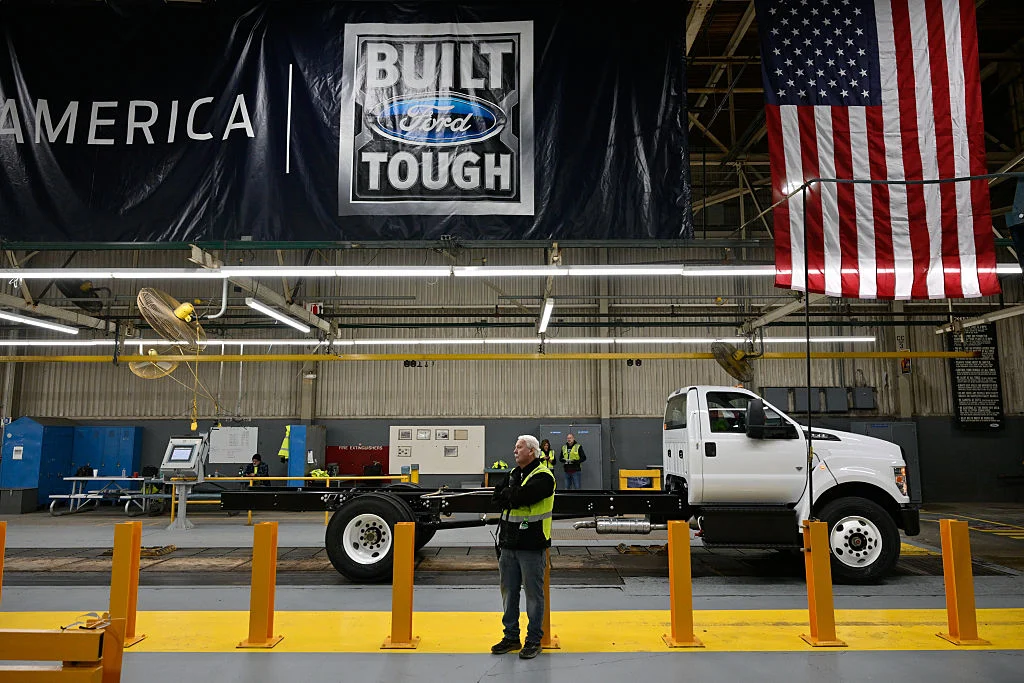
As of late June 2026, Ford has confirmed a strategic pivot that effectively reverses years of automation-heavy quality control. The automaker has hired 350 veteran engineers—many of whom are retirees returning to the fold—to oversee, refine, and, in some cases, override the automated quality systems that have governed the company’s production lines for the past several years. This move marks a significant reckoning for the automotive sector, highlighting the friction between algorithmic efficiency and the nuanced, tactile reality of building complex machinery.
The Reality Check: When Automation Fails the Assembly Line
For years, the promise of Industry 4.0 was clear: replace human intuition with high-fidelity sensors, predictive algorithms, and AI-driven quality assurance to reduce human error. Ford, like many of its peers, embraced this transition with fervor. However, as the company’s Chief Operating Officer, Kumar Galhotra, recently admitted to journalists, the reliance on automated systems produced "disappointing results."
The failure was not one of computing power, but of perspective. While AI is exceptionally efficient at identifying known patterns and flagging anomalies within a pre-defined dataset, it often struggles with the "unknown unknowns"—the subtle, physical imperfections that a seasoned engineer recognizes through years of tactile experience.
"Mistakenly, we thought that by just introducing artificial intelligence and ingesting the design requirements that we had, that that would produce a high-quality product," explained Charles Poon, Ford’s Vice President of Vehicle Hardware Engineering. This admission signals a cultural shift within Ford’s Dearborn headquarters. The company realized that while AI could process massive amounts of data, it could not replicate the "gut instinct" of a master engineer who understands how a specific bolt might behave under extreme thermal expansion or how a minor vibration in a transmission housing might manifest as a catastrophic failure three years down the road.
A Chronology of the Quality Crisis
The path to this decision was not immediate; it was paved by a series of incremental challenges that finally reached a tipping point.
- 2022–2023: The Great Automation Push: Ford, alongside other major OEMs, accelerated its digital transformation. Investments in machine learning were touted as the solution to streamlining production and reducing labor costs.
- 2024: The Latent Issues: Reports began surfacing regarding recurring quality issues in new vehicle launches. While automated systems performed well in controlled environments, the complexity of supply chain integration and manufacturing variations led to a rise in warranty claims.
- Early 2025: The Internal Audit: As warranty costs began to climb, Ford leadership launched an internal review. They discovered that while AI was flagging major defects, it was missing subtle, systemic quality issues that were only apparent to human experts.
- Late 2025: The Re-Hiring Strategy: Leadership made the decision to prioritize human expertise. The initiative to recruit "gray beard" engineers—a term of endearment for industry veterans with decades of experience—began in earnest, targeting both former Ford employees and high-level talent from key suppliers.
- June 2026: Public Validation: Following months of structural changes, Ford topped the J.D. Power Initial Quality Survey, signaling that the intervention of human veterans had stabilized the company’s output.
The "Gray Beard" Strategy: Mentorship and Machine Learning
The 350 engineers hired by Ford are not merely performing manual inspections; they are serving as the architects of a new, hybrid quality-assurance model. Ford has effectively implemented a two-pronged strategy.
First, these veterans are tasked with "hunting for failure points" long before a component ever reaches the plant floor. By utilizing their deep institutional memory—understanding the failure modes of components that haven’t been in production for a decade—they are acting as a secondary, human-led audit layer that AI simply cannot match.
Second, they are acting as the primary trainers for the next generation of Ford engineers and, crucially, for the AI itself. By feeding their expert observations back into the neural networks, they are helping to "reprogram" the company’s automated tools. In this sense, the humans are not being replaced by AI; they are teaching the AI to think more like a veteran engineer.

"We aren’t abandoning AI," a company representative clarified. "We are maturing it. We are using the experience of our veteran staff to train our younger engineers and to provide the ‘human truth’ that our machine learning models need to become truly effective."
Supporting Data: The Financial Impact of Human Insight
The financial implications of this move are already manifesting on Ford’s balance sheet. CEO Jim Farley has been vocal about the positive impact of these quality-focused initiatives. Addressing investors, Farley noted that the reduction in warranty and recall costs, driven by the improved quality control processes, has contributed to "hundreds and hundreds of millions of dollars of a tailwind" for the company.
For a legacy automaker, where margins are often razor-thin, the cost of a recall can be existential. By catching defects at the design and pre-production stage—a task that requires the intuition of experienced staff—Ford is avoiding the massive downstream costs of replacing components in vehicles that have already reached the consumer.
Furthermore, the recent J.D. Power Initial Quality Survey ranking—where Ford claimed the top spot among mainstream brands—serves as an external validation of the internal pivot. In an industry where brand loyalty is often tied to reliability, this ranking is a critical metric for long-term growth and market share recovery.
Implications for the Future of Manufacturing
The Ford case study serves as a cautionary tale for the broader tech and manufacturing industries. The "AI-first" movement, while transformative, has hit a wall of complexity in sectors where physical hardware is paramount.
1. The Death of the "Plug-and-Play" Automation Myth
Companies are learning that complex manufacturing environments cannot be fully digitized without the risk of "black box" failures—instances where an AI makes a decision that is technically efficient but practically flawed.
2. The Premium on Tribal Knowledge
The "gray beard" engineer is suddenly the most valuable asset in the room. As younger, tech-native engineers enter the workforce, companies are realizing that the lack of institutional knowledge is a major vulnerability. The integration of legacy experience with modern data tools will likely become the gold standard for high-performance engineering firms.
3. A Hybrid Future
The future of manufacturing is not "Human vs. AI," but rather a "Centaur" model—where the raw computational speed of AI is directed and vetted by the nuance of human experience. Ford’s decision to rehire 350 specialists is likely just the beginning of a trend that will see many Fortune 500 manufacturing companies reconsidering their reliance on purely algorithmic systems.
Conclusion: Lessons for an Automated Age
As we look toward the second half of the decade, Ford’s pivot highlights a fundamental truth about progress: technology is a force multiplier, but it is not a substitute for wisdom. By bringing back the "gray beards," Ford has not only saved money and boosted its quality ratings; it has re-centered the human element as the final arbiter of excellence.
For the tech sector, the takeaway is clear: artificial intelligence can handle the data, but it still doesn’t know how to build a car. Until it does, the engineers who have spent decades under the hood will remain the most critical component in the manufacturing chain. As Ford continues to refine its processes, the industry will be watching closely to see how this human-centric AI model scales—and whether other titans of industry follow suit in realizing that, sometimes, the best upgrade to a computer is a person.
 Asep Darmawan
 Siti Muinah
 Ali Ikhwan
