

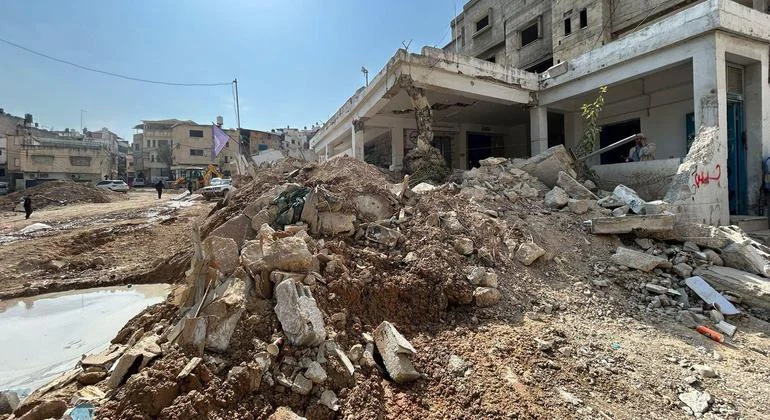
NEW YORK — The United Nations Security Council convened an emergency open session on Monday to address the accelerating expansion of Israeli settlements in the occupied Palestinian territory. The session, held at the UN headquarters in New York, comes amid a volatile climate in the West Bank, where infrastructure degradation, military incursions, and civilian displacement have reached what observers describe as a critical breaking point.
The meeting features critical briefings from the Office of the UN Special Coordinator for the Middle East Peace Process (UNSCO), alongside testimonies from two civil society representatives who have been documenting the direct impact of these activities on local communities.
The Core Issue: A Direct Challenge to International Law
At the heart of the Security Council’s deliberations is the status of Israeli settlements, which the UN and the broader international community have long declared illegal under international law. The session serves as a formal follow-up to the landmark resolutions established over a decade ago, which sought to halt the fragmentation of Palestinian land.
The UN’s stance remains consistent: the construction and expansion of settlements in the West Bank and East Jerusalem constitute a flagrant violation of international law and a major obstacle to a viable two-state solution. As the Council meets, members are tasked with evaluating whether the current trajectory of settlement expansion has rendered the prospects for peace functionally impossible.
Chronology of Escalation: From Rhetoric to Reality
The current situation is not an isolated event but the culmination of a decade of shifting political dynamics on the ground.
- 2016 – The Watershed Moment: The Security Council adopted a landmark resolution reaffirming that Israel’s settlement activities in the occupied Palestinian territory, including East Jerusalem, have no legal validity and constitute a flagrant violation of international law.
- 2020–2024 – Accelerated Annexation: Reports from UN agencies throughout this period noted a sharp increase in settlement "outposts" and the legalization of previously unauthorized structures.
- 2025 – Humanitarian Crisis: The year was marked by a spike in settler violence and the destruction of Palestinian-owned infrastructure. The images of exposed sewage systems in areas like the Nur Shams camp—a direct consequence of military operations intended to facilitate settlement security—became a global symbol of the humanitarian neglect occurring in the territory.
- June 2026 – The Current Crisis: With reports of new planning permits being issued for thousands of housing units in the West Bank, the Security Council has moved to hold this urgent open meeting to address the breach of international norms.
Supporting Data: The Cost of Expansion
The impact of settlement expansion is not merely political; it is deeply material. According to data provided by humanitarian organizations operating on the ground:
- Infrastructure Decay: As seen in the Nur Shams camp, military operations associated with settlement security have frequently resulted in the destruction of essential municipal infrastructure. Exposed sewage, ruptured water mains, and gridlocked transport routes have become commonplace in communities adjacent to settlement zones.
- Displacement Figures: Recent assessments indicate that the combination of home demolitions—often cited by authorities as being conducted without permits—and the psychological pressure exerted by expanding settlements has led to the displacement of hundreds of families in the past twelve months alone.
- Economic Fragmentation: The "settler-only" road networks and military checkpoints have effectively bifurcated the West Bank, making the movement of goods and people increasingly costly and time-consuming, further stifling the Palestinian economy.
Official Responses and Diplomatic Friction
The Security Council chamber is currently a theater of intense diplomatic friction. While several member states have expressed grave concern over the "irreversible" nature of the expansion, others have called for a more balanced approach that acknowledges the security concerns of the Israeli state.
The UN Position
The UN Special Coordinator for the Middle East Peace Process has repeatedly warned that the "facts on the ground" are changing rapidly. The briefings delivered today emphasize that the expansion is not only a legal issue but a primary driver of the current cycle of violence. "Every new brick laid in an illegal settlement is a brick removed from the foundation of a future, peaceful coexistence," one senior UN official remarked prior to the session.
Civil Society Perspectives
The two civil society representatives invited to brief the Council are expected to provide harrowing accounts of life under the shadow of expansion. Their testimony will focus on the "human cost"—the loss of agricultural land, the intimidation of farmers, and the systemic barriers that prevent Palestinian communities from accessing healthcare and education. By bringing these voices into the chamber, the Council aims to move beyond abstract legal debates and confront the daily realities of life in the occupied territories.
Implications for the Future of the Peace Process
The implications of this Security Council meeting are profound. If the Council fails to reach a consensus on measures to enforce the cessation of settlement expansion, analysts suggest that several negative outcomes are likely:
1. The Death of the Two-State Solution
The primary concern is that the territorial contiguity required for a Palestinian state is being systematically eroded. If the current rate of settlement construction continues, the possibility of drawing a functional border between the two entities may become physically impossible, forcing a shift toward a "one-state reality" that remains deeply contentious and potentially unstable.
2. Regional Instability
The situation in the West Bank is a bellwether for regional security. Increased tension and perceived injustice are frequently cited as catalysts for broader unrest across the Middle East. Should the UN fail to act, observers fear that radicalization and the desire for unilateral action by various actors in the region will increase, threatening the stability of neighboring nations.
3. The Erosion of International Norms
The Security Council’s ability to uphold its own resolutions is being tested. When resolutions regarding the illegality of settlements are ignored for over a decade, the credibility of the United Nations itself is called into question. The outcome of today’s meeting will likely serve as a barometer for the Council’s future relevance in resolving deep-seated, long-term geopolitical conflicts.
Conclusion: The Path Ahead
As the live session continues, the world watches to see if the Council will move toward concrete actions, such as sanctions or formal condemnation, or if it will once again be paralyzed by internal divisions.
For the people living in Nur Shams and countless other communities across the West Bank, the diplomatic maneuvering in New York feels distant, yet the results will define their future. The exposure of the sewage systems and the crumbling infrastructure are not just physical problems; they are the visible manifestation of a political process that has failed to protect the vulnerable.
The Security Council meeting serves as a reminder that international law is only as strong as the political will of those who have sworn to uphold it. As the session progresses, the global community waits for a sign that the international order is prepared to address the fundamental issues of justice and sovereignty in the Middle East, or whether the current state of affairs will continue to deteriorate into further instability.
Stay tuned to UN Web TV for ongoing coverage of this session. For daily updates on the situation in the Middle East and other global hotspots, subscribe to the UN News newsletter and download the UN News app for iOS and Android devices.
 Asro
Asro
 Layla Zulfa
