

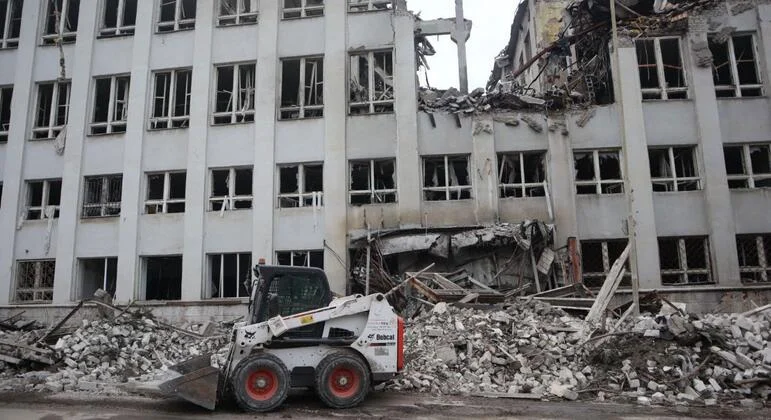
Executive Summary: A Humanitarian Crisis Deepens
As the conflict in Ukraine enters its fifth year, the humanitarian situation has reached a critical inflection point. A landmark report released this week by the United Nations Human Rights Monitoring Mission in Ukraine (HRMMU) has exposed the catastrophic impact of systematic Russian strikes on Ukraine’s power grid throughout the 2025–26 winter months. The findings paint a grim picture of a nation pushed to the brink, with the deliberate targeting of electricity and heating infrastructure leaving millions of civilians in life-threatening conditions.
The report arrives amidst a fresh wave of violence, with Ukrainian authorities reporting eight civilian deaths and 35 injuries following a series of Russian strikes on the city of Dnipro this Monday. These events mirror recent developments on the other side of the border, where Russian officials reported at least six deaths following Ukrainian strikes on Russian-controlled territories over the weekend. As both nations engage in reciprocal strikes on energy assets—including a recent major fire at a Russian oil refinery attributed to Ukrainian forces—the civilian population remains the primary victim of an escalating war of attrition.
A Brief Chronology: From Invasion to Attrition
The current humanitarian crisis is the latest chapter in a conflict that began on February 24, 2022, when Russia launched a full-scale invasion of Ukraine, following the 2014 annexation of the Crimean Peninsula.
- February 2022: Full-scale hostilities commence, leading to mass displacement and the initial disruption of Ukrainian infrastructure.
- 2023–2024: The conflict shifts into a high-intensity war of attrition. UN General Assembly resolutions repeatedly demand a withdrawal of Russian forces, while humanitarian agencies struggle to maintain life-saving aid delivery.
- December 2025 – May 2026: The period covered by the latest OHCHR report, marked by the most sustained and systematic campaign against energy infrastructure to date.
- Present Day: Both sides continue to trade long-range strikes, with the energy sector becoming a primary theater of war.
The Targeting of Vital Infrastructure
The OHCHR report, titled Attacks against Ukraine’s energy infrastructure and update on the human rights situation in Ukraine, provides granular detail on the scale of the destruction. According to UN investigators, Russia carried out at least 423 distinct attacks on electricity generation, transmission, and distribution facilities. Furthermore, at least 74 strikes were documented against centralized heating infrastructure—a lifeline for the vast majority of Ukrainian urban households.
The Impact of Frigid Temperatures
The winter of 2025–26 was recorded as the coldest in Ukraine since 2010. The systematic destruction of heating networks meant that hundreds of thousands of civilians were stripped of warmth during record-low temperatures.
Danielle Bell, Head of the UN’s Human Rights Monitoring Mission in Ukraine, emphasized the disproportionate impact on vulnerable groups. "Loss of electricity and heating during winter affected people’s health, safety, and ability to maintain an adequate standard of living, particularly for older people, those with disabilities, and families with children," Bell stated. The physical damage to the power grid is so extensive that UN experts warn that full restoration of generation capacity will not be possible before the onset of next winter, suggesting that millions of civilians face a renewed threat of freezing in the coming months.
Supporting Data: Escalating Civilian Toll
The UN report presents a stark quantitative analysis of the human cost of the conflict. Between December 1, 2025, and May 31, 2026, the HRMMU documented 1,272 civilian deaths and 6,871 injuries. This represents a staggering 40 percent increase in casualties compared to the same period in the previous year.
Primary Drivers of Casualties
- Long-Range Munitions: Missile and drone attacks remain the leading cause of civilian deaths. These strikes, often aimed at urban centers, have become more frequent and more destructive.
- Short-Range Drone Proliferation: The increasing use of tactical drones near frontline areas has introduced new risks, complicating civilian evacuations and impeding the work of humanitarian aid convoys.
- Isolation: The destruction of energy grids has effectively "caged" communities, cutting off communication, water pumping, and medical services, further exacerbating the mortality rate.
Violations Against Prisoners of War
Beyond the direct targeting of civilians, the report sheds light on the treatment of prisoners of war (POWs) on both sides. Based on 1,926 interviews with victims and witnesses, the report documents a pattern of systemic abuse.
Nearly all Ukrainian POWs interviewed described harrowing conditions, including torture, beatings, sexual violence, the use of electric shocks, and a deliberate denial of medical care while in Russian custody. Conversely, the report notes that the majority of Russian POWs held by Ukraine also reported instances of torture or ill-treatment, signaling a widespread disregard for the Geneva Conventions by both parties. The UN has called for immediate, humane treatment of all detainees, reminding both Moscow and Kyiv of their obligations under international humanitarian law.
Occupation: The Erosion of Fundamental Rights
The UN’s findings extend to the territories currently under Russian occupation. The report documents a systematic dismantling of civil society, characterized by:
- Freedom of Expression: Total suppression of dissent and independent journalism.
- Forced Conscription: Reports of local residents being coerced into military service.
- Cultural Erasure: The prohibition of the Ukrainian curriculum in schools and the enforcement of Russian-centric educational mandates.
- Restricted Access: The UN continues to be denied independent access to occupied territories, preventing a full assessment of the humanitarian situation in these regions.
Official Responses and International Action
The United Nations has been vocal in its condemnation of the invasion. Through multiple General Assembly resolutions, the international body has demanded the withdrawal of Russian forces. While these diplomatic efforts continue, the practical focus remains on humanitarian intervention.
Four years into the conflict, UN agencies and their NGO partners are engaged in a massive relief effort. This includes:
- Emergency Aid: Distributing food kits, sanitation supplies, and blankets to frontline communities.
- Healthcare Support: Deploying mobile clinics and providing trauma kits to hospitals struggling under the weight of incoming casualties.
- Infrastructure Advocacy: Pushing for the protection of civilian energy facilities and demanding accountability for violations of international law.
Implications: A Future in the Balance
The findings of the latest OHCHR report serve as a sobering reminder of the long-term consequences of the war. The "energy warfare" strategy has not only degraded the current quality of life for millions but has also set back Ukraine’s development by years.
The Path Forward
The UN’s recommendations are clear:
- Civilian Protection: Both parties must cease the targeting of critical infrastructure, which serves no military necessity that outweighs the catastrophic civilian cost.
- Accountability: Mechanisms for documenting and prosecuting war crimes—both regarding infrastructure targeting and the treatment of POWs—must be strengthened.
- Humanitarian Access: Russia must allow independent monitors into occupied territories to ensure that the fundamental rights of civilians are not further eroded.
As the conflict stretches into another season, the resilience of the Ukrainian people is being tested by forces far greater than just the military engagement on the frontlines. The loss of heat, power, and security has created a multifaceted crisis that requires not only immediate humanitarian aid but also sustained international attention.
Without a shift in strategy or a move toward de-escalation, the upcoming winter threatens to be even more perilous than the last. For the millions of civilians living in the shadow of this conflict, the promise of a return to normalcy remains elusive, replaced by the daily, grinding reality of survival in a war-torn landscape. The international community, through its various UN agencies, remains the final line of defense for those caught in the crossfire, yet the report concludes that only a cessation of hostilities can truly end the cycle of violence and allow for the reconstruction of a shattered nation.
 Lina Hope
 Asro
Asro
