

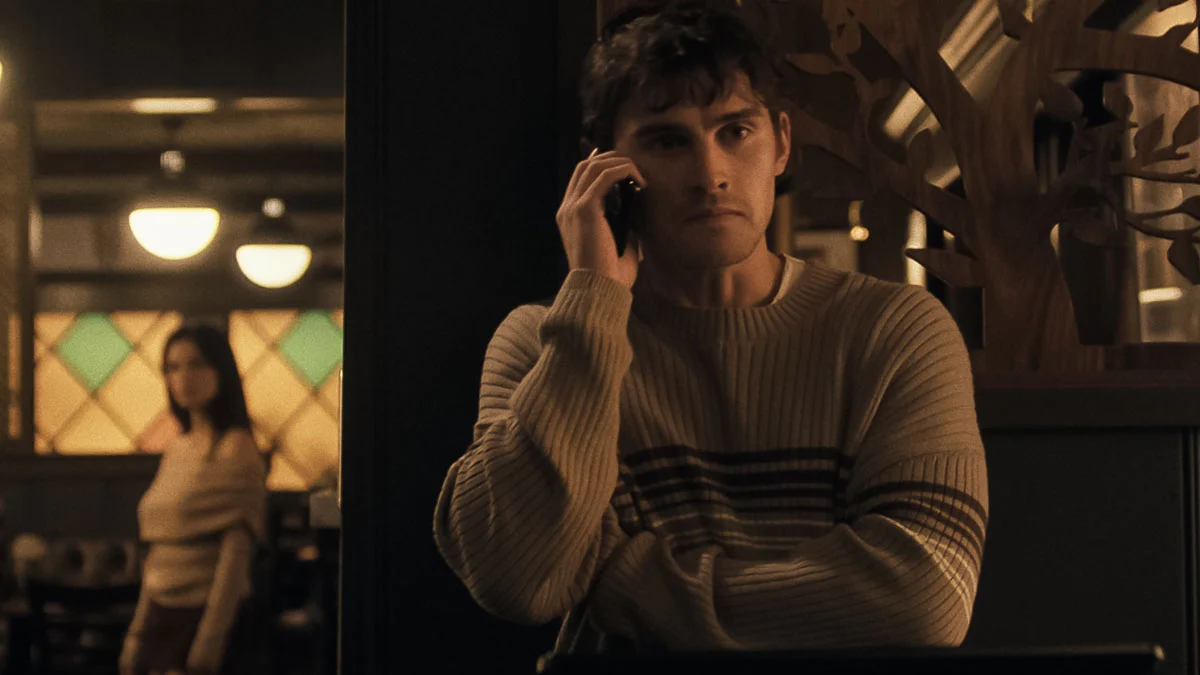
In the landscape of modern cinema, where tentpole franchises and established intellectual property (IP) usually dictate box office dominance, Curry Barker’s Obsession has emerged as a startling anomaly. The Focus Features horror-thriller, which explores the dark, twisted intersection of desire and supernatural consequence, has defied conventional distribution wisdom.
Proving that audiences are starving for original storytelling, Obsession has maintained a stubborn, impressive hold on the box office—so much so that the film is currently executing a rare "triple-threat" release strategy. While still playing in multiplexes nationwide, the film has simultaneously debuted on Video-on-Demand (VOD) and is slated for a premium 4K Ultra HD, Blu-ray, and DVD physical media release in just two weeks. This rapid-fire rollout is a testament to the film’s status as a bona fide cultural phenomenon, one that studios likely failed to predict in their initial projections.
The Premise: A Nightmare Born from Springfield
At the heart of Obsession is a deceptively simple, high-concept premise. Directed by Curry Barker, the film stars Michael Johnston as a desperate young man who, driven by a profound and unrequited yearning, inadvertently makes a supernatural wish for his crush (played by Inde Navarrette) to return his affections. What follows is a descent into psychological and supernatural horror, as the protagonist discovers that obtaining one’s deepest desire often carries a cost far higher than one is prepared to pay.
Interestingly, the genesis of such a grim narrative lies in an unlikely source: the long-running animated sitcom The Simpsons. Barker has noted in recent interviews that the core mechanism of the film was inspired by a specific episode of the series, demonstrating how even the most whimsical sources can provide the spark for chilling, grounded horror. By grounding the supernatural in the universal, relatable emotion of romantic obsession, Barker has crafted a narrative that resonates deeply with contemporary audiences.
Chronology of a Surprise Hit
The journey of Obsession from an indie-leaning horror project to a box-office titan has been nothing short of meteoric.
- The Launch: Released in early May 2026, the film arrived with modest expectations. Initial marketing focused on the film’s atmospheric tension rather than the spectacle-driven campaigns usually reserved for summer blockbusters.
- The Grassroots Surge: By the second and third weeks of release, social media discourse—driven by intense fan reactions to the film’s shocking third-act twists—began to fuel ticket sales. Unlike many horror films that suffer from "front-loaded" box office performance (dropping off sharply after opening weekend), Obsession demonstrated remarkable "legs," consistently ranking in the top five.
- The Seven-Week Milestone: As of the weekend of June 26th, seven weeks into its theatrical run, Obsession secured the number three spot at the domestic box office. It held its ground against heavy hitters, trailing only the massive release of Supergirl while comfortably outperforming legacy franchise entries like Jackass: Best and Last.
- The Multi-Platform Expansion: Recognizing the sustained demand, the studio opted for a hybrid strategy. The film hit digital platforms via Apple TV and Amazon on June 26th, allowing viewers who missed the theatrical experience to catch up, while simultaneously ramping up the marketing for the physical 4K Ultra HD release.
Supporting Data: Why ‘Obsession’ is Breaking the Mold
To understand the success of Obsession, one must look at the shifting metrics of the 2026 box office. Industry analysts have long suggested that the "IP-first" model—relying solely on sequels, prequels, and cinematic universes—was hitting a saturation point. Obsession serves as the primary case study for this pivot.
Data from the weekend of June 26th shows a clear trend: audiences are increasingly willing to pay for fresh, original concepts. While Supergirl utilized the weight of DC branding to take the top spot, the fact that Obsession remained in the top three nearly two months after its debut is statistically significant. It suggests that "word-of-mouth" marketing, amplified by digital connectivity, has become more potent than traditional marketing budgets.
Furthermore, the decision to push the film to VOD while it is still actively drawing crowds suggests that the studio is prioritizing "content velocity"—the speed at which a movie can saturate the cultural consciousness—over the traditional 90-day theatrical window. By making the film available on Apple TV and Amazon simultaneously with its theatrical tail, the studio is capturing both the hardcore theater-going audience and the at-home demographic, effectively maximizing revenue streams in an era of fractured viewing habits.
Official Responses and Behind-the-Scenes Insights
For those eager to dive deeper into the creation of the film, the upcoming physical media release offers more than just high-definition picture quality. The 4K Ultra HD/Blu-ray/DVD package, arriving on July 14th, is packed with supplemental material intended to satisfy the film’s growing cult following.
Chief among the special features is Obsession Unleashed, a comprehensive behind-the-scenes featurette. This segment provides a rare glimpse into the production, including the original chemistry tests between Michael Johnston and Inde Navarrette. These tests are often the "smoking gun" of a successful film; the undeniable spark between the two leads is widely cited by critics as the anchor that keeps the film’s supernatural elements from drifting into absurdity.
Additionally, the release features an exclusive audio commentary by Curry Barker. For fans of the horror genre, this is a must-listen, as Barker breaks down the technical challenges of filming the movie’s more complex sequences and discusses the specific narrative choices that led to the film’s viral reputation. Pre-orders are currently available via Amazon, and the studio expects a significant uptick in sales following the digital-to-physical transition.
Implications: The End of the IP Era?
Perhaps the most important takeaway from the success of Obsession is what it signals for the future of Hollywood. For over a decade, the industry has operated under the assumption that original intellectual property was too risky to produce at a high level. Obsession proves that this assumption is not only dated but arguably incorrect.
As we noted in our recent analysis of the evolving film industry, the old Hollywood IP model is effectively dying. Audiences are no longer content to simply consume the next iteration of a decades-old franchise; they are actively seeking out "eventized" original films that offer unique visions and provocative storytelling.
The success of Obsession provides a roadmap for studios looking to replicate this outcome. It requires a combination of strong, hook-driven concepts (like a "wish-fulfillment" horror story), effective utilization of digital social discourse, and a flexible release strategy that treats theatrical, VOD, and physical media not as competing silos, but as a unified ecosystem.
Whether or not Obsession inspires a wave of copycats remains to be seen. However, one thing is certain: the film has successfully disrupted the industry’s status quo. By proving that a modest-budget horror film can command the same level of attention as a blockbuster superhero movie, Curry Barker has cemented his status as a director to watch.
As of now, the film remains available on VOD via Apple TV and Amazon. For collectors and cinephiles, the 4K Ultra HD edition arrives on shelves on July 14th. Whether you have already seen it in theaters or are waiting for the home release to experience the tension for the first time, Obsession stands as the definitive cinematic surprise of 2026. It is a haunting reminder that in the world of movies, the most powerful thing a film can have isn’t a massive budget or a famous logo—it’s a story that people simply cannot stop talking about.
 Asro
Asro
 Lina Irawan
