

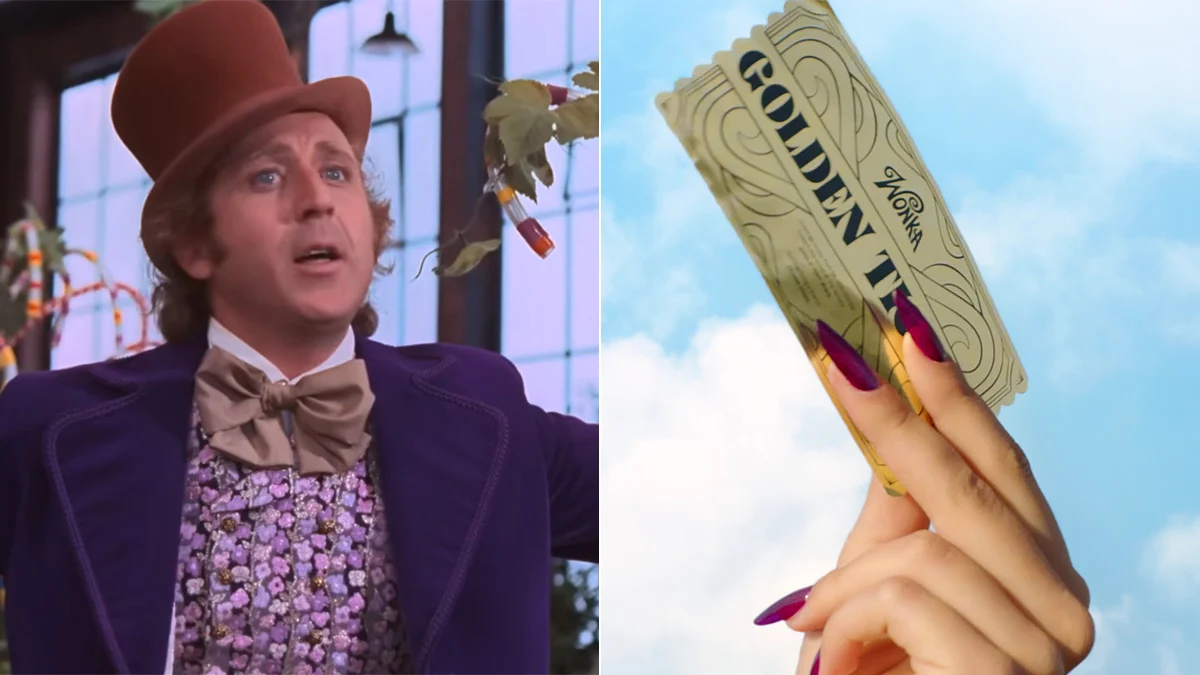
In the landscape of modern entertainment, the boundary between honoring a legacy and exploiting an estate has become increasingly blurred. Netflix’s latest announcement—a reality competition series titled Wonka’s The Golden Ticket—has ignited a firestorm of debate, not merely because it transforms a beloved cinematic masterpiece into a high-stakes, corporate-backed game show, but because it utilizes generative artificial intelligence to “reanimate” the voice of the late Gene Wilder.
Wilder, who passed away in 2016, remains a titan of 20th-century comedy. His performance as the eccentric chocolatier in the 1971 classic Willy Wonka & the Chocolate Factory is widely regarded as a pinnacle of screen acting—a delicate balance of whimsical warmth, sharp intellect, and profound, hidden melancholy. By resurrecting his likeness and voice to serve as the “host” of a modern reality series, Netflix has entered a precarious ethical space, prompting industry experts and fans alike to question whether the convenience of technology has outpaced our moral considerations regarding the deceased.
The Mechanics of the Competition: What is ‘Wonka’s The Golden Ticket’?
According to the official press release from Netflix, the series is designed as a sprawling social experiment. The premise involves twelve “Golden Ticket” winners, each accompanied by a chosen partner, entering a recreation of the Wonka factory. The goal is to provide a "world of pure imagination," though the actual mechanics lean heavily into the tropes of contemporary reality television.
Contestants will be subjected to a series of games, tests, and psychological hurdles. The show promises to challenge participants “physically, mentally, and morally,” forcing them to navigate a landscape of unpredictable traps. The narrative framing suggests a high-stakes environment where players must demonstrate “instincts, resilience, and character” to survive the chaos.
While the show features a physical set and presumably elaborate production design, the most striking element remains the host: a digital reconstruction of Gene Wilder’s voice. This choice is presented by the studio as a "nostalgic tribute," an attempt to bridge the gap between the 1971 source material and a modern audience accustomed to the aggressive pacing of shows like Survivor or The Traitors.
A Chronology of the Wonka IP Acquisition
The roots of this project can be traced back to the broader industry trend of IP consolidation. In 2021, Netflix made a monumental investment, spending upwards of $680 million to acquire the Roald Dahl Story Company. This acquisition granted the streaming giant the rights to a vast catalog of intellectual property, including Charlie and the Chocolate Factory, Matilda, and The BFG.
For Netflix, the objective was clear: the company needed to build a pipeline of globally recognized, family-friendly franchises to compete with the likes of Disney and Warner Bros. The decision to pivot the Wonka property into a reality game show is the logical, albeit aggressive, expansion of that investment.
The production timeline has been kept under tight wraps, but industry insiders suggest that the decision to incorporate Wilder’s voice was a late-stage development. While the show features appearances by legacy talent—notably original Oompa Loompa actor Rusty Goffe—the core of the show’s marketing is built entirely around the digital recreation of the film’s lead, marking a significant escalation in how studios utilize AI to "revive" stars for promotional and content-creation purposes.
Supporting Data: The Cost of Nostalgia
The financial weight of this project is significant. By acquiring the Roald Dahl estate, Netflix essentially purchased the right to iterate on these stories indefinitely. However, the cost of the acquisition is only one side of the coin. The “cost” to the cultural legacy of Gene Wilder is a point of contention that cannot be quantified in a balance sheet.
Wilder’s career was defined by intentionality. Following his retirement from acting, he shifted his focus toward literature, writing novels and memoirs. He was notoriously protective of his work, rarely engaging in the commercialized branding that defines modern celebrity. He served as a guest programmer for Turner Classic Movies in 2014—a role that allowed him to discuss film history with the dignity and gravitas he was known for—and his rare television appearances were typically limited to creative projects rather than commercial exploitation.
When comparing the original 1971 film to the upcoming game show, the disparity in tone is jarring. The original film is a musical fantasy grounded in human emotion; the Netflix series is a competitive reality show centered on “social experiments” and prize money. By grafting Wilder’s voice onto the latter, Netflix is essentially using the actor’s persona to lend authority to a format that he never participated in and, given his personal history, would likely have found entirely foreign.
Official Responses: The Stance of the Estate
Perhaps the most surprising aspect of this controversy is the active support of the Wilder estate. In a public statement, Karen B. Wilder, the late actor’s widow, expressed her approval of the project:
“More than five decades after Gene brought Willy Wonka to life, people of all ages and backgrounds around the world continue to find joy, laughter and inspiration in his performance. Gene had a remarkable ability to bring humor, wonder and heart into people’s lives, and that connection has endured for generations. We are delighted that Wonka’s The Golden Ticket celebrates the warmth and imagination that he brought to the role.”
This endorsement presents a complex legal and moral reality: the estate retains the rights to control the likeness and voice of the deceased. When an estate provides consent, the moral objections of the public are often secondary to the contractual reality. However, critics argue that the consent of an estate does not necessarily align with the wishes or the artistic integrity of the person who has passed. The “warmth and imagination” mentioned by the estate is precisely what many critics feel is missing from a game show format, leading to a disconnect between the family’s intention and the audience’s reception.
The Broader Implications: The Ethics of Digital Resurrection
The use of Gene Wilder’s voice in Wonka’s The Golden Ticket is a bellwether for the future of entertainment. As AI voice-modeling technology becomes more sophisticated and accessible, the industry is moving toward a future where "star power" is no longer limited by mortality.
1. The Erosion of Artistic Agency
When a studio can generate a performance using AI, the actor’s ability to interpret a role is replaced by an algorithm. In this case, even if the voice sounds like Wilder, it lacks the spontaneous, human choices that made his original performance iconic. It is a hollow mimicry—a “zombie voice” that risks turning a legendary career into a library of audio assets.
2. Consumer Fatigue and Brand Dilution
There is a growing sentiment that audiences are reaching a breaking point with the endless recycling of established IP. By forcing a beloved character into a reality show, Netflix risks diluting the prestige of the Willy Wonka brand. When a character is reduced to a game show host, the magic of the original narrative is inevitably diminished.
3. The Precedent for Future AI Usage
If this project is successful, it will undoubtedly encourage other studios to raid their archives. We may soon see digital versions of icons appearing in commercials, hosting podcasts, or even "starring" in new, low-budget content. The question remains: at what point does the digital presence of a deceased actor cease to be a tribute and start to become a violation of their memory?
4. The Human Element
Critics have noted that there is no shortage of living, breathing performers who could have brought a new, original energy to this role. By relying on digital necromancy, Netflix bypasses the opportunity to discover new talent, opting instead for the "safe" but creatively bankrupt path of brand recognition.
Conclusion: A Legacy Worth Protecting
As the September 23rd premiere date approaches, the discourse surrounding Wonka’s The Golden Ticket serves as a stark reminder of the tension between corporate ambition and artistic legacy. While Netflix may view this project as a clever way to monetize its massive investment in the Roald Dahl catalog, the public response suggests that there are limits to what audiences are willing to accept in the name of “nostalgia.”
Gene Wilder’s contribution to cinema was defined by his humanity—his laughter, his pauses, and his genuine, unscripted reactions. To reduce that legacy to a series of prompts for an AI generator is to miss the point of what made his work endure for over fifty years.
For those who wish to honor Wilder, the solution remains simple: return to the source. The original 1971 film continues to exist, untainted by the mechanics of modern reality television, streaming on various platforms for a new generation to discover on their own terms. Perhaps the most respectful thing a studio can do for a legend is to let their work stand on its own, rather than forcing it to participate in the chaos of a modern game show. Ultimately, some doors—like the gates to the Wonka factory—are perhaps better left closed when the original architect is no longer there to guide the way.
 Pevita Pearce
 Asro
Asro
 Lina Irawan
