

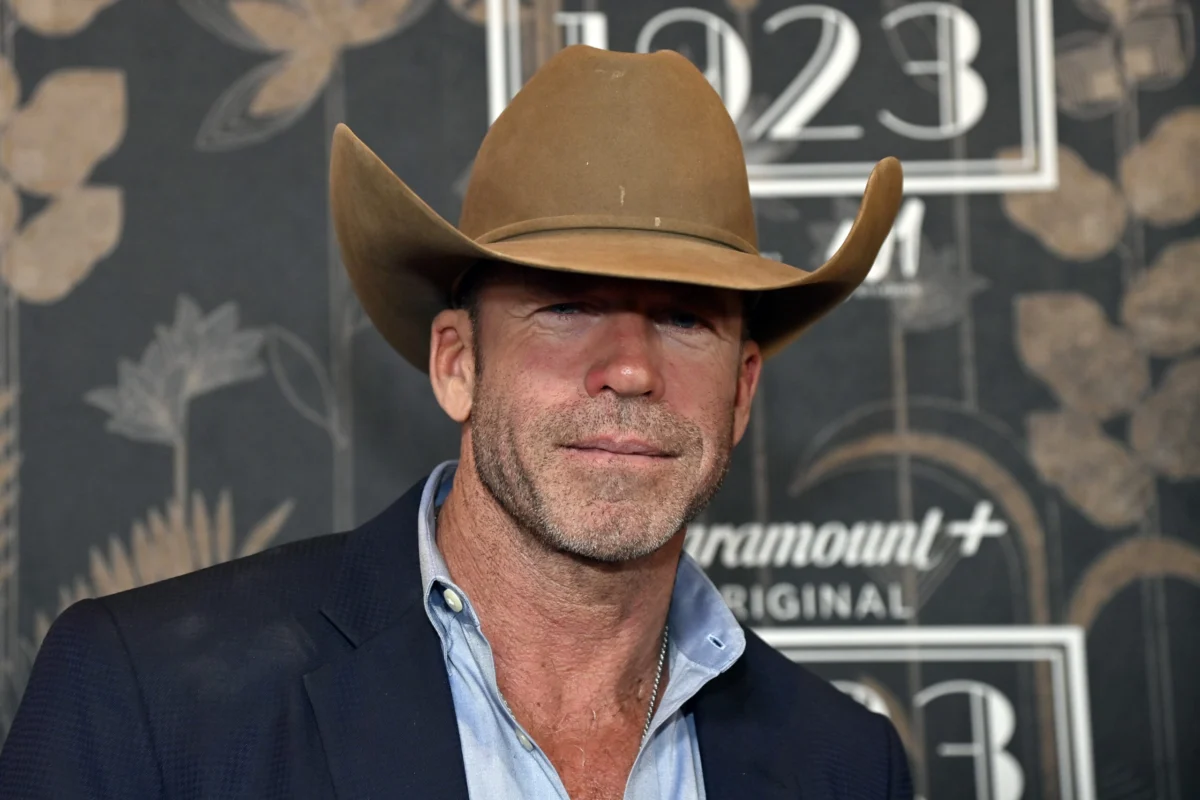
In a rare and unfiltered appearance on The Bill Simmons Podcast, Taylor Sheridan, the visionary force behind the modern Western renaissance and the architect of the Paramount+ streaming juggernaut, has delivered a scathing critique of the entertainment industry. The press-shy writer-producer, known for his relentless output and rugged, character-driven storytelling, used the platform to vent frustrations with the very institutions that define Hollywood success. His remarks—targeting everything from executive incompetence to the merit of awards circuits—have sent shockwaves through the industry, particularly as they arrive at the height of the 2026 Emmy “For Your Consideration” (FYC) season.

For an industry that relies on the delicate dance of public relations and awards-season campaigning, Sheridan’s candor is an anomaly. By dismissing the prestige of the Emmy Awards and publicly belittling the gatekeepers of the medium, Sheridan has effectively drawn a line in the sand, forcing a conversation about whether the "prestige" model of television is fundamentally at odds with the "common" appeal he champions.

A Decisive Critique: The "Know-Nothing" Executives and the Death of Nuance
During his conversation with Bill Simmons, which was ostensibly aimed at promoting his new book, How Not to Die in Prison (co-authored with Tom Nelson), Sheridan abandoned all pretense of industry diplomacy. When asked about the current state of television and the executives tasked with steering the ship, he was blunt.

"They know nothing," Sheridan remarked, describing the current echelon of studio and network executives as disconnected from the pulse of the American audience. His disdain extended to the blockbuster film industry as well, which he characterized as a series of "information dumps"—a nod to the convoluted, exposition-heavy nature of modern comic book movies.

Perhaps most provocatively, Sheridan took a swipe at the critical establishment, offering a dismissive "f–k ’em, honestly" to those who parse his work through the lens of traditional high-brow critique. For a showrunner who has arguably done more to keep the lights on at Paramount+ than any other creative, these comments are not merely personal grievances; they are a rejection of the traditional validation metrics that define a "successful" showrunner in the eyes of the Academy.

The "Common" Man’s Storyteller: A Philosophy of Entertainment
At the heart of Sheridan’s outburst is a deeply held philosophy regarding his target audience. While his contemporaries often chase the "prestige" label—seeking complex, experimental, or meta-narratives designed to win hardware—Sheridan views himself as a conduit for the American experience.

"I’m pretty common and I’m going to tell stories that common people are going to understand," Sheridan said during the podcast. "That’s most of America. You’re not going to win no Emmys with me, but I’m not trying to win Emmys. That’s not my goal."

For Sheridan, the goalpost is not a statuette on a mantle, but the emotional response of a viewer sitting on their couch. He emphasizes the visceral elements of storytelling: making an audience laugh, cry, fear for a character’s life, or feel a surge of genuine excitement. This "common-man" ethos has been the bedrock of his success with shows like Yellowstone, 1883, and 1923, which command massive viewership numbers that often dwarf the ratings of critically acclaimed, award-winning dramas.

A Critical Juncture: The Campaigns for Landman and The Madison
The timing of these comments could not be more sensitive. As the television industry enters the nomination phase for the 2026 Emmy Awards, two of Sheridan’s latest projects, Landman and The Madison, are heavily involved in active campaigns.

Both series have been positioned as the most likely candidates to bridge the gap between Sheridan’s "common-man" storytelling and the high-society sensibilities of the Television Academy. Landman, which features a powerhouse performance by Billy Bob Thornton, and The Madison, anchored by the acclaimed Michelle Pfeiffer, have been widely touted as the best chances for a Sheridan-created series to break into the top-tier drama categories.

For the actors involved, these nominations are far from trivial. While Sheridan may feel he has nothing to prove, an Emmy nomination—or a win—represents a career-defining milestone for performers who have dedicated months of their lives to his vision. The tension, therefore, lies between the creator’s disregard for the system and the performers’ desire for the recognition that the system provides.

The Anatomy of an FYC Campaign: When "Common" Goes "Swanky"
Despite Sheridan’s public indifference, the machinery behind his shows is operating with maximum intensity. The campaigns for Landman and The Madison have been, by all industry accounts, aggressive and lavish.

Chronology of Campaign Efforts
- April 2026: Both Landman and the Yellowstone spin-off Marshals hosted a series of "All Guild For Your Consideration" events in Los Angeles. These included intimate cast and creator panels designed to court Academy voters.
- Late May 2026: The Madison followed suit with similar high-profile events, while other series in the Sheridan-verse, including Tulsa King and Mayor of Kingstown, utilized virtual panels to ensure wide reach.
- Ongoing: The campaign has moved beyond traditional Q&As. A "swanky toast" was held in the Hollywood Hills to ensure the stars of Landman and The Madison were seen by the right people in the right setting.
- Cross-Pollination: In New York, the strategy involved a high-profile panel featuring heavy hitters like Nicole Kidman and Zoe Saldaña (Lioness), alongside rising stars from Landman and The Madison.
These efforts reveal a massive disconnect between the creator’s rhetoric and the studio’s strategy. While Sheridan talks about being "common," the marketing team is using every tool in the Hollywood arsenal—including exclusive farm-to-table dinners and even a "hands-on fly fishing experience" in Pasadena—to convince the Television Academy that these shows are not just popular, but "prestige."

The Stakes: Why the Actors Need the Academy
The most significant implication of Sheridan’s comments is the potential alienation of the very people who bring his scripts to life. A television show is a collective effort, and in an industry that is increasingly unstable, an Emmy nomination serves as a form of "career insurance." It raises a performer’s profile, grants them leverage in contract negotiations, and secures their place in the industry’s elite.

When a showrunner creates a narrative that the awards are worthless, it can inadvertently diminish the value of the work the actors are doing. If the creator suggests the game is rigged or that the prize is meaningless, the actors are left in a precarious position: they are campaigning for an award that their own boss has publicly derided.

Industry analysts suggest that this friction could create a divide between the "Sheridan-verse" talent and the creator himself. If the Academy feels slighted by Sheridan’s comments, they may be less inclined to reward the performances within his shows, regardless of their objective quality.

Industry Implications and Future Outlook
The fallout from this interview will likely be felt in the coming weeks as nomination ballots are tallied. The Television Academy, historically protective of its prestige, rarely takes kindly to public denigration. By labeling the executive class as "know-nothings" and dismissing the value of an Emmy, Sheridan has placed his shows in a defensive position.

However, some argue that this "anti-Hollywood" stance might actually play well with a segment of the voting body that feels alienated by the industry’s shift toward niche, experimental content. If Sheridan’s goal was to signal that his shows are for the audience and not for the critics, he has certainly succeeded.

Ultimately, the 2026 Emmy race will serve as a test case. Can a showrunner who holds the Academy in open contempt still receive its highest honors? Or will the "common" appeal of his work be dismissed by a committee that values industry approval as much as, if not more than, viewer satisfaction?

As the industry watches the numbers roll in, one thing is certain: Taylor Sheridan has successfully shifted the conversation from the quality of his shows to the soul of the industry itself. Whether that will lead to a breakthrough at the Emmys or a permanent exile from the winner’s circle remains to be seen. But in the world of Taylor Sheridan, the outcome may not matter—as long as the audience is watching.
 Ammar Sabilarrohman
 Siti Muinah
 Iffa Jayyana
