

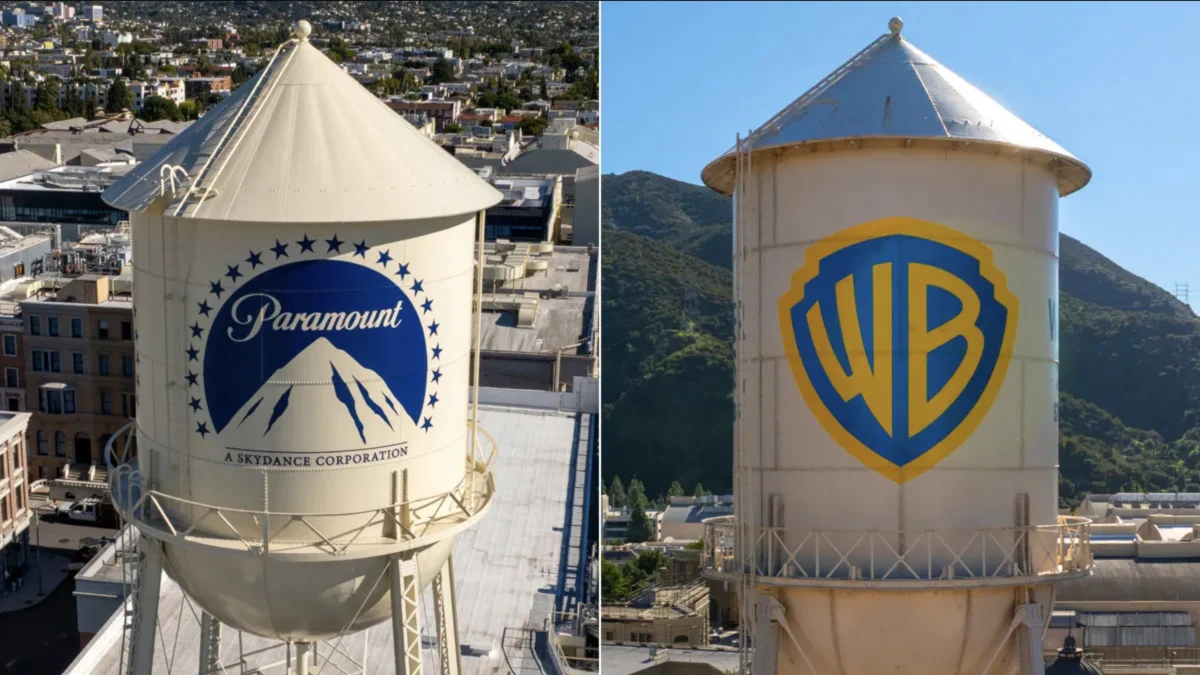
The global media landscape faces a potential tectonic shift as the United Kingdom government prepares to intervene in the monumental $110 billion acquisition of Warner Bros. Discovery by Paramount (backed by Skydance). This high-stakes merger, which aims to consolidate two of the world’s most influential entertainment conglomerates, has now hit a significant regulatory snag in London, casting uncertainty over a deal that has already faced months of intense scrutiny in the United States.
On Tuesday, British Secretary of State for Culture, Media and Sport, Lisa Nandy, issued a formal statement to Parliament, signaling that the UK government is “minded to intervene” in the takeover. This move places the British government on a collision course with one of the largest corporate mergers in media history, citing fundamental concerns regarding media plurality and the potential stifling of market competition.
The Core Conflict: Plurality and Market Dominance
At the heart of Secretary Nandy’s intervention lies the principle of "sufficient plurality"—a regulatory benchmark designed to ensure that the public has access to a wide variety of viewpoints and sources of information. When two massive entities merge, the concentration of power over news, sports, and entertainment platforms becomes a matter of public interest.
The UK’s concerns are grounded in the extensive footprint that both Paramount and Warner Bros. Discovery maintain within the British market. Between them, the companies control a vast array of influential outlets, including Channel 5, TNT Sports, Cartoon Network, Nickelodeon, CNN International, Paramount+, and the HBO Max streaming service.
Nandy’s concern is that the consolidation of these assets under a single corporate umbrella could lead to an unacceptable reduction in the diversity of content and editorial independence. By controlling both the distribution platforms and the content libraries, the merged entity would possess unprecedented leverage, which the UK government fears could distort the competitive landscape to the detriment of domestic British media entities.
A Chronology of the Mega-Merger
To understand the gravity of the current situation, one must look at the timeline of a deal that has evolved from a hostile maneuver into a global regulatory test case.
- December 2025: Paramount, under the leadership of CEO David Ellison, formally entered the race for Warner Bros. Discovery. At the time, Ellison argued that Paramount was uniquely positioned to integrate Warner’s assets, positioning the bid as a superior alternative to interest from Netflix, which had been the frontrunner for the acquisition.
- February 2026: After months of maneuvering, Paramount’s bid successfully secured the board’s approval, effectively winning the competition. However, analysts noted that the scale of the deal guaranteed a protracted period of antitrust review.
- Mid-June 2026: The deal reached a significant milestone when the United States Department of Justice (DOJ) antitrust division officially granted its approval, signaling that the merger did not violate federal competition laws in the U.S.
- Late June 2026: Despite the DOJ’s blessing, state-level resistance began to mount. Attorneys General in California and New York initiated investigations into the merger, exploring the possibility of antitrust lawsuits to block or force divestitures.
- July 2026: The UK government issued its "minded to intervene" notice, adding a transatlantic layer of complexity to the deal’s finalization.
The Path Forward: Regulatory Investigations
Secretary Nandy has emphasized that a final decision on intervention has not yet been reached. She has granted both Paramount and the current ownership of Warner Bros. Discovery until July 6th to respond to her department’s notice.
Should the government proceed with the intervention, the process will follow a structured legal path:
- Legislative Filing: The government would file formal documentation with Parliament, triggering an official investigation.
- Preliminary Inquiry: UK media regulators—likely involving the Competition and Markets Authority (CMA) and Ofcom—would be tasked with conducting a thorough assessment of the merger’s impact on the UK media ecosystem.
- The "Remedies" Phase: Based on the findings of these inquiries, the government may demand that Paramount alter the terms of the deal. This could include mandatory divestitures, such as the sale of specific UK-based assets (like Channel 5 or TNT Sports) to ensure that competition remains robust and that media plurality is preserved.
Implications for the Global Media Landscape
The intervention by the UK government is not merely a bureaucratic hurdle; it is a signal that the era of unfettered media consolidation is coming to an end. Regulators globally are increasingly sensitive to the fact that when content libraries, sports rights, and delivery platforms are concentrated in the hands of a few, the "market of ideas" is compromised.
The Impact on Streaming Services
The merger promises a "super-streamer" that could challenge the dominance of Netflix and Amazon. However, if the UK forces Paramount to strip away assets like HBO Max or Paramount+ in the British market, the economic logic of the deal begins to unravel. The synergy that Paramount is banking on—a massive library of content available globally—relies on scale. Regulatory fragmentation could leave the new entity with a diminished global reach.
The Role of National Sovereignty
This case highlights the tension between globalized corporate strategy and national interest. While Paramount sees a logical business combination, the UK sees a threat to its domestic media culture. The British government’s willingness to intervene suggests that they are prepared to prioritize national media pluralism over the corporate goals of American conglomerates.
The Ripple Effect on US Antitrust Efforts
The fact that the UK is intervening after the US DOJ gave the green light serves as a powerful validation for the state-level Attorneys General in the US. If California and New York can point to the UK’s concerns as evidence of a legitimate threat to competition, it could strengthen their hand in domestic courts, potentially leading to a series of legal challenges that could stall or permanently terminate the acquisition.
The Stance of the Stakeholders
Paramount, led by David Ellison, has remained largely optimistic throughout the process, maintaining that the merger is pro-competitive and will provide consumers with more value through bundled services. However, the company now finds itself in a precarious position. The need to appease regulators in multiple jurisdictions creates a "whack-a-mole" scenario: every time they satisfy one regulator’s concerns, they may be forced to make concessions that weaken their position in another market.
For Warner Bros. Discovery, the acquisition is seen as a necessary evolution in a changing market. Executives have long argued that the traditional studio model is failing in the face of digital disruption and that only by joining forces can they survive the high costs of content production.
Conclusion: A Precarious Future
The next few weeks will be critical. The response from Paramount and Warner Bros. Discovery due by July 6th will define the tone of the negotiations. If they choose to push back, they risk a protracted, expensive, and potentially public battle with the British government. If they choose to negotiate, they may find themselves forced to shed some of their most valuable assets, potentially undermining the very purpose of the $110 billion bid.
Ultimately, this intervention underscores a growing global trend: regulators are no longer looking at media mergers solely through the lens of price and efficiency. They are looking at the health of democracy, the diversity of culture, and the necessity of keeping the media landscape open to new players. For Paramount and Warner Bros. Discovery, the path to the finish line has never been steeper. The outcome of this regulatory standoff will likely set the precedent for how media empires are built—or dismantled—for decades to come.
 Asro
Asro
 Lina Irawan
 rifanmuazin
