

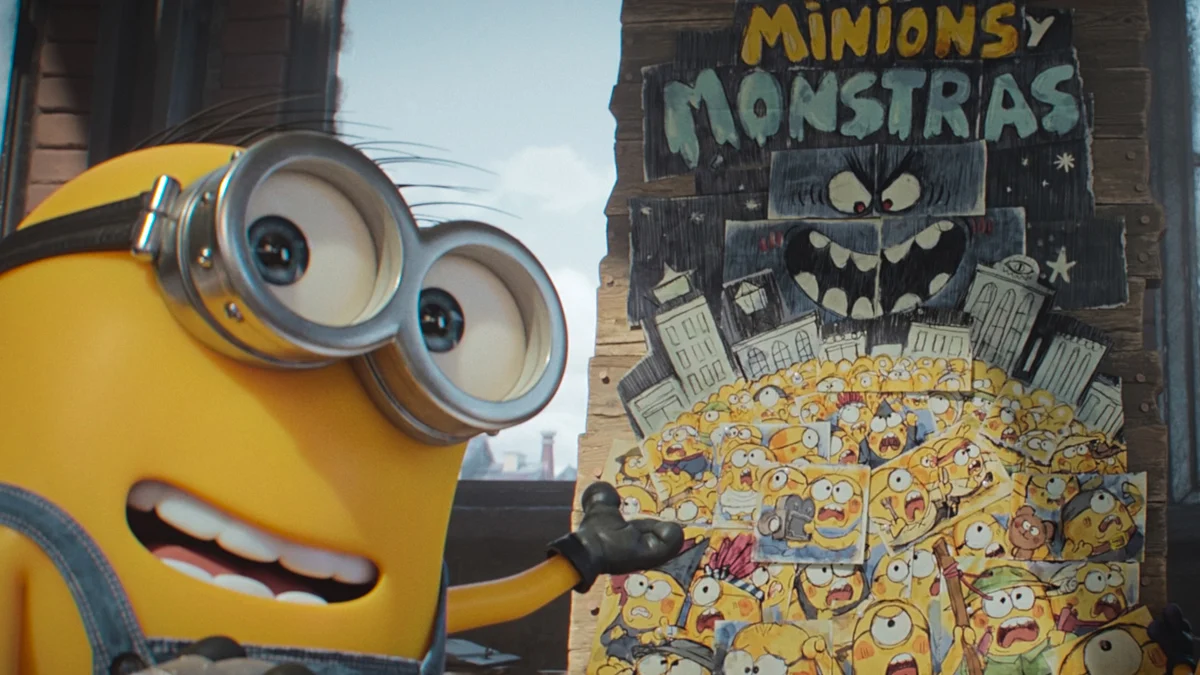
In the ever-expanding landscape of Illumination Entertainment’s Despicable Me universe, the yellow, gibberish-spouting Minions have long served as the franchise’s chaotic heartbeat. Yet, for nearly two decades, their antics have been tethered to the gravitational pull of Felonius Gru. That dynamic shifts irrevocably on July 1st, 2026, with the theatrical release of Minions and Monsters.
Stripped of their master and thrust into a world that feels less like a suburban cartoon and more like a fever dream of classic cinema, the Minions find themselves navigating a landscape populated by creatures that pay homage to everything from Universal’s own 1930s monster stable to the surrealist experiments of the silent era. It is a bold, bizarre, and—perhaps most shockingly—cinematically literate departure for the studio.
The Evolution of Chaos: A Chronology of the Franchise
To understand the shift presented in Minions and Monsters, one must examine the trajectory of the franchise over the last fifteen years.
The Gru Era (2010–2022)
The original Despicable Me (2010) established the Minions as sidekicks—servants to the "greatest villain of all time." Throughout three sequels and the original Minions spinoffs, the characters functioned as comedic relief, providing the physical comedy necessary to balance the emotional arcs of Gru and his daughters. They were tools, secondary characters, and—most importantly—marketable icons.
The Pivot toward Experimental Animation (2025–2026)
Following the success of Illumination’s recent, more daring endeavors—including the critically polarized but commercially dominant The Super Mario Galaxy Movie (2026) and the stylized, music-forward The Smurfs (2025)—the studio began to shift its internal philosophy. The directive was clear: capitalize on brand awareness, but infuse the projects with a level of auteur-driven, "unhinged" stylistic choices that cater to an older, cinephile demographic.
Minions and Monsters represents the apex of this strategy. By removing the anchor of Gru, the writers were forced to develop a new narrative syntax for the Minions. The result is a film that feels less like a corporate product and more like a sandbox for visual experimentation.
Supporting Data: Why This Film Marks a Shift
While box office projections remain speculative, industry analysts suggest that Minions and Monsters is poised to change the perception of Illumination’s portfolio.
- Genre-Bending Aesthetics: The film abandons the bright, primary-color palette of the previous entries in favor of a moody, high-contrast chiaroscuro, heavily influenced by German Expressionism.
- The "Film Nerd" Quotient: Early screenings indicate over 40 distinct visual and narrative nods to cinematic history. These range from subtle references to The Cabinet of Dr. Caligari to overt sequences that mirror the pacing of classic creature features like The Creature from the Black Lagoon.
- Narrative Complexity: Unlike its predecessors, the film lacks a traditional, linear villain-hero arc. Instead, the narrative structure is episodic, focusing on the Minions’ interactions with a series of "monsters" that act as foils to their innate, slapstick nature.
Official Responses and Creative Vision
The creative team at Illumination has been vocal about the necessity of this creative pivot. In a recent press junket, director Kyle Balda noted that the intention was never to "rebrand" the Minions, but to "deconstruct" them.
"When you take away the master, the Minion is a blank slate," Balda stated. "They are characters defined by their service. By placing them in a world where they have no one to serve, they become the agents of their own chaotic destiny. We looked at the DNA of the Universal Monsters—the loneliness, the tragedy, the misunderstanding—and found that the Minions actually share a surprising amount of soul with those classic figures."
Universal Pictures has echoed this sentiment, framing the film as a "tribute to the history of the studio." By leaning into the horror-comedy genre, they are hoping to capture a demographic that has previously aged out of the franchise.
Implications for the Industry
The release of Minions and Monsters carries significant weight for the future of animated filmmaking.
1. The Death of the "Safe" Sequel
For years, major studios have been criticized for "safe" sequels—films that repeat the formula of their predecessors to guarantee a return on investment. Minions and Monsters suggests that major studios are now willing to gamble with their IP, turning mascots into vessels for stylistic experimentation. If this film succeeds, expect other studios to follow suit, potentially leading to a new era of "experimental blockbusters."
2. The Rise of the Multi-Generational Animation
By embedding deep-cut film history into a children’s movie, Illumination is effectively creating a product that targets two demographics simultaneously: children drawn to the physical humor, and cinephiles who appreciate the craft. This "dual-layer" narrative approach is likely to become the gold standard for high-budget animation in the late 2020s.
3. The Future of the Minions IP
There is a legitimate question as to whether this shift will alienate the core demographic of younger children. However, early audience testing suggests that the slapstick nature of the Minions is universal. The "unhinged" elements—such as the bizarre pacing and the darker visual tone—are being received as "cool" and "weird" rather than "scary."
Observations: A Deconstruction of the "Unhinged"
To truly grasp the nature of this film, one must look at the specific narrative choices that distinguish it from its predecessors. Below are several core observations regarding the film’s unique identity:
- The Silence of the Monsters: Unlike the Minions, who communicate through their signature "Minionese," the monsters in the film are largely silent, creating a jarring juxtaposition that highlights the Minions’ hyperactive energy.
- Pacing as Parody: The film deliberately fluctuates between breakneck slapstick and elongated, atmospheric shots that evoke the slow-burn tension of classic horror films.
- Metatextual Awareness: There are moments where the Minions appear to recognize the filmic nature of their existence, a meta-commentary that has never been present in the Despicable Me universe before.
- The Absence of Gru: Gru’s absence is never explicitly explained, creating a sense of existential dread that somehow serves as the film’s emotional anchor.
Conclusion: A New Frontier
Minions and Monsters is a testament to the fact that even the most corporate-friendly intellectual properties have the potential for artistic growth. By stepping away from the familiar, Illumination has managed to breathe new life into characters who were at risk of becoming stale.
The film is not merely a collection of gags; it is a thoughtful, if somewhat deranged, love letter to the history of the medium. Whether this experiment leads to a long-term change in the franchise’s direction remains to be seen, but as of July 1st, 2026, the Minions are no longer just sidekicks. They are, for better or worse, the stars of their own strange, cinematic nightmare.
For the film nerd in the audience, the experience is profoundly satisfying. For the average viewer, it remains a high-octane, hilarious, and visually inventive piece of entertainment. It is a rare moment where a studio decides that "good enough" is no longer acceptable, opting instead for a path that is as bold as it is unhinged.
As the credits roll, one is left with a single, lingering question: where could the Minions possibly go from here? If this film is any indication, the answer is anywhere they want. And that, perhaps, is the most exciting prospect of all.
 Pevita Pearce
 Asro
Asro
