

In an era defined by rapid technological shifts, polarized political discourse, and increasing scrutiny over the boundaries of free expression, a formidable coalition of Hollywood’s most influential figures is preparing to take a stand. On Sunday, June 14—coinciding with Flag Day—New York City’s historic Town Hall will serve as the epicenter for "Rise Up, Sing Out: A Concert for the First Amendment." Organized by the newly revitalized Committee for the First Amendment, the event promises to be a landmark cultural manifestation of the fight to protect the bedrock of American democracy: the right to speak, create, and dissent without fear of retribution.
The concert, which has already garnered significant attention for its star-studded roster, seeks to bridge the gap between artistic expression and civic duty. By leveraging the platforms of some of the most recognizable faces in entertainment, the organizers aim to turn the spotlight toward the precarious state of civil liberties in the modern United States.
The Lineup: A Converging Force of Talent and Advocacy
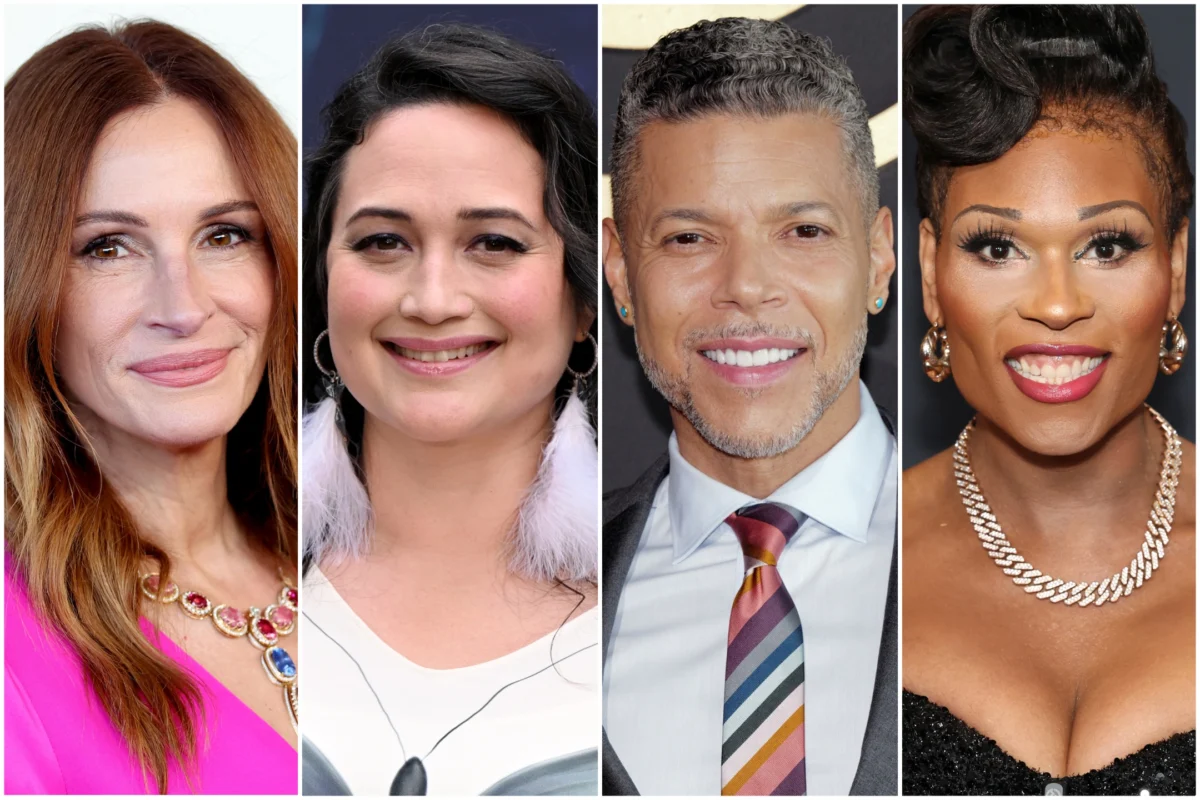
The organizers have announced a massive expansion of their performance roster. Academy Award winner Julia Roberts, acclaimed Killers of the Flower Moon star Lily Gladstone, LGBTQ+ advocate and actor Wilson Cruz, and the iconic drag performer Peppermint have joined the bill, bringing a diverse array of voices to the stage.
These luminaries join an existing lineup that reads like a “Who’s Who” of the arts and political activism. Jane Fonda, the driving force behind the committee’s resurgence, will be joined by musical legends Bette Midler and Patti Smith. The evening will also feature appearances by journalist Joy Reid, singer-songwriter Rufus Wainwright, and performer Sasha Allen. To round out the production, the bill now includes Jenn Colella, Alex Joseph Grayson, the Singing Resistance choir, the Rude Mechanical Orchestra, Kayla Davion, and Rev. Adriene Thorne, along with the powerhouse Broadway Inspirational Voices.
The diversity of this lineup is intentional. By bringing together actors, musicians, journalists, and activists, the Committee for the First Amendment is signaling that the defense of the First Amendment is not a niche concern for legal scholars, but a fundamental issue that touches every corner of the creative and journalistic world.
A Legacy Reborn: The Chronology of the Committee
To understand the weight of this upcoming concert, one must look back to the origins of the Committee for the First Amendment. The organization was born in the 1940s during the height of the McCarthy-era “Red Scare,” a period characterized by government-led blacklisting and the systematic intimidation of artists suspected of communist sympathies.
Henry Fonda, Jane’s father, was a prominent member of the original committee, which stood as a bulwark against the government’s overreach into the private political lives of American citizens. The group was essential in challenging the House Un-American Activities Committee (HUAC) and providing a moral compass for an industry that was rapidly folding under political pressure.
Fast forward to October 2024: Jane Fonda announced the official relaunch of the coalition. The move was a response to what she and her peers identified as a renewed threat to free expression, citing government repression, industry complicity, and the rise of a climate of self-censorship. The revival was met with overwhelming support, attracting more than 550 A-list signatories. This list includes a staggering array of industry icons: Aaron Sorkin, Barbra Streisand, Viola Davis, Spike Lee, Pedro Pascal, Natalie Portman, and John Legend, among many others.
The Moral Imperative: Why Now?
The core mission of the concert is articulated with urgency by Jane Fonda. “We can’t sit idly by while our rights are at stake,” Fonda stated in a press release. “History shows us that when democracy is threatened, song becomes one of our most powerful weapons. Right now, we are at a critical crossroads. It’s time for us to rise up, raise our voices and stand up against a government that refuses to put its people first.”
Fonda’s rhetoric reflects a growing sentiment within the creative community that the "chilling effect" of modern political discourse has moved from theoretical concern to tangible reality. By framing the concert as an act of “solidarity” and a “fight back” against intimidation, the organizers are positioning the arts not just as entertainment, but as an essential tool for social resistance.
The Committee for the First Amendment defines its mission as defending free expression against three primary threats: government repression, industry complicity, and public intimidation. By creating a collective of storytellers and cultural leaders, they aim to provide a safety net for those whose voices might otherwise be stifled by corporate interests or political agendas.
Logistics and Accessibility: Bringing the Message to the Public
"Rise Up, Sing Out" is designed to be as accessible as possible, emphasizing that the defense of the First Amendment is a public—not private—endeavor.
- Date: Sunday, June 14 (Flag Day)
- Location: Town Hall, New York City
- Time: Doors open at 6:45 p.m. ET; show begins at 7:30 p.m. ET
- Accessibility: In addition to the in-person event, the concert will be available to watch via free livestream, ensuring that the message reaches audiences far beyond the physical constraints of the venue.
Tickets are currently available through Ticketmaster and the official concert website. All proceeds from the event are earmarked to support the ongoing operations of the Committee for the First Amendment, funding their advocacy, legal resources, and public education initiatives.
The Production Powerhouse
The scale of this event is underscored by the high-caliber creative team assembled to bring it to life. The concert is directed by Schele Williams, with musical direction by Mary Mitchell Campbell and a script crafted by the sharp wit of Bess Kalb.
The visual and technical aspects of the show are being handled by a team of industry veterans:
- Lighting Design: Jamie Roderick
- Sound Design: Cody Spencer
- Projection Design: Daniel Brodie and Olivia Sebesky
- Production Stage Manager: Linda Marvel
The production itself is spearheaded by Bruce Cohen and the team at rigor + ruckus (Robb Nanus, Heather Shields, and Rachel Sussman), ensuring that the artistic caliber of the evening will match the gravity of its political message.
Implications for Free Expression in the Digital Age
The relaunch of the Committee and the upcoming concert arrive at a time when the legal and social definition of the First Amendment is being tested in unprecedented ways. From debates over social media moderation and platform accountability to the banning of books in public schools and the legislative efforts to restrict protest, the landscape of free speech is constantly shifting.
By mobilizing the most powerful figures in media and entertainment, the Committee for the First Amendment is effectively changing the conversation. They are shifting the narrative from a dry legal debate to a high-stakes cultural battle. When icons like Julia Roberts or Viola Davis speak out, they command the attention of millions—a megaphone that the Committee intends to use to protect the future of American intellectual and creative liberty.
Furthermore, the involvement of diverse performers—ranging from the Broadway Inspirational Voices to activist-artists like Peppermint—highlights the intersectional nature of free speech. The committee argues that censorship and repression disproportionately affect the most vulnerable communities, making the defense of the First Amendment a matter of social justice as much as constitutional law.
Conclusion: A Call to Vigilance
As the countdown to June 14 begins, the "Rise Up, Sing Out" concert stands as a testament to the enduring power of collective action. Whether the event will lead to lasting policy changes remains to be seen, but its primary goal—to raise consciousness and demand vigilance—is already being met.
In a climate where the line between protected speech and actionable offense is increasingly blurred, the Committee for the First Amendment is offering a clear, unified stance: that the right to express oneself is non-negotiable. As Jane Fonda and her cohort prepare to take the stage at Town Hall, they are not merely performing for an audience; they are issuing a reminder that in a democracy, the voice of the people is the ultimate check on power.
For those watching, whether in the seats of Town Hall or via the livestream, the message is simple: democracy is not a spectator sport. It requires the constant, active, and often loud participation of those who believe that liberty, once lost, is rarely regained without a fight.
 Ali Ikhwan
 Iffa Jayyana
 Siti Muinah
