

Main Facts: A New Silhouette for an Icon
In the storied corridors of Hollywood, few figures have maintained the enduring cultural footprint of John Travolta. From the disco-drenched streets of Saturday Night Fever to the pulp-fiction cool of the nineties, Travolta has navigated five decades of shifting trends. However, his most recent stylistic pivot has less to do with the red carpet and more to do with the director’s chair.
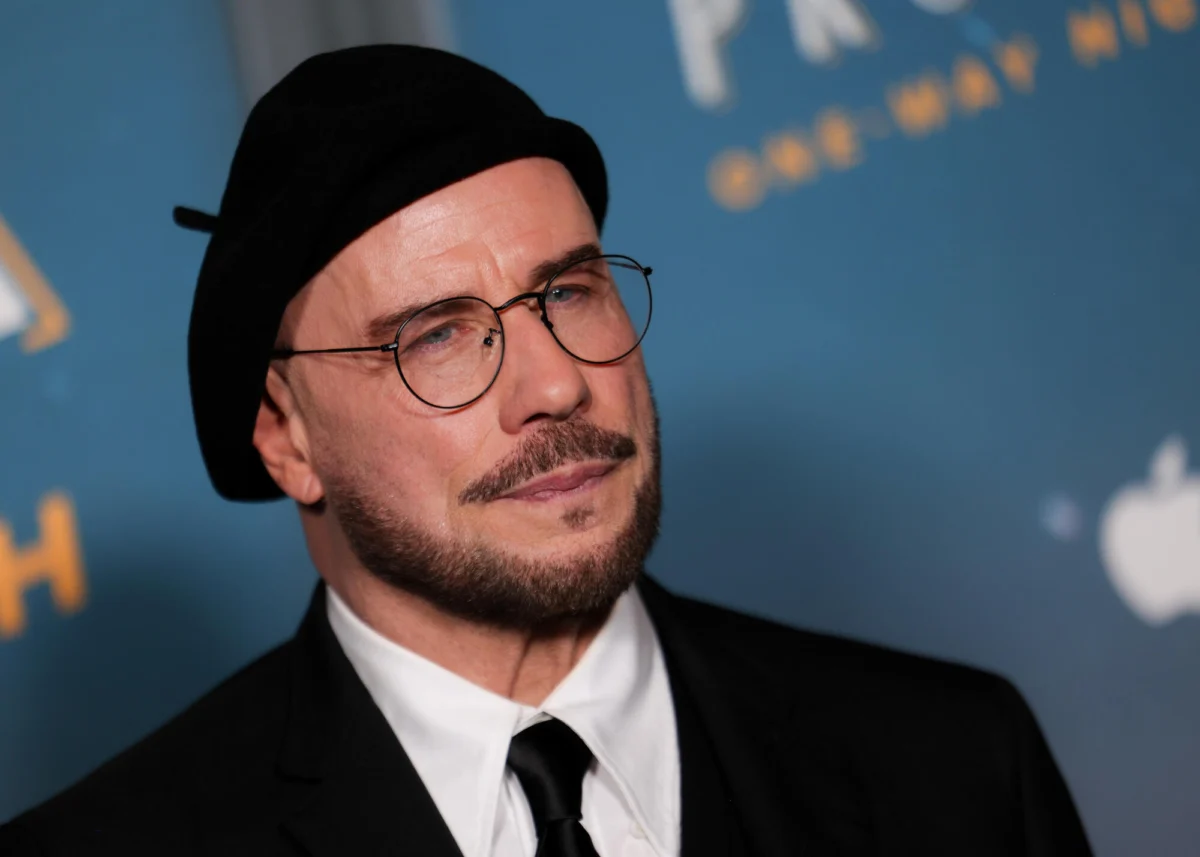
Since his headline-grabbing appearances at this year’s Cannes Film Festival, Travolta has wholeheartedly embraced the beret as his signature accessory. The transition is not merely a whim of fashion; it is a deliberate psychological and professional repositioning. Speaking with Variety’s Marc Malkin at the DGA premiere of his directorial debut, Propeller One-Way Night Coach, Travolta revealed that the headwear serves as a bridge between his long-standing identity as a leading man and his burgeoning evolution as a filmmaker.
"The beret has been around for 800 years," Travolta remarked, adjusting his cap. "It’s an old-school thing. I looked at all the photographs of me for 50 years, and I couldn’t tell you the difference. I started to not be able to differentiate, and I said, ‘Well, you’re not an actor really.’ I decided I needed to look like a director."
Chronology: From Cannes to the DGA Premiere
The genesis of this "director’s look" can be traced back to the festival circuit earlier this month. Travolta’s arrival in Cannes was marked by a sudden departure from the standard tuxedo-and-bow-tie homogeneity of the festival circuit. Clad in sharp tailoring complemented by his new accessory, he caught the attention of international fashion critics, landing on the "best-dressed" lists of Vogue, GQ, and Harper’s Bazaar.
This wasn’t just a brief moment of experimentation. By the time he reached the Directors Guild of America (DGA) for the premiere of his new film, the beret had become an extension of his persona. The event, which served as the official unveiling of Propeller One-Way Night Coach, allowed Travolta to contextualize his stylistic choice. He shared that he had spent time researching the visual tropes of mid-century auteurs—men who viewed the camera as their brush and the set as their canvas.
"I looked up all the old-school directors," he explained. "They all had berets and sometimes glasses. It was cliché, but in a wonderful way. They were reflecting the painters and musicians of their time. I wanted to capture that essence of the artisan."
Supporting Data: The Anatomy of a Wardrobe Shift
For an actor who has defined American style for half a century, the decision to commit to a specific item of clothing is significant. Travolta confirmed that he currently owns at least 12 variations of the cap. This depth of inventory suggests that the beret is not a temporary accessory but a foundational element of his current wardrobe.
His daughter, Ella, who appears alongside him in Propeller One-Way Night Coach and has been a constant presence by his side throughout the promotional tour, has been a key witness to this evolution. While the duo opted for a "Brigitte Bardot-inspired" look for their recent appearance rather than the "twin berets" they considered, Ella is a vocal proponent of her father’s new aesthetic.
"To make an amazing and artistic decision and just rock it is so cool," Ella told Variety on the carpet. "So many people play fashion choices safe. He’s so good with that and knows what looks good."
The influence of high fashion is not new to Travolta. He attributes his early sensitivity to clothing to his upbringing, noting that his brother-in-law, who worked for Vogue and Harper’s Bazaar during the 1960s, acted as an early stylist. "He would style me as a teenager," Travolta recalled. "I had my first bell-bottoms, my first wide belt, my first double-breasted suit. I looked like Warren Beatty in Bonnie and Clyde."

Official Responses and Gender Expression
Perhaps the most provocative aspect of Travolta’s commentary is his critique of modern menswear. During his interview, he touched upon the current trends in celebrity styling, specifically the movement toward androgynous fashion.
"Guys don’t have enough to do," Travolta mused. "They’re putting men in skirts because there’s a lack of something there. Why not change it up? We can have fun, too."
His perspective highlights a tension in current fashion: the desire for men to express creativity without necessarily adopting the avant-garde trends currently dominating editorial spreads. For Travolta, the beret represents a "classic" masculinity—one that is rooted in the tradition of the artist, the intellectual, and the professional, rather than the fleeting nature of internet-driven trend cycles.
Implications: The Director’s Burden and Artistic Identity
The underlying theme of Travolta’s transition is the necessity of "differentiation." After 50 years of being the face, the smile, and the dance moves of American cinema, the act of directing requires a fundamental shift in perception.
"I said, ‘You’re not an actor unless you’re really a director. Why don’t you dress like one?’" This internal monologue reveals the weight of the "actor" label. For an individual who has been defined by his performance for so long, the beret serves as a uniform of intent. It is a visual signal to his cast, his crew, and the public that the lens through which he sees the world has changed.
The Film: Propeller One-Way Night Coach
The project driving this transformation is Propeller One-Way Night Coach, a film based on Travolta’s own 1997 children’s book of the same name. Available now on Apple TV+, the one-hour film represents a deeply personal endeavor. By directing a story he wrote decades ago, Travolta is engaging in a full-circle creative moment. The film’s tone, which leans into the whimsical and the nostalgic, feels perfectly aligned with the classic, European-inflected style he has chosen to adopt.
Fashion as a Professional Tool
In the context of the entertainment industry, clothing is rarely just clothing. It is a tool for branding and a method of signaling professional maturity. Travolta’s embrace of the beret is, in essence, a masterclass in rebranding. By aligning himself with the historical archetype of the "director," he is actively shaping the discourse surrounding his new film. He is not merely an actor who decided to sit in the chair; he is an artist curating his own image to fit the gravity of his new role.
The Legacy of the Look
As Travolta continues to promote Propeller One-Way Night Coach, the "beret era" of his career is likely to be remembered as a marker of his evolution. Whether the trend catches on with other directors remains to be seen, but for Travolta, the goal was never to start a trend—it was to find a personal truth.
"I’m very aware of how women have more options than we do," he noted, reflecting on his long history with fashion. In a world where men’s fashion is often restricted to variations on a dark suit, Travolta’s adoption of the beret is a reclamation of the right to be theatrical, to be intentional, and, above all, to be a director in every sense of the word.
As he steps into this next chapter, the cap remains a constant companion—a quiet, soft-crowned symbol of a Hollywood icon who, after five decades, is still finding new ways to tell his own story.
 Ali Ikhwan
 Iffa Jayyana
 Siti Muinah
