

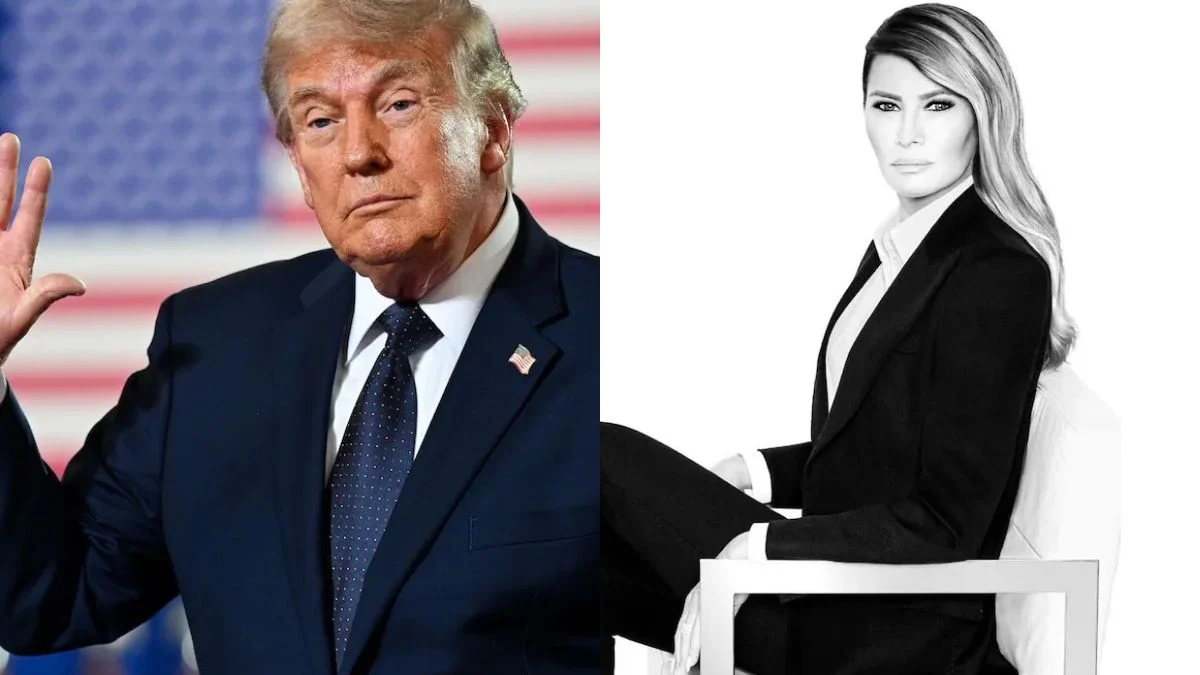
A newly released 927-page financial disclosure from the U.S. Office of Government Ethics has pulled back the curtain on the extraordinary intersection of the Trump family’s personal business interests and their role in the White House. The document reveals that President Donald Trump received a staggering $10.7 million licensing fee linked to the Amazon MGM Studios documentary, Melania. This revelation offers the most granular look to date into the financial windfalls associated with the First Lady’s image and provides fuel for ongoing debates regarding the blurred lines between public service and private profit.
A Lucrative Licensing Deal
The $10.71 million payment, explicitly tied to the Brett Ratner-directed project Melania, represents just one segment of a broader portfolio of income reported by the President. The documentary, which centers on First Lady Melania Trump, has become the centerpiece of a controversy surrounding the valuation of creative content produced by those in power.
Beyond the documentary’s licensing fee, the filing highlights a diverse array of revenue streams associated with the First Lady. This includes $521,161 in licensing income from her published memoir, distributed by Skyhorse Publishing, and an additional $6 million in proceeds derived from NFTs and various branded collectibles. When aggregated, these figures underscore the significant commercial viability of the "Melania" brand, though critics argue the financial success of these projects is inseparable from the political platform of the Trump administration.
Chronology of the Deal: From Mar-a-Lago to Prime Video
The backstory of the Melania documentary is as complex as the financial figures attached to it. Reports indicate that Amazon MGM Studios paid a substantial $40 million to secure the rights to the film following a fierce post-election bidding war.
The origin of this deal is perhaps the most scrutinized element of the timeline. According to The Wall Street Journal, the agreement was reached shortly after a high-profile meeting at Mar-a-Lago between Donald and Melania Trump and Amazon founder Jeff Bezos. This meeting, which took place mere weeks after the 2024 presidential election, has served as a focal point for ethics watchdogs who question whether the acquisition of the documentary rights was a purely commercial transaction or a gesture of corporate-political alignment.
Following the acquisition, the film saw a theatrical release in January before migrating to the Prime Video streaming platform. Despite the massive investment—Amazon reportedly spent an estimated $75 million on the project’s acquisition and marketing—the film’s commercial performance was underwhelming. With a total worldwide theatrical gross of only $16.7 million, the documentary is widely considered a financial failure for the studio. Furthermore, the film was met with critical derision, currently holding a meager 7% rating on Rotten Tomatoes. Consequence famously issued the film an "F" grade, labeling it a "glossy exercise in image management" that lacked genuine journalistic inquiry or substance.
A Broader Financial Picture
The $10.7 million payment is far from the most significant figure in the President’s recent disclosure. The 927-page report outlines an annual revenue stream that has pushed past the $2 billion mark. Central to this total is more than $1.4 billion in cryptocurrency-related income, stemming from ventures such as World Liberty Financial and the $TRUMP meme coin.
These figures represent a more than threefold increase in profits compared to the year preceding his re-election. This exponential growth in personal wealth while in office has reignited long-standing questions about the President’s business entanglements. When pressed on whether he was personally profiting from the presidency, President Trump dismissed the concern, stating, "Everybody is profiting" because the stock market is currently trending upward. He further remarked, "I made a lot of money before I became president… I don’t know if I had a better career in politics or business," a statement that appears at odds with the sheer scale of the financial gains documented in the latest filing.
Official Responses and Ethical Defense
In the wake of the report’s publication, the White House has moved quickly to contain the narrative. White House spokeswoman Anna Kelly issued a formal statement addressing the potential for conflicts of interest, asserting: "Neither the President nor his family has ever engaged—or will ever engage—in conflicts of interest. All actions by President Trump and his administration are taken in the best interest of the American people."
This defense, while standard for the administration, has done little to satisfy critics. The ethics of the Melania deal—specifically the connection between the Mar-a-Lago meeting with Bezos and the subsequent Amazon payout—remain a subject of intense public discourse. Critics argue that the administrative rhetoric fails to address the optics of a sitting President receiving eight-figure sums from a major corporation that is subject to federal regulation, tax policy, and antitrust scrutiny.
Implications for the Future
The implications of these disclosures extend far beyond the specific dollar amounts. The situation has highlighted a growing unease regarding the normalization of massive corporate payouts to high-ranking officials. The case of the Melania documentary is viewed by many as a textbook example of "prestige-documentary packaging" designed to rehabilitate a public image while simultaneously enriching the subjects through institutional platforms.
Moreover, the financial report arrives alongside other controversial developments. The administration’s recent acceptance of a luxury Boeing 747-8 from the government of Qatar—which underwent extensive, taxpayer-funded modifications to serve as an interim Air Force One—has added another layer to the narrative of blurred boundaries. As these various revenue streams and corporate gifts are aggregated, they paint a picture of a presidency that operates as a global commercial entity.
For the public, the question remains whether the government’s oversight mechanisms are equipped to handle the scale of these modern financial realities. The "F-rated" nature of the documentary itself, as noted by critics, serves as a metaphor for the entire affair: an attempt to curate a narrative of success that, upon closer inspection, lacks the transparency and merit required for genuine public trust.
As the 2026 calendar continues, the conversation surrounding the President’s finances is unlikely to subside. The combination of crypto-wealth, celebrity-linked licensing deals, and high-stakes corporate relationships ensures that the intersection of the Trump presidency and the Trump business empire will remain a primary focus of investigative journalism and legislative scrutiny. Whether this influx of capital represents a new standard for modern governance or a dangerous departure from democratic norms remains the defining political debate of the era.
 Pevita Pearce
 Asro
Asro
 Lina Irawan
