

Just when the world thought John Cena had reached the pinnacle of his public influence, the 17-time WWE champion—recently retired from the ring in late 2025—has once again redefined what it means to be a modern icon. By stepping into the spotlight with a candid admission regarding his hair restoration journey, Cena has shifted the cultural conversation, proving that true strength lies in vulnerability.
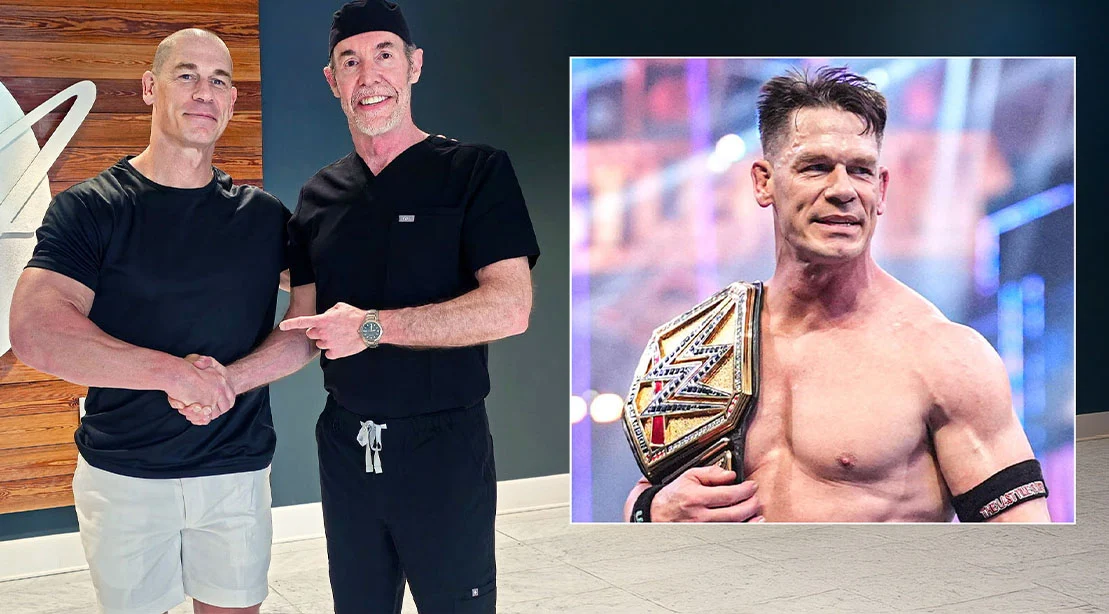
A recent viral photograph of the "You Can’t See Me" star, which captured the wrestling legend with a shaved head in preparation for a procedure, ignited a global conversation. While the image initially sparked rumors and speculation, Cena’s transparent approach to his Follicular Unit Extraction (FUE) journey has turned a traditionally "hushed" cosmetic procedure into a mainstream talking point, encouraging men to shed the stigma associated with hair loss.
The Catalyst: From Ring Spectacle to Personal Realization
For decades, John Cena was defined by his larger-than-life persona, his unwavering commitment to the WWE, and his physical dominance. However, behind the bright lights and the roar of the arena, Cena was navigating a deeply personal struggle common to millions of men: hair loss.
In an exclusive interview with People magazine, the 49-year-old icon revealed that his journey was not merely a matter of vanity, but a response to the hyper-awareness of his fanbase. As his hairline began to recede, the relentless scrutiny of the professional wrestling audience became impossible to ignore.
"As I was trying to hide my hair loss, the audience was bringing it to light," Cena explained. "I saw their signs that said, ‘The bald John Cena.’ They pushed me into going to see what my options were."
Cena’s admission highlights the unique pressure of public life, where personal insecurities are often amplified by an audience that tracks every physical change. He candidly expressed regret over the timing of his decision, noting, "I hate the fact that if there wasn’t so much shame around it, I’d have gotten it done 10 years ago." His journey serves as a powerful reminder that even the most "manly" of men are subject to the same biological realities—and the same societal pressures—as everyone else.
Understanding FUE: The Science of Restoration
The procedure that brought Cena back to the headlines is known as Follicular Unit Extraction, or FUE. As the curiosity surrounding his transformation grows, many are asking: what exactly does this procedure entail, and why is it the gold standard in hair restoration?
The Mechanics of FUE
Unlike older, more invasive methods, FUE is a minimally invasive surgical technique. The procedure involves the individual extraction of hair follicles from a "donor area"—usually the back of the head, where hair growth remains genetically resistant to thinning. These healthy, individual units are then harvested and meticulously implanted into the thinning or "dead" areas of the scalp.
A single, standard round of FUE can involve the transplantation of 1,500 to 3,000 grafts. Because the procedure is highly precise, it requires a skilled surgeon to ensure the natural density and direction of the hair growth match the patient’s existing pattern.
Why Men are Susceptible
Hair loss, or androgenetic alopecia, is a near-universal experience for men as they age. While statistics vary, data suggests that two-thirds of American men will experience some degree of noticeable hair loss by the age of 35. By the time men reach their 50s, the prevalence of thinning hair is even more significant. Despite this high frequency, the stigma remains a barrier to treatment for many.
Chronology of a Transformation: The Road to "Round 2"
Cena’s hair restoration journey is a masterclass in patience and commitment. It was not an overnight fix, but a structured, multi-phase process.
- November 2025: Following his official retirement from professional wrestling, Cena underwent his first primary hair transplant procedure.
- Late 2025 – Early 2026: Cena began integrating a rigorous scalp care regime, moving beyond just the surgery to prioritize long-term follicle health.
- June 2026: The viral moment occurred when Cena shared a photo on X (formerly Twitter) showing his head shaved for his second session. The post, which reached millions within minutes, demystified the "recovery" phase of the surgery.
- Post-Procedure 2026: Cena continues to engage in a comprehensive maintenance program, highlighting that a transplant is an investment that requires ongoing care.
Data and Costs: The Reality of Modern Hair Restoration
For those considering similar procedures, it is vital to understand the logistical and financial commitment involved. FUE is a cosmetic surgical procedure, and as such, it is rarely covered by health insurance.
Financial Considerations
The cost of an FUE transplant can range significantly, typically falling between $4,500 and $12,000. These price variations depend on the number of grafts required, the reputation of the clinic, and the geographic location of the surgeon. Patients must also factor in the cost of follow-up treatments, specialized shampoos, and potential secondary sessions to achieve maximum density.
Candidacy and Expectations
Not everyone is a candidate for FUE. The procedure works best for those with hereditary hair loss who still possess a healthy, dense donor area. It is generally not recommended for individuals suffering from autoimmune-related alopecia, where the immune system attacks hair follicles, as this can result in inconsistent growth patterns.
The "Cena Routine": Beyond the Operating Room
Perhaps the most valuable takeaway from Cena’s public journey is his emphasis on maintenance. He is the first to admit that surgery alone is not a "magic bullet." In his People interview, he outlined a dedicated, multi-faceted approach to hair health:
- Red-Light Therapy: Used to stimulate blood flow to the scalp and promote cellular repair.
- Minoxidil: A topical treatment used to maintain existing hair and encourage growth.
- Nutritional Support: A tailored regimen of vitamins specifically targeting hair follicle health.
- Professional Grooming: The use of high-quality, clinical-grade shampoos and conditioners to maintain scalp pH and health.
This commitment is echoed by his surgeon, Dr. Ken Anderson of the Anderson Center for Hair. In a response to Cena’s social media update, Dr. Anderson noted, "Your commitment to the process and long-term hair health has made all the difference."
Implications: Changing the Cultural Narrative
John Cena’s decision to document his journey has far-reaching implications for men’s health and the broader culture of male grooming. For too long, men have been conditioned to view hair loss as an inevitable decline to be suffered in silence. By speaking openly, Cena is helping to dismantle the shame associated with seeking cosmetic improvements.
The Normalization of Vulnerability
When a figure as synonymous with "toughness" as John Cena admits that he felt insecure about his appearance, it gives "permission" to other men to acknowledge their own vulnerabilities. Whether it is addressing hair loss, mental health, or personal insecurities, the act of vocalizing these struggles is a hallmark of emotional maturity.
A New Standard for Celebrities
In an era of filters and digital alteration, seeing a celebrity show the "raw" process—the shaved head, the surgical prep, the post-op recovery—is refreshing. It provides a level of authenticity that resonates with fans. By thanking his medical team publicly, Cena has also brought legitimacy to the field of hair restoration, positioning it as a health-conscious lifestyle choice rather than a superficial vanity project.
Conclusion: The "Super Cena" Effect
John Cena has spent his career being a hero to millions, but his latest role as an advocate for self-improvement and vulnerability might be his most impactful. By turning his hair loss journey into a platform for education and honesty, he has proven that one does not need to hide their imperfections to be considered strong.
As the former WWE champion continues to recover and share his progress, the narrative around FUE and male hair loss will undoubtedly continue to evolve. For those millions of men experiencing the same, Cena’s message is clear: You don’t have to "just live with it." There are options, there is science, and most importantly, there is no reason to be ashamed of wanting to feel like the best version of yourself.
Whether he’s in the ring or undergoing a medical procedure, "Super Cena" remains a testament to the power of taking control of one’s own narrative. As he continues to thrive in his post-wrestling career, he reminds us all that true confidence is not about having a perfect head of hair—it’s about having the courage to show the world your journey, every step of the way.
 Lina Irawan
 Jia Lissa
