

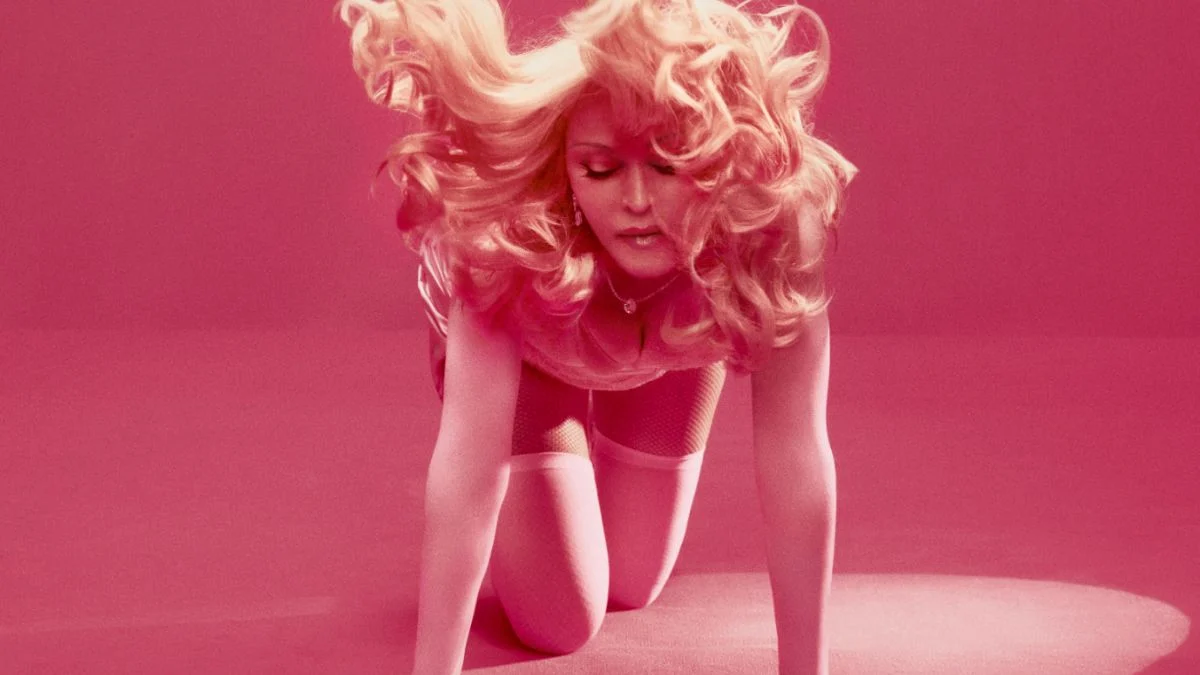
Twenty-one years ago, Madonna released Confessions on a Dance Floor, an album that didn’t just define a moment in pop culture—it prophesied one. Helmed by the meticulous production of Stuart Price, the 2005 record served as a masterclass in dance-pop architecture. It was a seamless, continuous-mix odyssey that distilled four decades of Madonna’s artistic evolution, blending the spiritual explorations of Ray of Light with a newfound, disciplined adherence to the rhythm. At the time, it arrived as a vanguard, predating the mainstream EDM explosion that would eventually saturate global airwaves.
Today, in the summer of 2026, the musical landscape looks vastly different. Electronic music has been assimilated, exhausted, and reinvented a dozen times over. Yet, Madonna has chosen this moment to revisit her most lauded conceptual project. Confessions II arrives with the weight of expectation, aiming to reclaim the dance floor as a site of transcendence. While the record functions as a polished, highly competent party, it ultimately struggles to bridge the gap between "dance music as a vibe" and "dance music as a manifesto."
A Chronology of a Dance Icon
To understand the stakes of Confessions II, one must look at the trajectory that led to its creation.
- 1983–2004: Madonna establishes herself as a chameleon of the club scene, evolving from the gritty underground of New York’s Danceteria to the global pop dominance of the 90s.
- 2005: Confessions on a Dance Floor is released, earning critical acclaim for its structural integrity and its ability to treat the dance floor as a sacred, rather than merely hedonistic, space.
- 2010s: The EDM boom fundamentally changes pop radio. Madonna struggles to find her footing, oscillating between chasing trends and forced experimentation, notably seen in the divisive reception of her 2015 track, "Bitch I’m Madonna."
- 2019: Madame X marks a period of dense, conceptual, and often polarizing artistic choices. While intellectually ambitious, it lacked the immediate, visceral accessibility of her prime work.
- 2026: Confessions II is announced as a direct sequel. Re-teaming with Stuart Price and inviting a roster of modern heavyweights—including Feid, Stromae, Andrew Watt, and her daughter, Lola Leon—Madonna attempts to reconcile her past with the current sonic frontier.
Production and Sonics: The Return of the Master Architect
The strongest argument for Confessions II is the return of Stuart Price to the producer’s chair. If Madame X felt like an artist searching for a new language, Confessions II is the sound of an artist returning to a native tongue. Price’s influence is immediately apparent; the production is tasteful, restrained, and refreshingly devoid of the "gargantuan beat drops" that have plagued pop music for the last decade.
The album traverses a wide electronic spectrum: house, French Touch, intricate breakbeats, and, in its latter half, a subtle, moody dip into trip-hop. It is a sonically coherent, professional, and undeniably stylish record. It effectively sheds the "bratty" aesthetic that characterized Madonna’s mid-2010s output. However, the lack of friction is a double-edged sword. While the album is never unpleasant, it is also rarely surprising. In an era where hyper-pop and experimental electronic sub-genres are pushing the boundaries of what "dance music" can be, Confessions II feels like a comfortable, well-upholstered armchair—luxurious, but firmly rooted in the past.
The Lyrical Void: When Transcendence Stalls
The primary critique leveled at Confessions II is its failure to provide the depth its title implies. A "confession" requires vulnerability, a revealing of the self. Yet, the lyrics here are largely ornamental.
The album’s central thesis—that dancing is "good for the soul"—is repeated with such frequency that it loses its transformative power. The opening sequence, comprised of tracks like "I Feel So Free," "Good For the Soul," and "One Step Away," serves as a microcosm of this issue. Lyrically, the tracks are indistinguishable. There is a profound lack of narrative progression. Even when the album attempts to ground itself in specific geographies—such as the New York-centric "Danceteria" or "L.E.S. Girl"—the result feels like nostalgia-baiting rather than a genuine exploration of personal identity.
The Spoken Word Dilemma
As with its predecessor, Madonna utilizes spoken-word interludes to guide the listener through the "DJ set." These moments are meant to offer an intimate, seductive commentary on her philosophy. At their best, they provide a necessary jolt of personality. On "Everything," for instance, Madonna’s delivery of the line, "It’s not okay / I don’t fuck with it," is delivered with a sharp, palpable grit that briefly snaps the listener to attention.
However, these moments are the exception. Far too often, the interludes devolve into vague, aphoristic clichés about "the rhythm that sets us free" or "partying all night." When a song like "Love Without Words" explicitly tells the listener, "Call it trance, call it house, call it love without words," it inadvertently highlights the album’s greatest flaw: it spends so much time talking about the magic of the music that it forgets to actually show it.
Official Responses and Industry Context
While official press releases from Interscope describe the album as "a reclamation of the dance floor as a sanctuary of spiritual awakening," the industry reaction has been more nuanced.
Music critics have largely praised the technical proficiency of the record, citing it as a "return to form" that successfully course-corrects from the perceived missteps of her recent catalog. However, there is a pervasive sense that this is a "safe" album. Industry analysts note that Madonna is currently navigating a pop landscape that is increasingly youth-obsessed and fragmented. By collaborating with artists like Feid, she is clearly attempting to bridge generational gaps, yet even the inclusion of these guests—such as on the track "Read My Lips"—feels largely decorative. The song, while rhythmically catchy, settles for being a standard "boy, bye" breakup anthem, failing to integrate the distinct voices of its collaborators into a cohesive new vision.
Implications: The Legacy of a Pop Titan
The release of Confessions II invites a broader conversation about the nature of longevity in pop music. When a legendary artist returns to their "greatest" era, they are inevitably fighting a losing battle against the nostalgia of the audience and the evolution of the genre.
Is the "Confessions" formula still viable?
The original Confessions was successful because it was a distillation of the zeitgeist—it felt like a preview of the future. Confessions II, by contrast, feels like a preservation of a museum piece. While it is undeniably more competent than much of the music currently occupying the Top 40, it lacks the "friction" that made Madonna’s early work revolutionary.
The Path Forward
The implication for Madonna’s career is clear: she remains a master of the dance-pop format. She can still craft a record that is sonically superior to her peers. However, the cultural relevance of such a project is diminished when the lyrical content fails to match the ambition of the production. For an artist whose career has been built on constant reinvention, the primary challenge of Confessions II is that it feels, for the first time, like an exercise in repetition rather than discovery.
Ultimately, Confessions II is a great party record—it is polished, rhythmic, and undeniably danceable. But as a statement of intent, it leaves us wanting more. It invites us to the floor, promises a spiritual awakening, but delivers only the echoes of a party that happened long ago. Madonna remains an icon, but this particular confession feels more like a well-rehearsed script than a genuine revelation.
 Ammar Sabilarrohman
 Lina Irawan
 Nana Muazin
