

Main Facts: The Crisis of Inequality in Athletics
Despite the common refrain that sport is a "great equalizer"—a meritocratic arena where talent is the only currency—a damning new report from the United Nations reveals that global athletics are deeply compromised by systemic racism. Ashwini K.P., the UN Human Rights Council-appointed independent expert on contemporary forms of racism, racial discrimination, xenophobia, and related intolerance, has presented findings that characterize modern sports not as a level playing field, but as a landscape fractured by structural exclusion.
The report highlights that individuals from racial and ethnic minorities, including caste-oppressed communities and other marginalized groups, face profound barriers to participation. These obstacles are not accidental; they are woven into the fabric of sports governance, selection processes, and eligibility regulations. According to the Special Rapporteur, the underrepresentation of these groups is a direct consequence of colonial legacies, historical exploitation, and an industry that remains overwhelmingly dominated by white, male leadership.
Chronology: From Idealism to Institutionalized Exclusion
To understand the current state of global sports, one must trace the evolution of institutional bias:
- The Colonial Legacy: Historically, sports were often exported by colonial powers as tools for social discipline or elite recreation, creating early exclusionary patterns that persist in modern infrastructure.
- The Modern Disconnect: Throughout the 20th century, while sports became more globalized, the administrative hierarchies remained largely static, preserving traditional power structures.
- The 2021 Inflection Point: The establishment of the Hamilton Commission by Sir Lewis Hamilton marked a significant moment of introspection, highlighting the severe lack of diversity in high-tech, high-cost sports like Formula One.
- The 2023 Reckoning: A series of reports, including investigations into cricket in England and Wales, provided empirical data confirming that recreational participation by diverse groups does not translate into professional opportunities or leadership roles.
- The 2024 UN Mandate: Ashwini K.P. presented her comprehensive findings to the Human Rights Council, marking the most significant international effort to date to classify racial discrimination in sports as a fundamental human rights violation.
Supporting Data: Quantifying the Disparity
The data gathered by the Special Rapporteur and independent bodies paints a grim picture of "the pipeline problem."
The Professional Gap
In England and Wales, a 2023 study found that while 30 to 35 percent of the adult recreational cricket population identified as ethnically diverse, Asian British and Black British men comprised only 8.1 percent of male professional cricketers in 2021. This indicates a massive "leaking" of talent, where systemic barriers prevent youth participation from evolving into professional careers.
The Leadership Void
The report identifies a near-total absence of diversity in sports governance. In Europe, the "very significant majority" of senior football leadership positions are occupied by white men. Similarly, the Hamilton Commission found that in motorsports, representation of Black individuals in technical, engineering, and team management roles is statistically negligible.
The Economic Barrier
The report asserts that economic disparities are never "race neutral." In many regions, the lack of access to basic equipment, coaching, travel, and nutrition is a direct byproduct of historical underdevelopment. When children are priced out of sports at a young age, they lose not only the chance for a professional career but also the essential physical and mental health benefits that organized athletics provide.
Eligibility Rules and Intersectional Discrimination
A critical portion of the report investigates how seemingly "neutral" regulations are weaponized to exclude marginalized groups.
The Hijab Bans
The report explicitly cites France’s restrictions on the hijab in football and basketball. By preventing Muslim women from wearing head coverings, governing bodies create a direct conflict between the right to compete and the right to religious expression. This represents a form of intersectional discrimination, where race, gender, and religion collide to force women out of the arena.
Biological Regulation and Global South Athletes
The Special Rapporteur expressed alarm over regulations—such as those regarding testosterone levels enforced by World Athletics—which disproportionately impact women from the Global South. Furthermore, rules concerning the use of prosthetics have been noted to potentially disadvantage Black athletes. The report warns that when these regulations are not drafted in strict alignment with international human rights law, they function as tools of exclusion rather than fairness.
The Case of the Occupied Palestinian Territory
Beyond structural racism, the report addresses the physical destruction of opportunity. In the Occupied Palestinian Territory, the combination of travel restrictions and the systemic destruction of sports facilities has rendered international competition nearly impossible for Palestinian athletes, effectively isolating them from the global sporting community.
Official Responses and The Path Forward
The Special Rapporteur’s recommendations are aimed at both Member States and international sports governing bodies. The core of her argument is that "symbolic gestures"—such as anti-racism slogans or one-off awareness campaigns—are insufficient to address deep-seated racial hierarchies.
Recommendations for Member States:
- Data Collection: States must collect disaggregated data on racism in sports to understand the true scale of the problem.
- Infrastructure Investment: Governments must prioritize public investment in sports facilities in lower-income areas to rectify historical underdevelopment.
- Human Rights Alignment: Eligibility regulations must be reviewed to ensure they do not violate the International Convention on the Elimination of All Forms of Racial Discrimination.
- Remediation: Establish clear, accessible channels for athletes to report discrimination and seek legal remedy.
Recommendations for Sports Governance:
- Transparency: Move toward a human rights-based approach in all administrative decisions.
- Accountability: Dismantle the "old boys’ club" dynamics in leadership that perpetuate the current lack of diversity.
- Barrier Identification: Actively audit talent pipelines to determine where and why minority athletes are being filtered out of the system.
Implications: Beyond the Stadium
The implications of the UN report are profound. If sports are indeed a microcosm of society, the persistence of these racial hierarchies suggests that the global community has failed to translate the promise of equality into institutional practice.
The report emphasizes that the failure to act is not merely a sports issue; it is a human rights issue. When sports governance remains a closed shop for white, wealthy, and male individuals, the broader societal message is that power and leadership are reserved for a specific demographic.
"Efforts must move beyond symbolic gestures and reactive measures," Ashwini K.P. concluded in her address to the Council. The call to action is for a fundamental restructuring of the sports ecosystem. This requires a transition from a reactive stance—where organizations apologize after a scandal occurs—to a proactive, systemic dismantling of the racial hierarchies that have defined the playing field for too long.
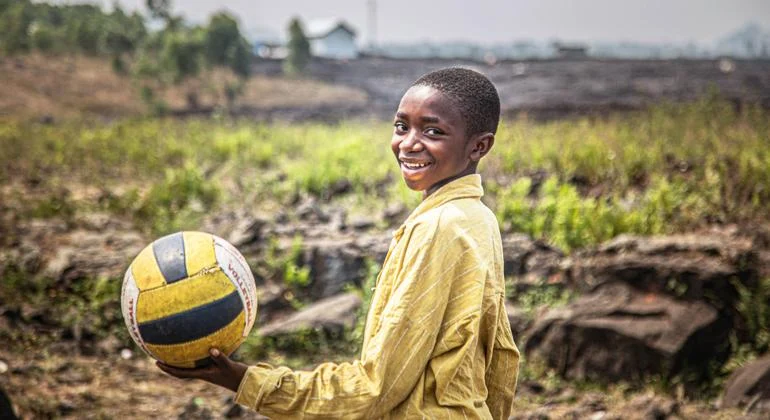
For the young athlete in an underserved neighborhood, the outcome of these policy discussions is not academic. It is the difference between a life of health, opportunity, and participation, or one defined by the invisible, yet impenetrable, walls of institutionalized bias. As the UN continues its oversight, the world’s sporting bodies are now on notice: the era of "neutral" governance, which historically shielded and sustained racial inequality, is being brought to an end by the weight of evidence and the demand for justice.
 Azzam Bilal Chamdy
 Pevita Pearce
 Iffa Jayyana
