

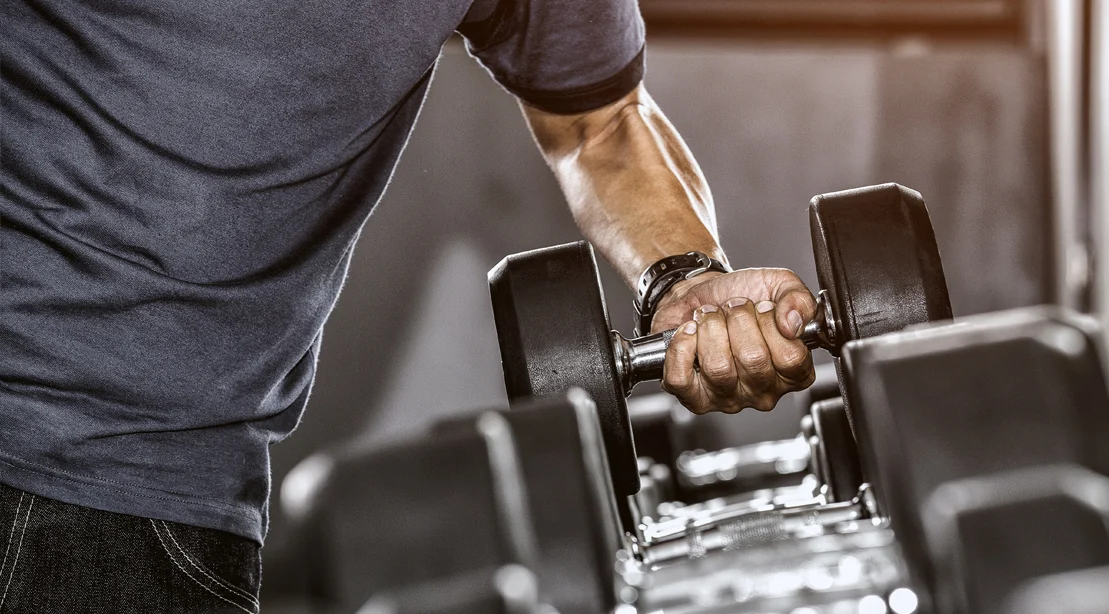
Two decades ago, stepping into a commercial gym was a predictable affair. You would find rows of chrome or rubber-coated dumbbells—the undisputed kings of the free-weight floor, a position they had held with absolute authority for over a century. Today, however, the landscape has shifted. The rise of functional fitness and the meteoric growth of CrossFit have propelled the kettlebell from an obscure Russian relic to a staple of modern exercise culture.
Suddenly, it seemed as if every personal trainer was advocating for the “cannonball with a handle,” suggesting that the traditional dumbbell was a relic of a bygone, “non-functional” era. But as the dust settles on the initial hype of the functional fitness movement, a critical question emerges: Have we traded fundamental, time-tested logic for a trend? Is the kettlebell truly the superior tool, or have we simply been seduced by the novelty of a new way to sweat?
The Core Conflict: Design and Physics
To understand the rivalry, one must first look at the mechanical divergence between these two implements. The dumbbell is a masterclass in linear physics. By distributing weight evenly on both sides of a centralized handle, the load is placed directly in line with the wrist, forearm, and elbow. This design is intentionally stable, allowing the user to isolate specific muscle groups with a high degree of predictability. It is the gold standard for hypertrophy, body composition, and foundational strength.
The kettlebell, conversely, is an exercise in controlled instability. Because the bulk of the mass is situated several inches below the handle, the center of gravity is constantly shifting. This creates a leverage challenge that forces the body to engage stabilizing muscles that often remain dormant during standard dumbbell movements.
While proponents argue that this instability is the key to “functional” athleticism, it is a double-edged sword. The very design that makes the kettlebell a unique conditioning tool is the same design that introduces significant mechanical risk for the uninitiated.
A Chronology of the Kettlebell Resurgence
- Pre-2000s: Kettlebells were largely confined to niche circles, including Eastern European military training and old-school strongman displays. They were a rarity in the average suburban health club.
- The Early 2000s: The "Kettlebell Revolution" began in earnest, championed by figures like Pavel Tsatsouline, who introduced the tool to the Western mainstream.
- 2005–2015: The explosion of CrossFit transformed the kettlebell from a specialty item into a gym essential. Trainers began integrating high-volume ballistic movements—swings, snatches, and cleans—into daily workouts.
- 2015–Present: The "Functional Fitness" boom led to a saturation of the market. Kettlebells became synonymous with "modern" training, leading many trainers to adopt them as a catch-all solution for clients, regardless of specific goals or physiological limitations.
The Danger of Ballistic Training: The 800-Pound Gorilla
Perhaps the most significant point of contention regarding the kettlebell is the nature of its primary movements. The kettlebell swing, for instance, requires a heavy object to be accelerated violently between the legs and launched upward.
While this movement can build explosive hip power, it is inherently technical. For a beginner, a kettlebell swing is rarely an athletic masterpiece; it is frequently an “uncontrolled spinal event.” When fatigue sets in or form breaks down, the forces exerted on the lower back, shoulders, and wrists are magnified by the off-center load.
Critics argue that by prioritizing these complex, high-risk, high-velocity movements for the general population—many of whom spend eight hours a day sitting at a desk—the fitness industry is courting injury under the guise of “functional training.” Dumbbells, by contrast, offer a controlled environment for presses, rows, and squats. They provide a predictable pathway for progression, making them far safer for the sedentary individual looking to improve their quality of life.
Supporting Data: Why "Functionality" is a Buzzword
The modern fitness industry loves the word "functional," but the term is often misused. Functionality should be defined by the user’s life, not the implement in their hand. For a professional athlete, a kettlebell swing might be highly functional. For a 50-year-old accountant looking to reduce joint pain and build lean muscle, a controlled dumbbell chest press or a goblet squat is arguably more "functional" because it builds the necessary strength with a lower risk-to-reward ratio.
Recent biomechanical studies suggest that for 90 percent of the population, there is no measurable advantage to using a kettlebell over a dumbbell when the primary goals are muscle hypertrophy and fat loss. In fact, the dumbbell’s smaller weight increments allow for more granular progressive overload, which is the cornerstone of long-term physique development.
Perspectives from the Field
Leading trainers have begun to push back against the "kettlebell-only" dogma. We spoke to several strength coaches, who offered a balanced view:
- The Pro-Kettlebell View: "Kettlebells are unparalleled for building grip strength and cardiovascular endurance when used in circuits. They bridge the gap between lifting and cardio," says one specialist.
- The Skeptical View: "I see trainers putting clients with poor mobility through high-rep snatches. That’s not training; that’s just asking for a rotator cuff injury. You need a base of strength before you start throwing things around," notes a veteran physical therapist.
The consensus among elite performance coaches is clear: the implement should serve the goal, not dictate the program. A kettlebell is a tool in a toolkit, not the entire workshop.
Implications for Your Training Program
If you are currently evaluating your workout regimen, consider these three implications for the future of your fitness:
1. The Principle of Progressive Overload
Muscles do not understand the shape of the iron they are lifting. They respond to tension, fatigue, and progressive adaptation. Whether you are using a dumbbell, a kettlebell, or a gallon of water, if you are not tracking your sets, reps, and load, you are not training—you are just exercising.
2. Prioritize Movement Quality Over Complexity
Before attempting high-velocity kettlebell movements, ensure you have mastered the basics. If your squat or deadlift form is failing with a standard dumbbell, you have no business swinging a 24kg kettlebell between your legs. Master the linear movement first; add the dynamic, ballistic movement once the foundation is rock solid.
3. Identify Your Goal
Are you training to be a kettlebell athlete, or are you training for body composition and longevity? If your goal is to add muscle, dumbbells will almost always provide a more efficient, manageable, and safer path to that objective. Save the kettlebells for metabolic conditioning days, specialized grip training, or to add variety to your routine.
Conclusion: The Religion of Iron
The most vital takeaway for any gym-goer is this: lifting is the religion, not the implement. The human body is a masterpiece of biology that has evolved to respond to resistance, regardless of its source.
If a trainer insists that kettlebells are superior to dumbbells in every conceivable scenario, it is time to reassess that relationship. The most effective programs in history—those that built the world-class physiques of the last century—were built on the pillars of consistency, intensity, and the fundamental mastery of traditional movements.
Before you chase the latest trend, exhaust the old-school methods. If you haven’t seen significant progress with a standard set of dumbbells, the problem isn’t the equipment—it’s the application. Stay grounded, stay consistent, and remember that the best tool in the gym is the one that keeps you training hard and injury-free for the next twenty years.
 Lina Hope
 rifanmuazin
 Laily UPN
